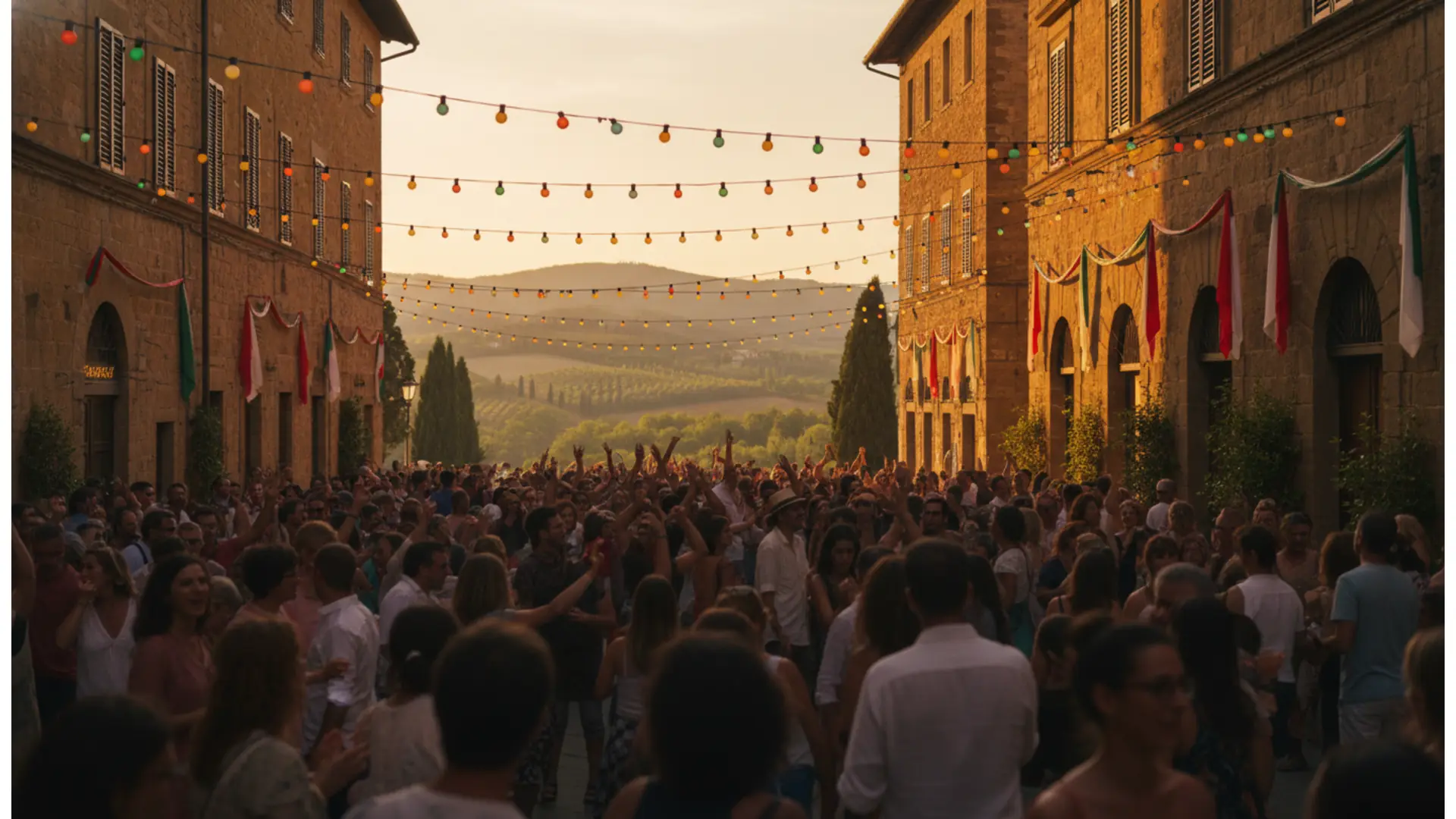
Saint Costabile Festival (Patronal Feast of Castellabate)
On February 17th, the village of Castellabate honors Saint Costabile Gentilcore, from the Basilica to the seaside Belvedere.
About Saint Costabile Festival
A patronal feast in the heart of the village
February 17th is the date that has marked the life of Castellabate for centuries, a village overlooking the Cilento coast in the province of Salerno, Campania. It is the day the community honors its patron, Saint Costabile Gentilcore, with a day of celebrations that blend popular devotion, historical memory, and a landscape that remains the true protagonist: the gulf, Punta Licosa, and Punta Tresino.
This is not a food festival or a show staged for visitors: it is a feast the town holds for itself, and for this very reason, it retains an authenticity that strikes those arriving from outside. Those who climb to the upper village on this late winter day will find stone streets filled with the faithful, religious chants, brotherhood banners, and a sense of reverence that few other coastal festivals can offer.
Who was Saint Costabile Gentilcore
Born in the Tresino area between 1069 and 1070, Costabile Gentilcore was a Benedictine monk and the fourth abbot of the Abbey of the Most Holy Trinity of Cava de' Tirreni. He is credited with starting the construction of the Castello dell'Abate, the fortification on the promontory that became the original core of modern-day Castellabate and from which the town takes its name.
Costabile died on February 17, 1124: hence the date of the patronal feast. To mark the 900th anniversary of his passing, the community observed a Costabilian Holy Year, established the previous October, which enriched the calendar of celebrations with evangelization days, choral reviews, and extraordinary diocesan moments.
The procession to the Belvedere
The heart of the day is the procession. The statue and the bust of the saint pass through the alleys of the medieval village accompanied by chants and the insignia of the parishes, along a route that winds up and down the stone streets until it reaches the most scenic point in the entire town: the Belvedere of Saint Costabile.
Here, the bust is turned toward the panorama, and a blessing is bestowed upon the sea, the coastal hamlets, and the entire territory that the saint, according to tradition, founded and continues to protect. It is the most photographed and attended moment of the feast, with the sun setting over the gulf behind the crowd.
The legend of the seven hundred goats
Popular memory links an episode handed down since 1623 to the figure of Saint Costabile. Five pirate ships reportedly appeared off the coast to raid the town, forcing the inhabitants to take refuge in the castle. That evening, according to the story, a long procession of seven hundred goats with torches tied to their horns descended toward the sea: the pirates, believing they were facing an entire population in arms led by the saint, abandoned the assault.
This is not the only miracle attributed to the patron: local devotion has always invoked him as a protector against the plague, cholera, and Saracen raids—the three great fears that marked the history of this stretch of coast.
How the days are structured
The celebrations do not end on February 17th. During the novena, the calendar is enriched with events involving all the hamlets of the municipality:
- Evangelization days animated by the Missionary Apostles of the Word religious sisters;
- Choral review dedicated to the «Lily of Tresino», featuring community choirs;
- Eve of the feast, with the arrival in the historic center of statues from the parishes of Santa Maria, San Marco, Ogliastro Marina, Lago, Alano, San Pietro, and Matonti, and the celebration of the Stations of the Cross;
- Day of the feast: the brass band that announces the patron's day through the village streets in the early morning, the Solemn Mass in the Basilica, the procession, and the blessing at the Belvedere.
Castellabate during the feast
The feast is also the best opportunity to discover Castellabate out of season, when the village is not crowded with summer tourists. The Castello dell'Abate, the Pontifical Basilica of Santa Maria de Gulia, the alleys, the arches, and the small panoramic squares tell a story that begins precisely with the Benedictine abbot celebrated during these days.
The town, which extends from the upper village down to the marinas of Santa Maria and San Marco, is one of the symbolic places of the Cilento, and the patronal day reveals its truest face: that of a community gathering in the heart of winter around its own identity.
Saint Costabile Festival — edition 2026
The 2026 patronal feast
On February 17, 2026, Castellabate renewed the most heartfelt appointment in its calendar, the feast in honor of Saint Costabile Gentilcore, Benedictine monk and fourth abbot of the Abbey of Cava de' Tirreni, founder of the Castello dell'Abate.
The Solemn Holy Mass was presided over by Msgr. Vincenzo Calvosa, bishop of the Diocese of Vallo della Lucania. In the afternoon, the celebration was led by Don Michele Petruzzelli, abbot of the Abbey of Cava de' Tirreni, highlighting the deep bond between the Cilento village and the Benedictine abbey of which Costabile was a leader.
At the end, the patron's statue was carried on the shoulders of the faithful along the main streets of the historic center, accompanied by religious chants and parish banners. The procession concluded, as tradition dictates, at the Belvedere of Saint Costabile, the panoramic point from which the blessing was bestowed upon the sea and the entire municipal territory.
Programme Saint Costabile Festival 2026
Tuesday, February 17, 2026 — Day of the patronal feast
- In the early morning, according to tradition, the brass band travels through the village streets announcing that it is the day of the feast.
- Solemn Holy Mass presided over by Msgr. Vincenzo Calvosa, bishop of the Diocese of Vallo della Lucania.
- In the afternoon, celebration presided over by Don Michele Petruzzelli, abbot of the Abbey of Cava de' Tirreni.
- Following, solemn procession with the patron's statue through the streets of the historic center, accompanied by religious chants and banners.
- Arrival at the Belvedere of Saint Costabile and display of the saint's bust with a blessing over the sea and the territory.
The times of individual celebrations are announced by the Santa Maria Assunta Parish in the days preceding the feast.
Highlights Saint Costabile Festival 2026
- The patron's procession along the stone alleys of the medieval village.
- The blessing from the Belvedere of Saint Costabile, overlooking the gulf between Punta Licosa and Punta Tresino.
- The presence of the abbot of the Abbey of Cava de' Tirreni, Don Michele Petruzzelli, commemorating the Benedictine origins of Castellabate.
- The band that wakes the town at dawn, announcing the day of the feast.
Prices Saint Costabile Festival 2026
Practical information — Saint Costabile Festival
How to get there
By car: reach Castellabate via the SS18 Tirrena Inferiore, take the Agropoli exit, then continue along the Cilento coastal road. By train: the reference station is Agropoli-Castellabate, on the Tyrrhenian line, connected to the village by bus and taxi. By plane: Salerno Costa d'Amalfi and Naples Capodichino airports.
Costs
All religious celebrations, the procession, and the blessing at the Belvedere are free of charge.
Practical tips
- The upper village is pedestrian-only: it is best to leave your car in the parking areas at the edge of the historic center and walk up.
- You will walk a lot on stone paving and inclines: comfortable shoes are essential.
- It is mid-February and the sea wind on the promontory is cold in the evening: bring warm clothing even if the day is sunny.
- The most evocative moment is the arrival of the procession at the Belvedere around sunset: if you want a good view, arrive early.
Contacts
Santa Maria Assunta Parish of Castellabate and Municipality of Castellabate (SA), ZIP code 84048.
Festival-goer photos
No photos yet. Share yours!
Share your photos
5 photos max, 5 MB per photo (JPG, PNG, WebP)
Noticed an error or missing information?
Help us keep this listing up to date. Every proposal is verified by our team before publication.
Festival-goer reviews
No rating yet — be the first!
No comments yet. Be the first!
Were you there?
Share your experience with the community.
Published by Valentin Contard, festival listings writer. Reviewed, corrected and approved by Christophe Contard, editor-in-chief. .
Where does it take place — Saint Costabile Festival
Centro storico di Castellabate — Basilica Pontificia di Santa Maria de Gulia e Belvedere di San Costabile