Saint Sophia Festival - Piano Vetrale
The patron saint of the 'village of murals', featuring a novena, brass band, and procession
About Saint Sophia Festival
A patronal festival in the heart of Cilento
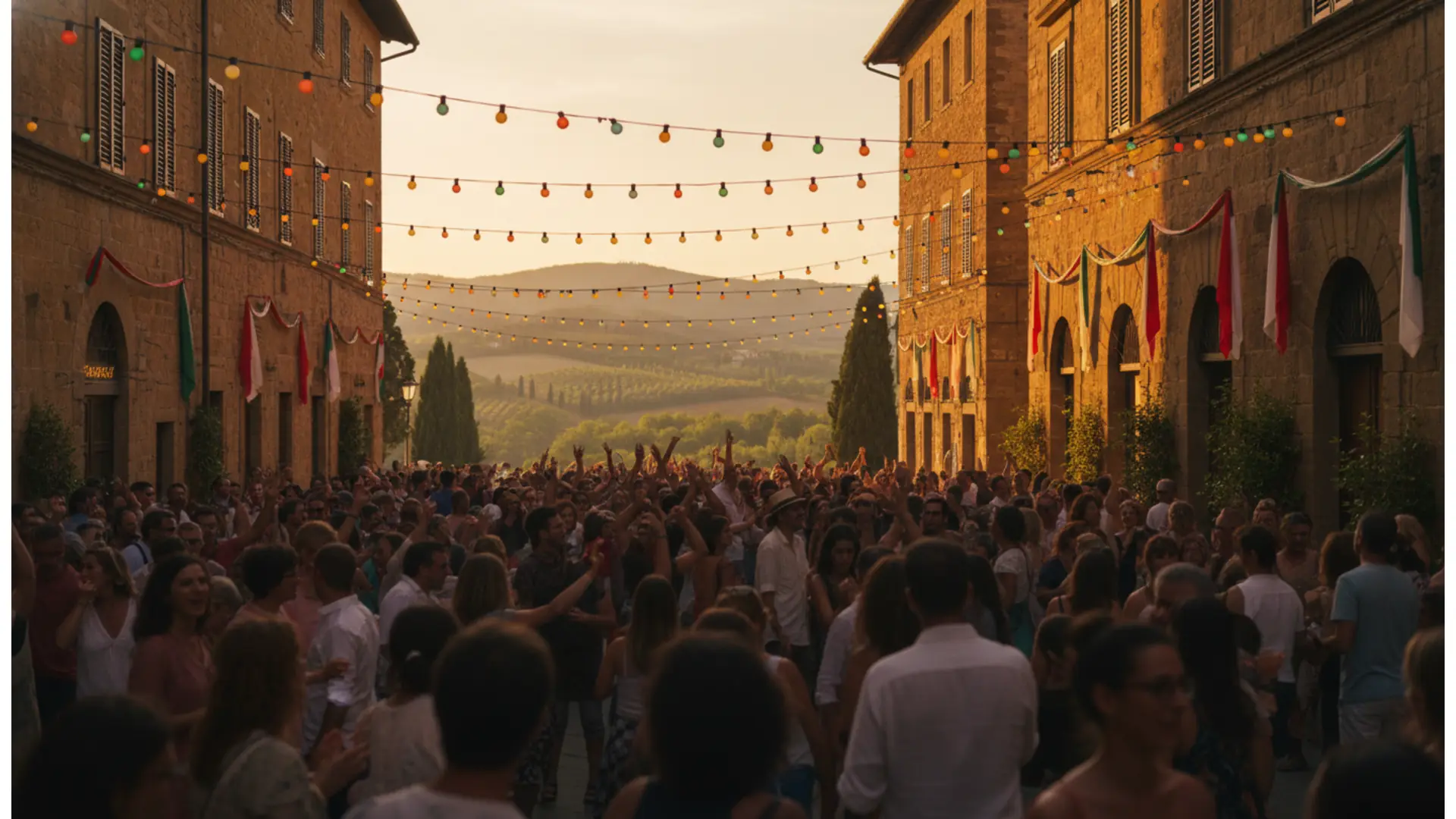
On September 30th, Piano Vetrale, a village in the Municipality of Orria in the province of Salerno, celebrates its patron saint, Saint Sophia. We are in the Cilento hinterland, within the Cilento, Vallo di Diano and Alburni National Park, on a ridge overlooking the valley of the Alento springs, at an altitude of about 575 meters. Here, the patronal festival is not an event staged for tourists: it is the day when a village of a few hundred inhabitants recognizes itself, reconnects, and opens its streets to those arriving from outside.
Saint Sophia and her three daughters
The liturgical memory of Saint Sophia and her three daughters — Pistis (Faith), Elpis (Hope), and Agape (Charity) — falls on September 30th according to the Roman Martyrology, while some communities following the Eastern tradition remember them on September 18th. The handed-down story tells of a Roman matron of the 1st-2nd century who, widowed, dedicated herself to imprisoned Christians: denounced under Emperor Hadrian and remaining steadfast in her faith, she saw her daughters killed and later died on their tomb. In Cilento, this devotion is deeply rooted — the territory holds the majority of Italian churches dedicated to the saint — and Saint Sophia is invoked as a protector against contagious diseases as well as the patron of wisdom: sophía, in Greek, means precisely «wisdom».
The novena, the band, the procession
The festival does not end in a single day. It is preceded by the novena, nine days of prayer that fill the church with the faithful and build anticipation; on the eve, the evening mass is celebrated with a solemn Eucharistic blessing. On September 30th, the day opens with an atmosphere that is both intimate and moving: it is the notes of the brass band that announce the start of the festivities, in a crescendo that begins from the outskirts of the village and climbs the alleys up to the center, where the church of Saint Sophia stands. Eucharistic celebrations are repeated throughout the day to allow everyone to participate, and the most anticipated moment remains the procession through the village streets with the images of the saint and her three daughters.
The 15th-century church
The church of Saint Sophia was founded around 1453, according to local tradition by Dionisio Mazza, known as «the Greek», a refugee who arrived from Constantinople after the city's fall. The building, which underwent extensive restoration in the nineties, features a stone facade and one of the tallest bell towers in Cilento, a visual landmark recognizable from the entire valley. It is around this building that the identity of the Piano Vetrale community has revolved for centuries.
The village of murals
Those who arrive for the festival discover a village that is also an open-air museum. Since the early eighties, thanks to the initiative of a group of students and later the «Paolo De Matteis» Pro Loco, the house facades have been covered with murals signed by Italian and foreign artists: scenes of rural life, myths, and legends of Cilento. The project was born to promote the figure of Paolo de Matteis (1662-1728), a painter of the Neapolitan school born in Piano Vetrale, to whom the village dedicates the «Golden Brush» art competition and an international award every summer. Walking through the stone-paved alleys and under the long arches that connect them, with the painted walls and the passing band, is the experience that makes this festival different from many others.
The return of the emigrants
There is a dimension that local chroniclers emphasize every year: September 30th is the date when Piano Vetrale repopulates. Natives who emigrated to Agropoli, Battipaglia, Northern Italy, and especially Germany return to the village, planning their homecoming specifically for the patron saint. For many families, the festival is worth more than a religious anniversary: it is the annual appointment that keeps a scattered community together.
Before and after the festival
The calendar of the Municipality of Orria and the village is busy throughout the rest of the year: Saint Felix, patron of Orria, is celebrated on January 14th; the Piano Vetrale summer brings the market fair in early July, the feast of Saint Elias around July 20th, the «Golden Brush» event, and the festival dedicated to the white fig of Cilento. The Saint Sophia festival ideally closes this season and brings the village back to its more intimate dimension, that of the Cilento autumn.
Saint Sophia Festival — edition 2026
The 2026 edition
The event calendar of the Municipality of Orria confirms the Saint Sophia Festival in Piano Vetrale on September 30th, classified as a patronal feast and presented with the theme «tradition, devotion, and community in the heart of Piano Vetrale». In 2026, the anniversary falls on a Wednesday.
What to expect
The structure of the day is the established one: the novena preparing for the festival, the vigil mass with the solemn Eucharistic blessing, Eucharistic celebrations repeated throughout September 30th, the brass band tour from the outskirts to the square of the 15th-century church, and the procession with the images of Saint Sophia and her three daughters through the village streets. As every year, many emigrants plan their return to the village specifically for this date.
Program and times
At the time of writing this entry, the flyer with detailed times has not yet been published: it is usually released by the parish and the «Paolo De Matteis» Pro Loco in the days immediately preceding the festival, posted in the village, and shared on local channels. This entry will be updated as soon as the 2026 program is announced.
Programme Saint Sophia Festival 2026
Highlights Saint Sophia Festival 2026
- The procession with the images of Saint Sophia and her three daughters, Pistis, Elpis, and Agape, through the village alleys
- The brass band tour, winding up from the outskirts to the church of Saint Sophia
- The novena, with the 15th-century church crowded with the faithful
- The return of emigrants from Agropoli, Battipaglia, Northern Italy, and Germany
- The murals of Piano Vetrale, an open-air museum dedicated to the painter Paolo de Matteis
Prices Saint Sophia Festival 2026
Practical information — Saint Sophia Festival
How to get there
Piano Vetrale is located about 4 km from the municipal seat of Orria, in the Cilento hinterland of the province of Salerno. By car, you arrive from the SS 18 Tirrena Inferiore road, heading inland towards Vallo della Lucania; the reference railway station is Vallo della Lucania-Castelnuovo, on the Tyrrhenian line, from where you continue by car or local bus connections. The nearest airports are Salerno-Costa d'Amalfi and Naples-Capodichino.
When
The festival always falls on September 30th, the date of the liturgical memory; the novena precedes it by nine days, and the vigil mass is held on the evening of the 29th.
Costs
Free and open participation, without tickets or reservations.
Tips
Comfortable shoes: the historic center is entirely uphill, stone-paved, and crossed by arches and stairways. It is worth arriving a few hours early to visit the murals and the bell tower of the church of Saint Sophia. At the end of September, evenings at this altitude are already cool: a light jacket is recommended. Parking spaces in the village are limited; it is better to leave the car at the entrance to the village.
Festival-goer photos
No photos yet. Share yours!
Share your photos
5 photos max, 5 MB per photo (JPG, PNG, WebP)
Noticed an error or missing information?
Help us keep this listing up to date. Every proposal is verified by our team before publication.
Festival-goer reviews
No rating yet — be the first!
No comments yet. Be the first!
Were you there?
Share your experience with the community.
Published by Valentin Contard, festival listings writer. Reviewed, corrected and approved by Christophe Contard, editor-in-chief. .
Where does it take place — Saint Sophia Festival
Chiesa di Santa Sofia e centro storico di Piano Vetrale
Piazza Santa Sofia, Piano Vetrale, 84060 Orria