Avellino Carnival
The grand traditional parade of Irpinia's folk groups
About Avellino Carnival
The Avellino Carnival, a showcase of Irpinian traditions
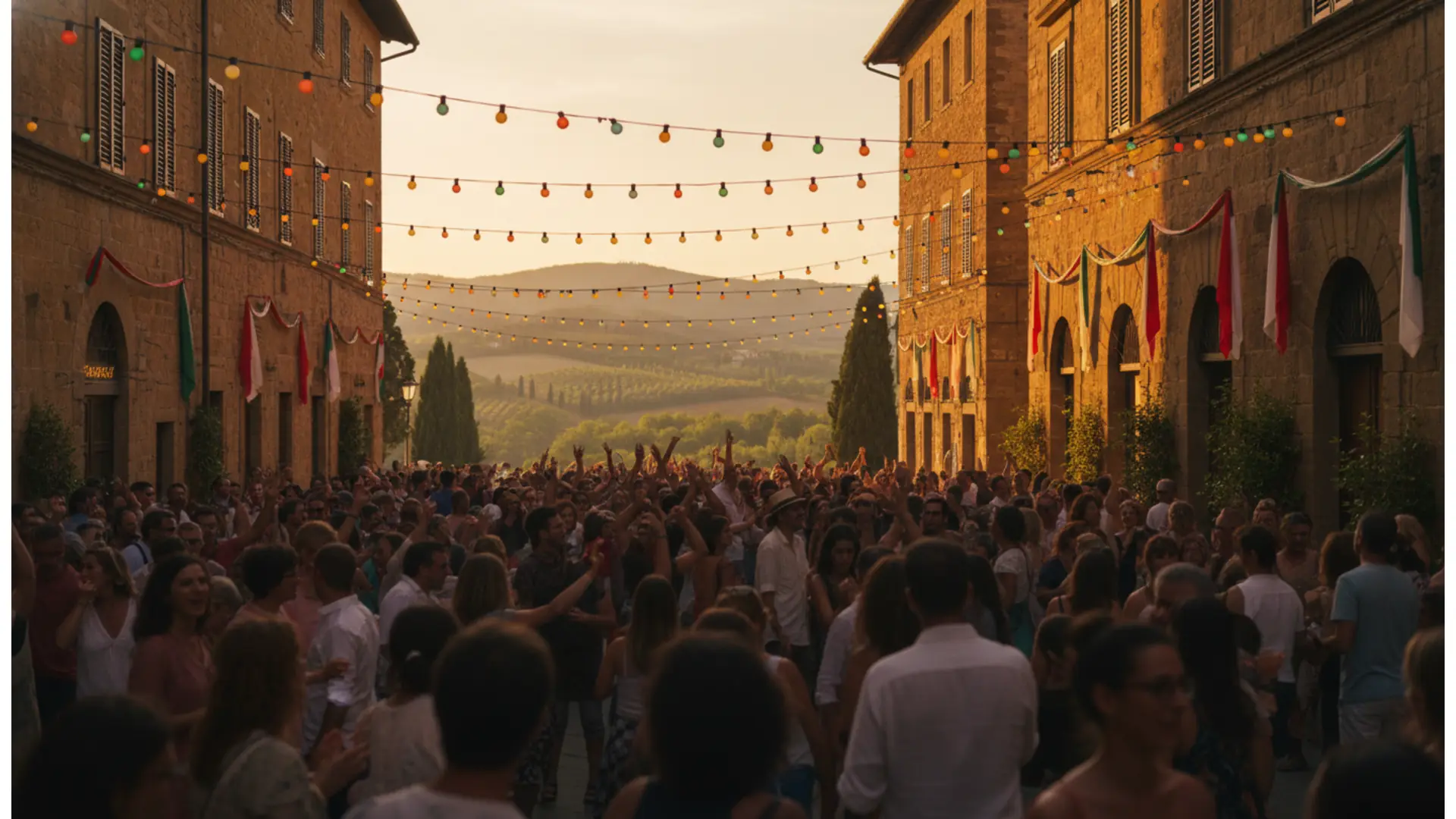
In the capital of Irpinia, Carnival is not about grand allegorical floats, but something far more ancient and rare: a parade of popular theater that gathers folk groups from provincial towns in Avellino. On the Sunday before Shrove Tuesday, Corso Vittorio Emanuele II becomes a stage spanning the entire center, where songs, trumpets, bass drums, handmade costumes, and masks tell the story of the peasant civilization of inland Campania.
The event has grown significantly in recent years: from twelve groups and five hundred performers in 2024 to approximately twenty groups and nine hundred participants in the 2026 edition, followed by thousands of people along the route. It has effectively become the premier event that unites the carnival traditions scattered across dozens of Irpinian municipalities—traditions that remain jealously local for the rest of the year—into a single procession.
The Zeza, the ballo 'ndreccio, and the mascarate
The heart of the parade is the Zeza, a carnival farce of Campanian origin sung to the sound of the trombone and bass drum. Born in Naples, it spread to the hinterland and took deep roots in Irpinia, with records dating back to the early 19th century in Mercogliano. Traditionally performed only by men, even in female roles, it depicts the family conflict between Pulcinella, his wife Zeza, and their daughter Vincenzella, who is courted by Don Nicola. It is a piece of street theater passed down orally from father to son.
Alongside the zeze, other forms of the Irpinian Carnival parade:
- The ballo 'ndreccio (or 'ntreccio) — braided dances from the groups of Montoro and Petruro di Forino.
- The laccio d'amore — choreographies with colorful ribbons typical of the Vallo di Lauro: Marzano di Nola, Pago del Vallo di Lauro, Quindici, Taurano.
- The mascarate — masked groups from Serino, Piazza di Pandola, and Figlioli di Montoro.
- The quadriglia, the tarantellati of Volturara Irpina, and the Scquaqualacchiun of Teora, among the most curious masks in the entire region.
The route in the center of Avellino
The groups gather early in the morning along Corso Vittorio Emanuele; the procession starts around 10:00 AM and crosses the center with three performance stops: the Villa Comunale square, the Church of the Rosary, and Piazza Libertà. At each stop, the groups pause for a full performance, allowing the public to see the farces and dances in their entirety rather than just watching the procession pass by. This detail makes this parade different from many others: you are not just watching a parade, you are attending a series of shows.
Who organizes the parade
The event is organized by the Provincial Committee of Pro Loco (UNPLI) of Avellino, chaired by Giuseppe Silvestri, with the patronage of the City of Avellino and the Campania Region. It is a collective effort by the Pro Loco associations of the province's municipalities, which spend months preparing costumes, rehearsals, music, and choreography. Participation is free for the public, and the day has become a civic ritual shared by the entire Irpinian community.
A Carnival spread throughout Irpinia
The day in Avellino is the gateway to a much broader calendar. In the same weeks, carnivals are celebrated in Montemarano, Castelvetere sul Calore, Paternopoli, Mercogliano, Montemiletto, Cesinali, and Sant'Andrea di Conza, each with its own mask, music, and closing ritual, from the "Dead Carnival" to the Montemarano tarantella. Those arriving in Avellino for the parade can easily build a two or three-day itinerary through the province's towns, with gastronomic stops featuring Fiano, Greco di Tufo, and Taurasi wines.
When to go and what to expect
The event always falls during the Carnival period, between February and early March depending on Easter: in 2026 it was February 15th, and in 2025 it was March 2nd. It is a morning event, suitable for families and children, held entirely outdoors in the Municipality of Avellino, the capital of Irpinia in Campania. Those who want to truly understand what the peasant Carnival of the South is, without tourist filters, will find one of the few contexts where it is still alive here.
Avellino Carnival — edition 2026
An edition with nine hundred performers
The 2026 Avellino Carnival took place on Sunday, February 15, on the day that opened the week of Irpinian Carnivals. About twenty groups from the province's municipalities paraded along Corso Vittorio Emanuele for a total of nine hundred performers: the highest number ever reached by the event, which has grown significantly compared to the twelve groups and five hundred performers of 2024.
The gathering was set for 9:00 AM on the Corso; from 10:00 AM, the procession moved through the center with stops and performances in front of the Villa Comunale, the Church of the Rosary, and Piazza Libertà. Despite the weather uncertainty the day before, the parade was held regularly and thousands of people attended the passage of the groups.
The masks in the procession
Among the protagonists of the 2026 edition were the zeze from Cesinali, Mercogliano, Capriglia, and Montemiletto, the mascarate from Serino (Ma:Bi and Rivus), those from Piazza di Pandola and Figlioli di Montoro, as well as the quadriglia, ballo 'ndreccio, and laccio d'amore groups from Quindici, Moschiano, Pago del Vallo di Lauro, Taurano, and Teora. Giuseppe Silvestri, president of UNPLI Avellino, emphasized how the event has now changed its scale, becoming the comprehensive showcase of the traditional Carnival of inland Campania.
Programme Avellino Carnival 2026
Sunday, February 15, 2026
- 9:00 AM — Gathering of carnival groups along Corso Vittorio Emanuele.
- 10:00 AM — Departure of the folk groups' procession from the province of Avellino.
- Along the route — Stops and performances at the Villa Comunale square, in front of the Church of the Rosary, and in Piazza Libertà.
Parading groups
- Zeze: Cesinali, Mercogliano, Capriglia, Montemiletto
- Mascarate: Ma:Bi of Serino, Rivus of Serino, Piazza di Pandola, Figlioli of Montoro
- Traditional dances (quadriglia, ballo 'ndreccio, laccio d'amore): Quindici, Moschiano, Pago del Vallo di Lauro, Taurano, Teora
In total, about twenty groups with nine hundred performers.
Highlights Avellino Carnival 2026
- About twenty groups and nine hundred costumed performers, a record for the event
- The zeze, sung farces to the sound of trombone and bass drum, performed only by men
- Performances at stops in Piazza Libertà and the Villa Comunale square
- The ballo 'ndreccio and laccio d'amore with colorful ribbons
- Thousands of spectators along Corso Vittorio Emanuele
- Free admission along the entire route
Prices Avellino Carnival 2026
Practical information — Avellino Carnival
How to get there
By car: Avellino can be reached via the A16 Naples-Canosa motorway (Avellino Ovest and Avellino Est exits) and the Avellino-Salerno motorway junction. By bus: the city is served by regional bus lines with frequent connections from Naples and provincial towns. During the parade, traffic in the center is modified: it is advisable to leave your car in parking lots outside the city center ring and walk to Corso Vittorio Emanuele.
Hours and admission
The event takes place in the morning: groups gather at 9:00 AM and the procession starts at 10:00 AM. Access is completely free and open; you can watch from the streets and squares of the center.
Tips
- Arrive early and position yourself in Piazza Libertà or in front of the Villa Comunale square: that is where the groups stop to perform.
- Dress in layers: in Irpinia, in February, the morning can be very cold.
- Check the weather forecast the day before, as the parade is outdoors and weather conditions may affect the schedule.
- Take advantage of the day for a gastronomic stop in the city: Irpinian cuisine and the great wines of the province are worth the trip alone.
Information
Provincial Committee UNPLI Pro Loco of Avellino — unpliavellino.it. Provincial Infopoint: Piazza Libertà 1 (Palazzo Caracciolo), 83100 Avellino.
Festival-goer photos
No photos yet. Share yours!
Share your photos
5 photos max, 5 MB per photo (JPG, PNG, WebP)
Noticed an error or missing information?
Help us keep this listing up to date. Every proposal is verified by our team before publication.
Festival-goer reviews
No rating yet — be the first!
No comments yet. Be the first!
Were you there?
Share your experience with the community.
Published by Valentin Contard, festival listings writer. Reviewed, corrected and approved by Christophe Contard, editor-in-chief. .
Where does it take place — Avellino Carnival
Corso Vittorio Emanuele II e centro cittadino
Corso Vittorio Emanuele II, 83100 Avellino