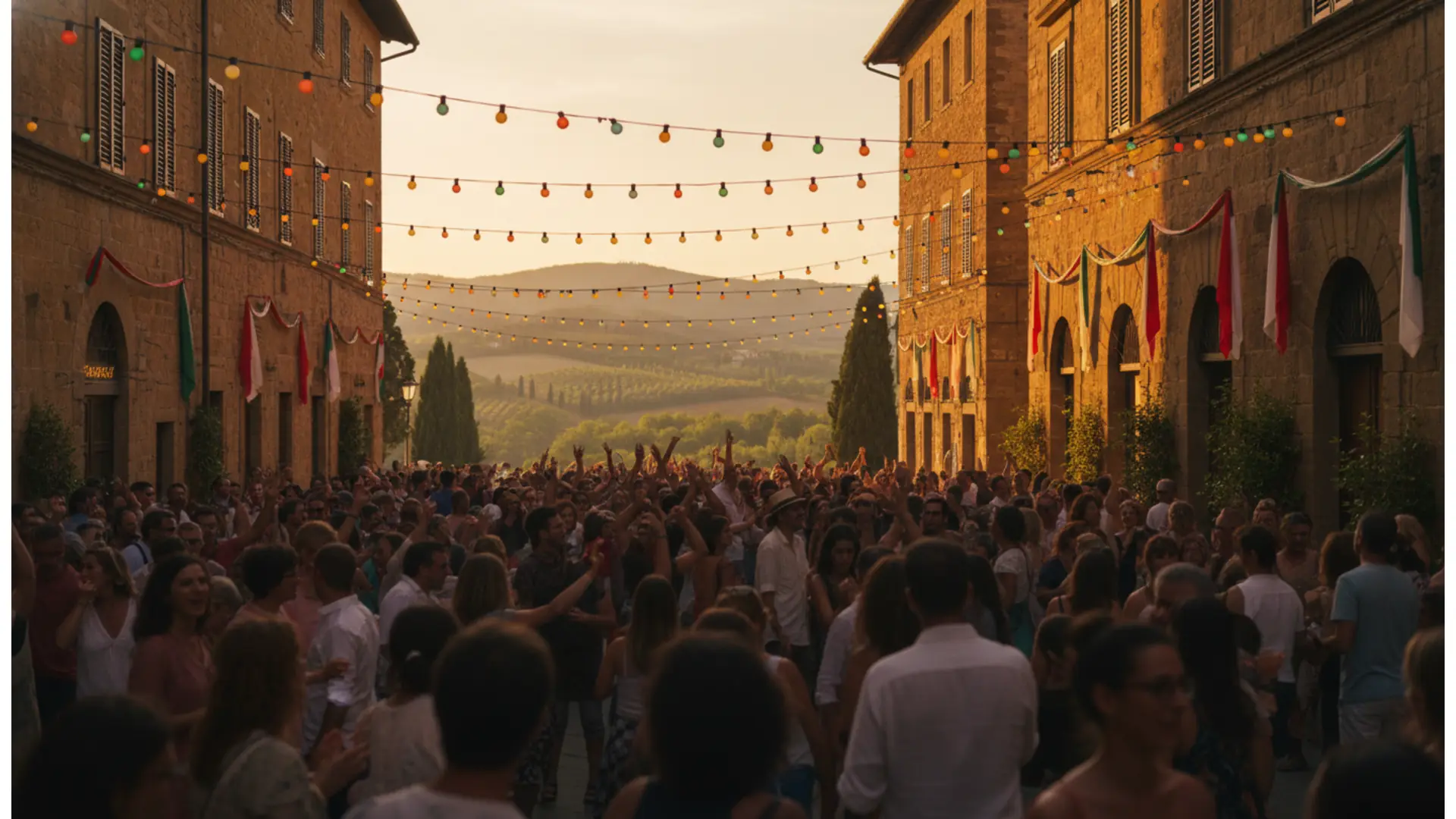
Pomigliano Popular Carnival
The peasant ritual-performance of Pomigliano d'Arco featuring Zeza, Ancient Crafts, and the Twelve Months
Edition 2026 not confirmed to date
This edition has not been confirmed by the organiser to date. We recommend checking before going.
About Pomigliano Carnival
A carnival born from the land
The Pomigliano Popular Carnival is one of the most authentic expressions of Campanian peasant culture. In Pomigliano d'Arco, a city in the Metropolitan City of Naples, Campania, the carnival is not merely a costume party but a true ritual-performance, deeply linked to seasonal cycles, agricultural labor, and animal husbandry. The first records of these performances date back to the late 15th century, and despite long periods of censorship imposed by the Church and ruling powers, the tradition has survived to this day in the city's courtyards and farmsteads.
The four souls of the tradition
The Pomigliano Popular Carnival consists of theatrical and musical performances that unfold during the festival days, forming its recognizable backbone:
- La Canzone di Zeza — a popular sung comedy, born in the 16th century in the tradition of the Commedia dell'Arte. It tells the story of the conflicted marriage between Vicenzella, Pulcinella's daughter, and Don Nicola, with her mother Zeza weaving intrigue behind her husband's back. The four characters embody the seasons: Pulcinella represents winter and the dying year, Zeza represents maturity and abundance, and the two young lovers represent summer and the autumn harvest.
- Gli Antichi Mestieri (Ancient Crafts) — a staging of vanished trades, from the poultry farmer to the cheesemaker producing ricotta and cheese, from the tinsmith to the ritual figures who warded off the evil eye and brought good luck to homes and families.
- I Dodici Mesi (The Twelve Months) — an allegorical procession of personified months, led by Marcusalemme, who recount in verse the weather, tools, hardships, and love troubles of every period of the year. Historically performed on horseback, it now takes place mostly on foot due to modern city street conditions.
- 'o Chianto a Muorto — the finale: the funeral lament for the death of Vincenzo Carnevale, performed with irony and improvisation by relatives, lovers, and authorities, marking the transition from carnival abundance to Lenten penance.
Keeping the tradition alive
The modern revival is thanks to the 'A Sunagliera Association of Popular Music and Culture, founded by Giovanni Sgammato Giovanni Sgammato in 2000 and active in Pomigliano d'Arco. Alongside Marcello Colasurdo and following the experience of the 'E Zezi group, the association has reconstructed lyrics, music, and masks through research into manuscripts and the oral memory of the elderly. The Carnival is held under the patronage of the Municipality of Pomigliano d'Arco and with the participation of local schools, which guide children through preparatory workshops.
Intangible Heritage of Campania
On December 15, 2025, at the Trianon Viviani Theater in Naples, the Pomigliano Carnival was inscribed in the Inventory of the Intangible Cultural Heritage of Campania (IPIC) among the new elements cataloged by the Region. This recognition certifies what has been known in Pomigliano for generations: this carnival is not postcard folklore, but a living practice, passed from father to son and continuously renegotiated by the community.
What to expect
Visitors arriving in Pomigliano during the carnival days will find a widespread event rather than a stage performance: costumed groups roam the streets and squares, stopping in courtyards and in front of houses, involving passersby. The soundtrack is that of the Campanian tradition — tammorre, putipù, scetavajasse, accordion, and multi-register voices — and the language is the Pomiglianese dialect, with its double meanings and corrosive wit. Alongside the performances, there are ancient games for children, from sack races to tug-of-war, and convivial moments with traditional Neapolitan carnival sweets, from chiacchiere to sanguinaccio.
Why it's worth the trip
In a region like Campania, rich in spectacular carnivals and allegorical floats, the Pomigliano event chooses the opposite path: no monumental scenery, but a popular community theater that has survived five centuries almost intact. For those visiting Naples and the Vesuvius area in winter, it is a chance to see up close a tradition that Italian anthropology scholars cite as a textbook case, just a few kilometers from the regional capital and easily accessible.
Pomigliano Carnival — edition 2026
Pomigliano Popular Carnival 2026
At the time of writing, there are no official announcements regarding the dates and program for the 2026 edition of the Pomigliano Popular Carnival. The event is organized by the 'A Sunagliera Association of Popular Music and Culture with the patronage of the Municipality of Pomigliano d'Arco (Metropolitan City of Naples, Campania) and traditionally takes place during the Carnival period, between February and March, with the highlight in the days leading up to Shrove Tuesday.
In previous editions, the program has alternated itinerant processions through the city streets, stops in squares and courtyards, ancient games for children, and the four historical performances that make up the ritual: La Canzone di Zeza, Gli Antichi Mestieri, I Dodici Mesi, and 'o Chianto a Muorto. Following the inscription of the tradition in the Inventory of the Intangible Cultural Heritage of Campania on December 15, 2025, anticipation for the new edition is particularly high in the city.
We recommend checking dates, routes, and times on the official channels of the 'A Sunagliera Association and the Municipality of Pomigliano d'Arco's website before planning your visit: this page will be updated as soon as the calendar is made public.
Prices Pomigliano Carnival 2026
Practical information — Pomigliano Carnival
How to get there
Pomigliano d'Arco is located about 15 km northeast of Naples. By car: Take the Asse Mediano or A16/A1 motorway and exit towards Pomigliano d'Arco–Acerra. By train: Use the Pomigliano d'Arco station on the EAV Circumvesuviana line (Naples–Baiano), with frequent connections from Naples Porta Nolana and Naples Garibaldi. By plane: Naples Capodichino Airport is about a twenty-minute drive away.
Where it takes place
The performances are itinerant, moving through the city center, main squares, and historic courtyards of Pomigliano d'Arco. The detailed program with routes and times is released by the 'A Sunagliera Association and the Municipality in the weeks leading up to the Carnival.
Tips
- Wear comfortable shoes: you will be walking alongside the groups throughout the route.
- In February and March, temperatures can be chilly in the morning: it is best to dress in layers.
- The Pomiglianese dialect is part of the show: you don't need to understand it all, as the gestures and music tell the rest.
- Pomigliano d'Arco is a good base for visiting the Vesuvius National Park, Nola, and Acerra.
Contacts
'A Sunagliera Association of Popular Music and Culture — official website and social media channels (Facebook, TikTok). Under the patronage of the Municipality of Pomigliano d'Arco.
Festival-goer photos
No photos yet. Share yours!
Share your photos
5 photos max, 5 MB per photo (JPG, PNG, WebP)
Noticed an error or missing information?
Help us keep this listing up to date. Every proposal is verified by our team before publication.
Festival-goer reviews
No rating yet — be the first!
No comments yet. Be the first!
Were you there?
Share your experience with the community.
Published by Valentin Contard, festival listings writer. Reviewed, corrected and approved by Christophe Contard, editor-in-chief. .
Where does it take place — Pomigliano Carnival
Centro cittadino, piazze e cortili di Pomigliano d'Arco