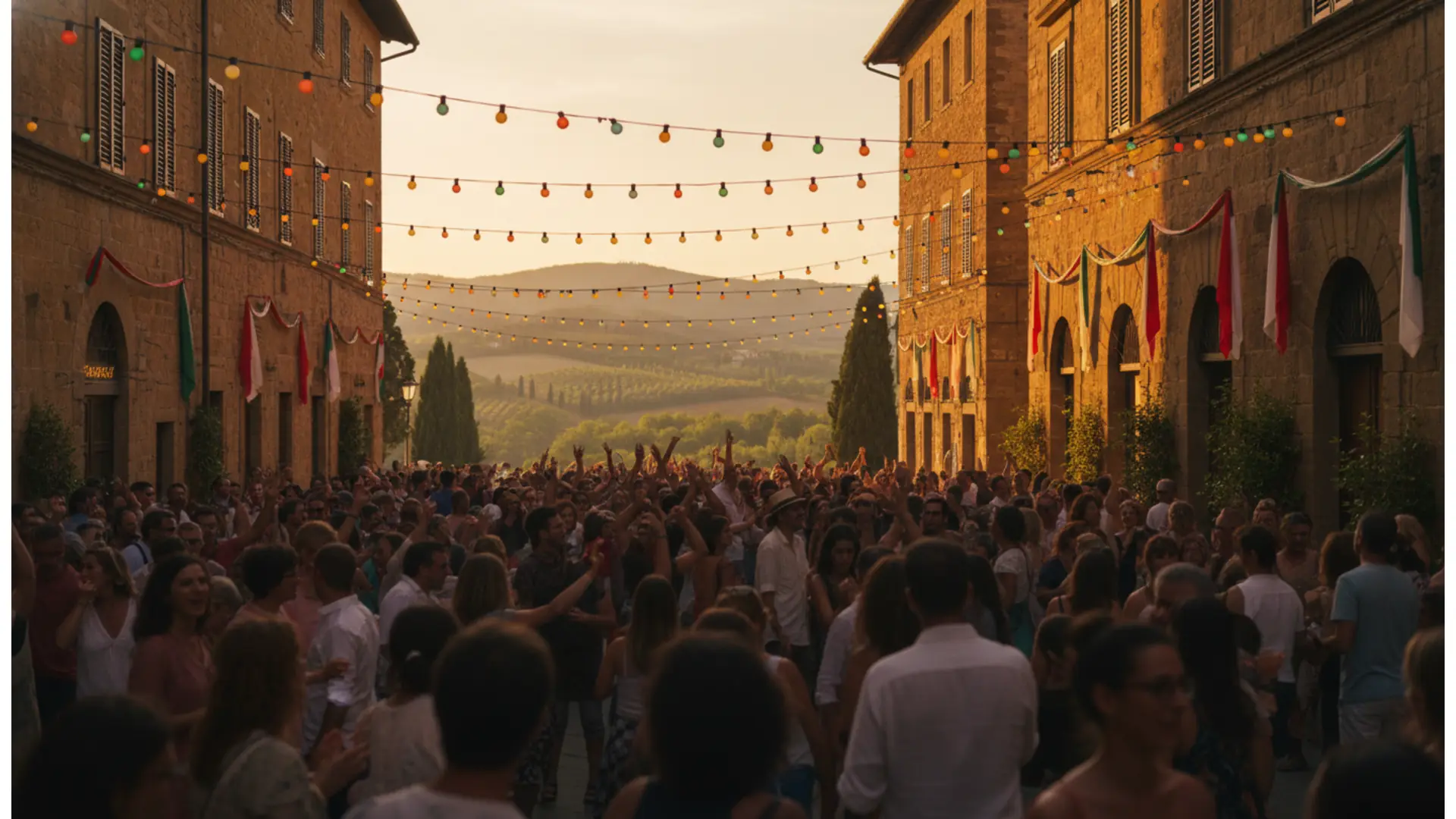
Palio of Somma Vesuviana
Renaissance pageants and ancient games in the Casamale district
About Palio of Somma
The Palio of Somma Vesuviana: three days of the 16th century at the foot of Vesuvius
In Somma Vesuviana, in the province of Naples, time seems to stand still during the second weekend of September. The Palio of Somma Vesuviana brings the historic center back to the atmosphere of the late 16th and early 17th centuries: Renaissance-costumed processions, drums and early music, street games, and re-enactments that involve the entire community. It is one of the most deeply rooted identity-building events in the Vesuvius territory of Campania, and in 2026 it reaches its 34th edition, scheduled for September 11, 12, and 13.
A grassroots festival born in 1991
The Palio was born in 1991 from the idea of a group of young people from Somma who, in years when organized crime was a heavy and visible presence in the area, chose to respond with culture, history, and popular participation. That intuition led to extensive historical research, allowing for the reconstruction of local customs, costumes, and games, which were then returned to the city in the form of a festival.
The founder and president of the Committee is Giuseppe Auriemma, who brought the project to life alongside the experience of the Centro Vita and the Giovani per un Mondo Unito, inspired by the Focolare movement. Today, the Palio is not just a three-day event: it is a year-round workshop, with studios for set design, costumes, choreography, music, and communication involving dozens of local youths. The cultural brand that encompasses these activities is called Cultura e Culturae.
The eight districts and traditional games
The competitive heart of the event is the challenge between the city's eight historic districts, each with its own colors, captains, and loyal supporters: Casamale, Margherita, Prigliano, Castello, Santa Maria del Pozzo, Costantinopoli, Starza Mercato, and Carmine. The teams face off in popular games recovered from the Vesuvius peasant tradition:
- Sack race, the most spectacular and beloved by children
- Tug-of-war, a collective test of strength between districts
- Greasy pole, the most difficult and highly anticipated climb of the day
- Hoop race, pushing a hoop with a stick along the racecourse
- Pignatta, also known as caccavella, to be broken while blindfolded
- Curuoglio, a game involving carrying weights balanced on the head
Winning the banner is a serious matter: the victory remains in the district's annals for an entire year and fuels a completely peaceful but very intense rivalry.
Casamale, a natural stage
The ideal setting for the re-enactment is Casamale, the fortified Aragonese village that forms the ancient core of Somma Vesuviana: narrow alleys, arches, internal courtyards, and the remains of the 15th-century city walls. When evening falls and the lights dim, the illusion is almost perfect, and no artificial scenery is needed. The competitions and shows then move to the central squares, where the public can watch comfortably.
The 2026 edition: Open Heavens, Rites, Games, and Wonder
The 34th edition bears the title «Apriti cielo, Riti, Giochi e Meraviglia» (Open Heavens, Rites, Games, and Wonder), which the organizers define as a true conceptual manifesto: it is the thread that guides the artistic production, historical research, and workshop programming. As per tradition, the path toward September is marked by cultural events, including theater, public meetings, and guided tours of the city's monumental heritage, such as the Santa Maria del Pozzo complex with its underground church.
Tradition, wine, and Vesuvius flavors
The Palio is also an opportunity to discover the material culture of Mount Somma. Somma Vesuviana is the land of the Catalanesca grape, cultivated on the volcanic slopes and having become a wine symbol of the district over the years, so much so that the city has joined the national Wine Cities circuit. During the evenings of the Palio, there is no shortage of areas dedicated to the ancient flavors of the territory, featuring traditional Vesuvius dishes.
Why it's worth the trip
Compared to other more tourist-oriented re-enactments, the Palio of Somma Vesuviana retains a strongly communal character: those who parade and compete are locals, the costumes are sewn in village workshops, and the music is played live. For those visiting Naples and Vesuvius in September, it is a different and authentic way to get in touch with inland Campania, just a few kilometers from the crater and the archaeological excavations.
Palio of Somma — edition 2026
34th edition: Apriti cielo, Riti, Giochi e Meraviglia
The Palio Committee has announced the dates for the thirty-fourth edition: September 11, 12, and 13, 2026. The chosen theme, «Apriti cielo, Riti, Giochi e Meraviglia», was presented by the president and founder Giuseppe Auriemma as a conceptual manifesto that guides the historical research, artistic production, and the work of youth workshops in the months leading up to the festival.
As every year, the structure of the event remains what has made the Palio recognizable: the re-enactment set between the late 16th and early 17th centuries, the costumed procession through the alleys of Casamale, the drums and traditional songs, and finally the district challenge in popular games. The path toward the event has already begun in the spring of 2026 with public meetings and theatrical performances hosted in the city's iconic locations.
Programme Palio of Somma 2026
The detailed program for the three days has not yet been released by the Committee. The 34th edition is confirmed for September 11, 12, and 13, 2026, on the theme «Apriti cielo, Riti, Giochi e Meraviglia», with the usual structure of a historical pageant, evening shows, and district games.
Announced preparatory events
- Thursday, May 28, 2026, at 7:30 PM - ARCI Garden at Casamale (via Campane 2): meeting «Gaza between present and future» with Professor Ata M. Kaisy, lecturer at the University College of Sciences and Technology of Gaza, together with university professors, religious authorities, and representatives of the Palestinian community in Campania. Free admission.
- Saturday, July 11, 2026, at 8:00 PM - Cloister of Santa Maria del Pozzo: «Purgatorio at the foot of Vesuvius», a prose and music drama based on «Il Rosario» by Federico De Roberto, directed by Josi Auriemma, with Peppe Parisi, Paola Matafora, Simonetta D'Angelo, Chiara Cozzolino, and Valeria Cozzolino; live music by Franco Paolo Perreca on clarinet and Giovanni D'Angelo on guitar. Following at 9:30 PM, a guided tour of the Underground Church with Professor Emanuele Coppola.
Highlights Palio of Somma 2026
- Historical pageant in Renaissance costumes through the alleys of the Aragonese village of Casamale
- The eight districts competing in ancient games: sack race, tug-of-war, greasy pole, hoop race, pignatta
- Drums, folk songs, and traditional Vesuvius music
- Theme of the edition: «Apriti cielo, Riti, Giochi e Meraviglia»
- Cultural path including theater, public meetings, and guided tours of the monumental heritage
Prices Palio of Somma 2026
Practical information — Palio of Somma
How to get there
Somma Vesuviana is located on the northern slopes of Mount Somma, about twenty kilometers from Naples. By car, it can be reached via the SS 268 del Vesuvio, which connects the capital to the Vesuvius municipalities, or from the A16 Naples-Canosa motorway, taking the Pomigliano d'Arco exit. By train, the reference station is Napoli Centrale, from which you can continue with the EAV bus lines directed to the Vesuvius municipalities.
Practical tips
- During the three days, the historic center is largely closed to traffic: it is best to park in the peripheral areas and continue on foot.
- The alleys of Casamale are paved with cobblestones: comfortable shoes are recommended.
- The district games generally take place in the late afternoon and evening; to get a good view of the competitions, it is advisable to arrive early.
- September on the Vesuvius side is still warm during the day, but evenings can get cool: a light sweatshirt is useful.
Where to stay
Local accommodation consists mainly of bed and breakfasts and agritourisms on the slopes of Mount Somma. Alternatively, you can stay in Naples or in the coastal Vesuvius municipalities and reach Somma Vesuviana for the day.
Festival-goer photos
No photos yet. Share yours!
Share your photos
5 photos max, 5 MB per photo (JPG, PNG, WebP)
Noticed an error or missing information?
Help us keep this listing up to date. Every proposal is verified by our team before publication.
Festival-goer reviews
No rating yet — be the first!
No comments yet. Be the first!
Were you there?
Share your experience with the community.
Published by Valentin Contard, festival listings writer. Reviewed, corrected and approved by Christophe Contard, editor-in-chief. .
Where does it take place — Palio of Somma
Centro storico e borgo del Casamale