San Giuseppe Festival
The ritual of the tables, the focàra bonfire, and folk music in the heart of Salento
About San Giuseppe Festival
A rural festival in the heart of Salento
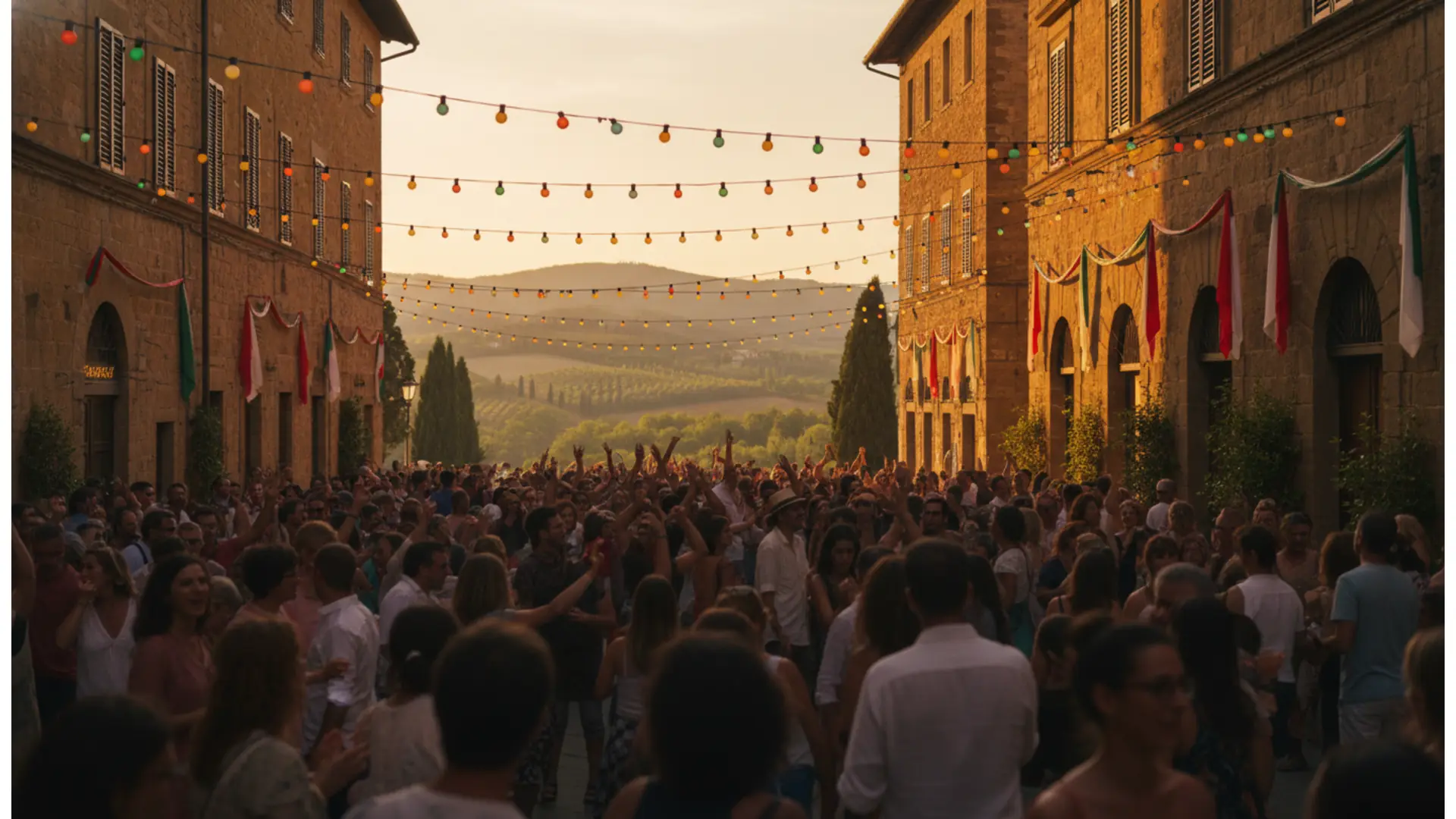
In the small town of San Cassiano, in the province of Lecce, the San Giuseppe Festival is much more than a local fair: it is a moment when the entire community reconnects with its peasant roots. Every year, around March 19th, this village in lower Salento transforms into a large shared courtyard, where food becomes a gift, the table becomes a ritual, and fire illuminates the night. Born in the late seventies, the event reached its 49th edition in 2026, confirming its status as one of the most iconic festivals in southern Puglia.
The ritual of the San Giuseppe tables
The heart of the festival lies in the famous tavole di San Giuseppe (St. Joseph's tables), laden with thirteen traditional dishes in honor of the patron saint of carpenters and the poor. 'Pane di San Giuseppe', 'massa' (homemade pasta), 'grano stumpato', chickpeas, wild greens, and the essential 'zeppole' make up a strictly rural menu, prepared with flours from ancient grains such as Saragolla, Senatore Cappelli, and Maiorca, grown in the nearby countryside and stone-ground at the Community Mill. Before the festival, following an ancient custom, the community's gifts—grain, oil, wine—are collected door-to-door to prepare the food. The tables are blessed by the parish priest, and at the end of the festival, all leftover products are donated to the needy: a gesture that encapsulates the spirit of the event.
The focàra and the music of Salento
At nightfall, the focàra is lit—a large bonfire built with bundles of wood around which people eat and warm themselves in good company. It is the signal that the festival is in full swing: pizzica dance circles enliven the streets of the center with tambourines and dancing, leading up to the grand evening concert that brings top names in folk music and Southern Italian singer-songwriting to San Cassiano every year.
Ruràlia and the Parco dei Paduli
For several years, the San Giuseppe Festival has been part of the Ruràlia project, created to support the rural identity of popular festivals in the municipalities of the Parco dei Paduli, the protected area that unites several villages in the Salento region of Lecce. Sustainability, local development, multifunctional agriculture, and healthy food are the values that drive the initiative, where the traditional festival becomes an opportunity to reflect on the future of the countryside. Visiting the San Giuseppe Festival means connecting with an authentic Salento, far from the most beaten tourist paths, where gastronomy, popular faith, and conviviality merge into a single, warm experience.
San Giuseppe Festival — edition 2026
The 49th edition of the San Giuseppe Festival was held in San Cassiano from March 19 to 21, 2026, with the main event on Saturday, March 21. The traditional structure of the festival was confirmed: the ritual of the tables with thirteen dishes prepared with ancient grains, the blessing by the parish priest, the focàra lit in the Contrada Spinelle area, and pizzica circles through the streets of the village. Closing the evening was the grand concert by Eugenio Bennato with his Musica nel Mondo Tour 2026. The free event reaffirmed its connection with the Ruràlia project and the theme of food as a gift, with leftover products donated to those in need.
Programme San Giuseppe Festival 2026
Thursday, March 19
- Start of the festival and preparations for the ritual in the village
- Lighting of the focàra in Contrada Spinelle
Saturday, March 21 — Main Day
- 6:00 PM — Opening of the MIAB museum and installation of the 'Santi Paduli', a community pact for local agriculture, healthy food, and public canteens
- The Ritual and The Tables — setting up and blessing of the San Giuseppe tables with the thirteen traditional dishes
- 7:00 PM — Traditional Food: distribution of dishes prepared with ancient grains
- 8:00 PM — The Fire: the focàra at the center of the festival
- 9:30 PM — The Concert: Eugenio Bennato — Musica nel Mondo Tour 2026, with pizzica circles preceding and following the performance
Highlights San Giuseppe Festival 2026
Prices San Giuseppe Festival 2026
Practical information — San Giuseppe Festival
Where
San Cassiano (LE), Puglia. The festival takes place in the historic center of the town and in the Contrada Spinelle area, where the focàra is set up. Free admission.
How to get there
By car: San Cassiano can be reached via the SS275 and the provincial roads of lower Salento, about 40 km from Lecce. The nearest train station is on the Ferrovie del Sud Est lines; the reference airport is Brindisi-Salento.
Tips
Arrive in the late afternoon to experience the lighting of the focàra and the tables at dusk. The evening concert is the highlight: be prepared to dance the pizzica. Comfortable and warm clothing is recommended for the March evening.
Festival-goer photos
No photos yet. Share yours!
Share your photos
5 photos max, 5 MB per photo (JPG, PNG, WebP)
Noticed an error or missing information?
Help us keep this listing up to date. Every proposal is verified by our team before publication.
Festival-goer reviews
No rating yet — be the first!
No comments yet. Be the first!
Were you there?
Share your experience with the community.
Published by Valentin Contard, festival listings writer. Reviewed, corrected and approved by Christophe Contard, editor-in-chief. .
Where does it take place — San Giuseppe Festival
Centro storico e Contrada Spinelle