Roccapiemonte Carnival
Allegorical float parades and the 'Ò 'ndreccio dei Vituosi' in Roccapiemonte
About Roccapiemonte Carnival
The Roccapiemonte Carnival: Roccapiemonte in masks
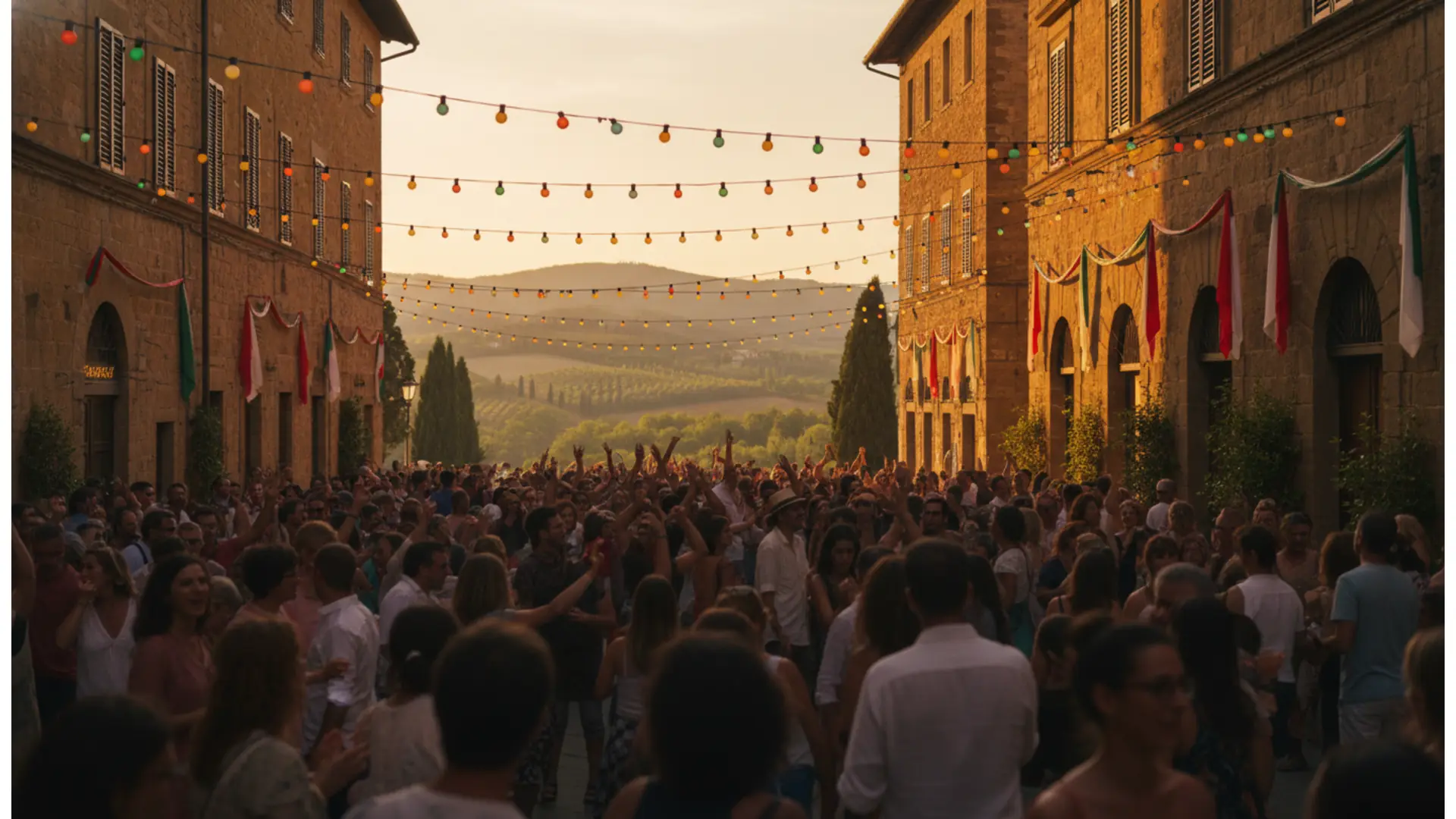
In the days leading up to Shrove Tuesday, the town of Roccapiemonte, in the province of Salerno, transforms into a large open-air stage. The Roccapiemonte Carnival is a popular festival that involves the entire town, from the San Potito district to Piazza Polichetti and Piazza Zanardelli, featuring parades of allegorical floats, masked groups, mascots, majorettes, and dance schools. It is a street carnival, promoted by the municipal administration together with local associations, aimed primarily at children and families in the Agro Nocerino-Sarnese area of Campania.
Two days across squares and districts
The program is divided into two distinct days. The first is dedicated to entertainment and a parade in the town center, with Piazza Zanardelli as the focal point; the second, on Shrove Tuesday, is the true heart of the festival, featuring a double parade of allegorical floats: the morning procession starts from the hamlet of San Potito and reaches Piazza Polichetti, while in the afternoon the route moves from Via Kolbe to Piazza Zanardelli. The streets are closed to traffic, and the parade moves slowly, accompanied by music, confetti, and a following of masked groups.
'Ò 'ndreccio dei Vituosi', a 17th-century tradition
Alongside the floats, Roccapiemonte preserves one of the oldest carnival traditions in the Agro Nocerino-Sarnese: in the hamlet of San Potito, the 'Ò 'ndreccio dei Vituosi' has been performed since the 1600s, carried on by the Vituosi di San Potito group. Here, there are no floats, but traditional dances and poetry. The first part of the show is the dance involving the weaving of grapevine cuttings adorned with paper flowers and colorful ribbons, from which the entire performance takes its name. Once in the square, the dancers form a circle and recite the 'a Zeza cantata, which tells the story of Pulcinella and the widow. Originally, it was an all-male performance, with half the group dressed as women because women were not allowed to participate in the allegorical parades; in recent years, local girls have also joined to help with the choreography.
Allegorical floats and local associations
The floats are built by local associations and volunteer groups, who work for weeks in warehouses and garages before the parade. Notable subjects featured in recent editions include:
- Dia de los Muertes, by the Mente Cuore e Forza Association
- La Corrida, by the S. Antonio Cultural Association
- Toro Loco, by Fiorentina Oliva and her brother
- I Pirati, by the Maria SS. Community Center
The parade also features the Majorette MCF folk group of Roccapiemonte, the Artando cultural association, the Juanny dance school, the Dance Academy, street performers, and mascots.
A carnival designed for families
The Roccapiemonte Carnival is more than just a parade: part of the program is reserved for children, with entertainment villages set up in the square, inflatables, soap bubbles, gadgets, and games. It is an occasion for the town to come together, with children in masks following the floats and families crowding the sidewalks along the route.
Roccapiemonte in the Agro Nocerino-Sarnese carnival
The carnival is a defining event for this part of the Campania region: in neighboring towns, historical masks like Alesio in Sarno or the Princess Nuceria in Nocera Inferiore parade, while in Roccapiemonte, the specificity lies in the bond between the modern festival of floats and the ancient ritual of the Vituosi. The town, nestled at the foot of Mount Solano and dominated by the ruins of the medieval castle, thus offers visitors two carnivals in one: the colorful and noisy one of the parades and the sober, ritualistic one of the hamlet, where the song in dialect continues to tell the story of Pulcinella just as it did three centuries ago.
Roccapiemonte Carnival — edition 2026
Roccapiemonte Carnival 2026
The return of the Roccapiemonte Carnival, promoted by the municipal administration of Roccapiemonte, involved various areas of the town, from the San Potito district to Piazza Zanardelli and Piazza Polichetti. On Sunday, February 15, the festival began in the center with entertainment dedicated to children and the parade of groups; on Tuesday, February 17, Shrove Tuesday, the double parade of allegorical floats created by local associations took place.
Floats and groups on the street
Among the allegorical floats in the parade: Dia de los Muertes by the Mente Cuore e Forza Association, La Corrida by the S. Antonio Cultural Association, Toro Loco by Fiorentina Oliva and her brother, and I Pirati by the Maria SS. Community Center. The processions were enlivened by the Majorette MCF folk group of Roccapiemonte, the Artando cultural association, the Juanny dance school, the Dance Academy, mascots, and street performers.
The tradition of San Potito
In the days around Shrove Tuesday, in the San Potito district, the 'Ò 'ndreccio dei Vituosi' was also performed: the dance involving the weaving of grapevine cuttings decorated with paper flowers and ribbons, and, in the square, the 'a Zeza' cantata telling the story of Pulcinella and the widow, a performance handed down since the 17th century.
Programme Roccapiemonte Carnival 2026
Sunday, February 15, 2026
- 10:00 AM - 1:00 PM, Piazza Zanardelli: children's entertainment by Gianburrasca Village, with inflatables, soap bubbles, and gadgets.
- Parade in the town center with the Majorette MCF folk group of Roccapiemonte, the Artando cultural association with allegorical floats, mascots, street performers, and the Juanny dance school.
Tuesday, February 17, 2026 - Shrove Tuesday
- 10:30 AM: start of the morning parade from the San Potito district, arriving at Piazza Polichetti.
- 3:30 PM: second parade from Via Kolbe to Piazza Zanardelli, with Dance Academy, Artando association, allegorical floats, mascots, performers, and the Juanny dance school.
- In San Potito, performance of the 'Ò 'ndreccio dei Vituosi' by the I Vituosi di San Potito group: dance of the grapevine cuttings and the 'a Zeza' cantata.
Allegorical floats in the parade
- Dia de los Muertes - Mente Cuore e Forza Association
- La Corrida - S. Antonio Cultural Association
- Toro Loco - Fiorentina Oliva and her brother
- I Pirati - Maria SS. Community Center
Highlights Roccapiemonte Carnival 2026
- Double parade of allegorical floats on Shrove Tuesday: San Potito-Piazza Polichetti in the morning, Via Kolbe-Piazza Zanardelli in the afternoon.
- Four floats created by local associations, from Dia de los Muertes to I Pirati.
- The 'Ò 'ndreccio dei Vituosi' in San Potito, with the grapevine dance and the 'a Zeza' cantata.
- Children's entertainment in Piazza Zanardelli with inflatables and soap bubbles.
- Majorette MCF, Artando, Dance Academy, and Juanny dance school along the routes.
Prices Roccapiemonte Carnival 2026
Practical information — Roccapiemonte Carnival
How to get there
Roccapiemonte is located in the Agro Nocerino-Sarnese area, in the province of Salerno, at the foot of Mount Solano. By car, it can be reached from the motorway exits of the Nocera area; by train, the most convenient station is Nocera Inferiore, on the Naples-Salerno line, with bus connections to the town.
Where it takes place
The parades cover the town center, with Piazza Zanardelli and Piazza Polichetti as arrival points, and the hamlet of San Potito, where the 'Ò 'ndreccio dei Vituosi' performance is held.
Tips
- The parades take place on the street: arriving a little early helps to find a spot along the route and to park outside the area affected by road closures.
- Shrove Tuesday is the busiest day, with both a morning and afternoon procession.
- For final schedules and any postponements due to bad weather, it is advisable to check the Roccapiemonte Municipality's official channels.
Festival-goer photos
No photos yet. Share yours!
Share your photos
5 photos max, 5 MB per photo (JPG, PNG, WebP)
Noticed an error or missing information?
Help us keep this listing up to date. Every proposal is verified by our team before publication.
Festival-goer reviews
No rating yet — be the first!
No comments yet. Be the first!
Were you there?
Share your experience with the community.
Published by Valentin Contard, festival listings writer. Reviewed, corrected and approved by Christophe Contard, editor-in-chief. .
Where does it take place — Roccapiemonte Carnival
Centro cittadino, Piazza Zanardelli, Piazza Polichetti e frazione San Potito