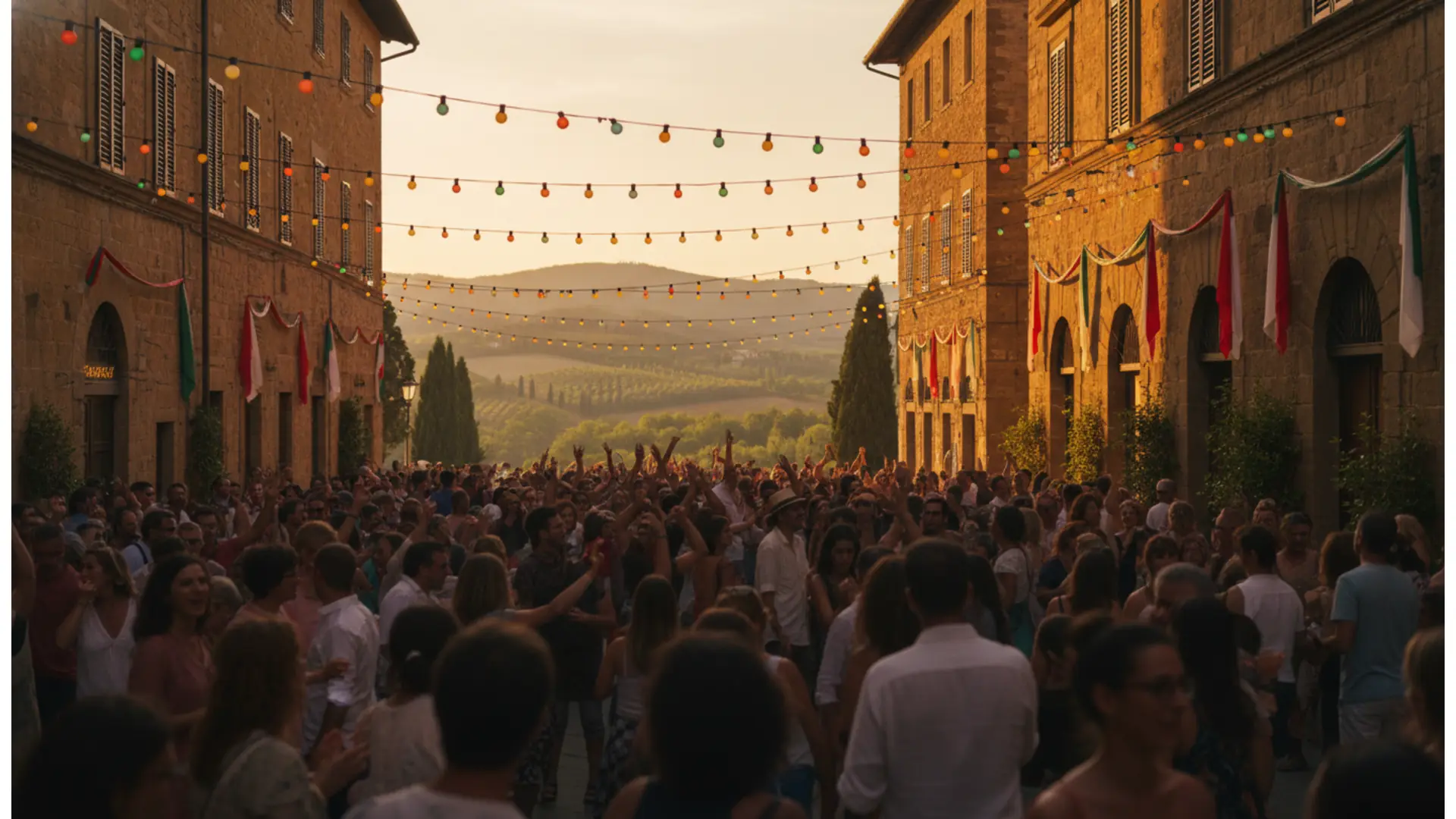
Pasquetta Maranese - Procession of the Madonna di Vallesana
The Procession of the Madonna della Cintura and the Marano tradition of celebrating Pasquetta on Tuesday
Edition 2026 not confirmed to date
This edition has not been confirmed by the organiser to date. We recommend checking before going.
About Pasquetta Maranese
A Pasquetta experienced over two days in Marano
In Marano di Napoli, a town in the Metropolitan City of Naples in Campania, the Monday after Easter is not just a simple day trip. Easter Monday is dedicated to devotion: the statue of the Madonna di Vallesana, also known as the Madonna della Cintura, is carried in procession on an artistic float through the streets of the historic center to the Vallesana chapel, where it is housed year-round. Barbecues, picnics, and festive lunches are moved to the following Tuesday: a custom that the people of Marano have defended for generations, setting this town apart from the rest of Italy.
The origins: Augustinian friars and the black belt
This devotion dates back to 1639, when the arrival of the Augustinian friars spread the cult of the Madonna di Vallesana in Marano. It was the Augustinians who added the black belt to the effigy, a symbol of their order: hence the double name by which the faithful still address the Virgin today. Since then, the small church of Vallesana, built on the edge of the ancient hamlet that gives the area its name, has become the focal point of a popular religiosity passed down for over three centuries, from father to son, without interruption.
The procession of the artistic float
The highlight of the day is the departure of the artistic float accompanying the statue. The procession leaves the Vallesana church, winds through the streets of the historic center, and returns, marked by prayers, hymns, and the united participation of families, committees, and devotees. It is one of the most deeply felt expressions of popular religiosity in the area north of Naples: the liturgical and community dimensions intertwine seamlessly, and for many Marano natives who have emigrated elsewhere, it is the annual occasion to return home.
The «Pasquetta dei cafoni»
Moving the secular festivities to Tuesday gave rise to what is locally called, with affection and a touch of self-irony, the «Pasquetta dei cafoni». This is not an isolated case in Campania: the same habit is found in Giugliano in Campania, where Tuesday is animated by the famous Giugliano tammurriata, and in Nocera Inferiore, where the choice dates back to a 16th-century episcopal decree intended to avoid clashes between pilgrims from different districts. In Marano, the reason is entirely devotional: when Easter Monday became a national holiday after the war, the community decided not to give up its procession and simply moved its picnics by twenty-four hours.
A collective ritual that marks the local calendar
More than just a festival, the Pasquetta Maranese is a collective ritual that shapes the city's calendar and strengthens the sense of belonging. It involves entire families, groups of young people, and circles of friends; on Tuesday, groups head toward the hills and countryside of the Phlegraean Fields surrounding the town for outdoor lunches that last until evening. It is a model of popular celebration that needs no stages or tickets: it thrives on word-of-mouth, home cooking, and loyalty to an ancient custom.
- Easter Monday — Procession of the Madonna di Vallesana on an artistic float through the historic center
- Following Tuesday — Picnics, barbecues, and outdoor lunches on the surrounding hills
- Access — Public street event, free and open to all
- Historical roots — Tradition documented since 1639
Marano di Napoli, between ancient hamlets and the Phlegraean Fields
With nearly 58,000 inhabitants, Marano di Napoli is one of the most populous towns in the northern hinterland of the Campanian capital. Its territory preserves traces of ancient settlements — the Vallesana area was already a hamlet in the Middle Ages — and overlooks the hilly system of the Phlegraean Fields, with farms, vegetable gardens, and vineyards that explain why Easter Tuesday has always been dedicated to countryside outings. Visitors will find here one of the most authentic and least touristy religious traditions in the Province of Naples, lived entirely by the local community.
Pasquetta Maranese — edition 2026
The 2026 Pasquetta Maranese
With Easter falling on Sunday, April 5, 2026, the Marano event was organized as usual over two days: Monday, April 6, Easter Monday, with the procession of the Madonna di Vallesana — the Madonna della Cintura — carried on an artistic float from the Vallesana chapel along the streets of the historic center; Tuesday, April 7 with the picnics, barbecues, and outdoor lunches that the people of Marano call the 'Pasquetta dei cafoni'.
In March 2026, the local Campanian news dedicated a report to this custom, describing it as one of the most deeply rooted traditions of the Metropolitan City of Naples and emphasizing how it continues to involve families, young people, and entire groups of friends. No official schedule for the procession was released, as it is managed according to the established practices of the parish community.
Why two days
The explanation is historical: when Easter Monday became a national holiday after the war, the people of Marano chose not to give up their procession and moved their day trips to the following day. Since then, the combination of a devotional Monday and a popular Tuesday has remained unchanged, and it was repeated once again in 2026.
Programme Pasquetta Maranese 2026
Highlights Pasquetta Maranese 2026
- Procession of the Madonna di Vallesana (Madonna della Cintura) on an artistic float, Monday, April 6, 2026
- Route through the historic center of Marano di Napoli starting and ending at the Vallesana church
- Tuesday, April 7, 2026: the 'Pasquetta dei cafoni', with picnics and outdoor lunches
- An uninterrupted tradition since 1639, linked to the arrival of the Augustinian friars
Prices Pasquetta Maranese 2026
Practical information — Pasquetta Maranese
Where it takes place
The procession starts from the Vallesana church, in the area of the same name in Marano di Napoli (ZIP 80016), and travels through the streets of the historic center before returning to the starting point.
How to get there
Marano di Napoli is easily reached by car from the Naples Tangenziale and the Asse Mediano; the area is connected to the capital and neighboring towns by bus lines. On the days of the procession, traffic bans may be in effect along the route: it is advisable to park outside the historic center and continue on foot.
Costs
Participation is free and open to all: it is a religious and popular event held on public land.
Tips
To watch the procession, it is advisable to arrive well in advance along the route. On the following Tuesday, the day of the picnics, many local businesses observe reduced hours: those wishing to eat out should look for establishments in the Phlegraean area.
Festival-goer photos
No photos yet. Share yours!
Share your photos
5 photos max, 5 MB per photo (JPG, PNG, WebP)
Noticed an error or missing information?
Help us keep this listing up to date. Every proposal is verified by our team before publication.
Festival-goer reviews
No rating yet — be the first!
No comments yet. Be the first!
Were you there?
Share your experience with the community.
Published by Valentin Contard, festival listings writer. Reviewed, corrected and approved by Christophe Contard, editor-in-chief. .
Where does it take place — Pasquetta Maranese
Chiesa di Vallesana e centro storico di Marano di Napoli