Madonna di Acquaviva Festival
The sea procession of the Virgin towards Cala dell'Acquaviva in Marittima di Diso
Edition 2026 not confirmed to date
This edition has not been confirmed by the organiser to date. We recommend checking before going.
About Madonna di Acquaviva
A celebration between the village and the sea
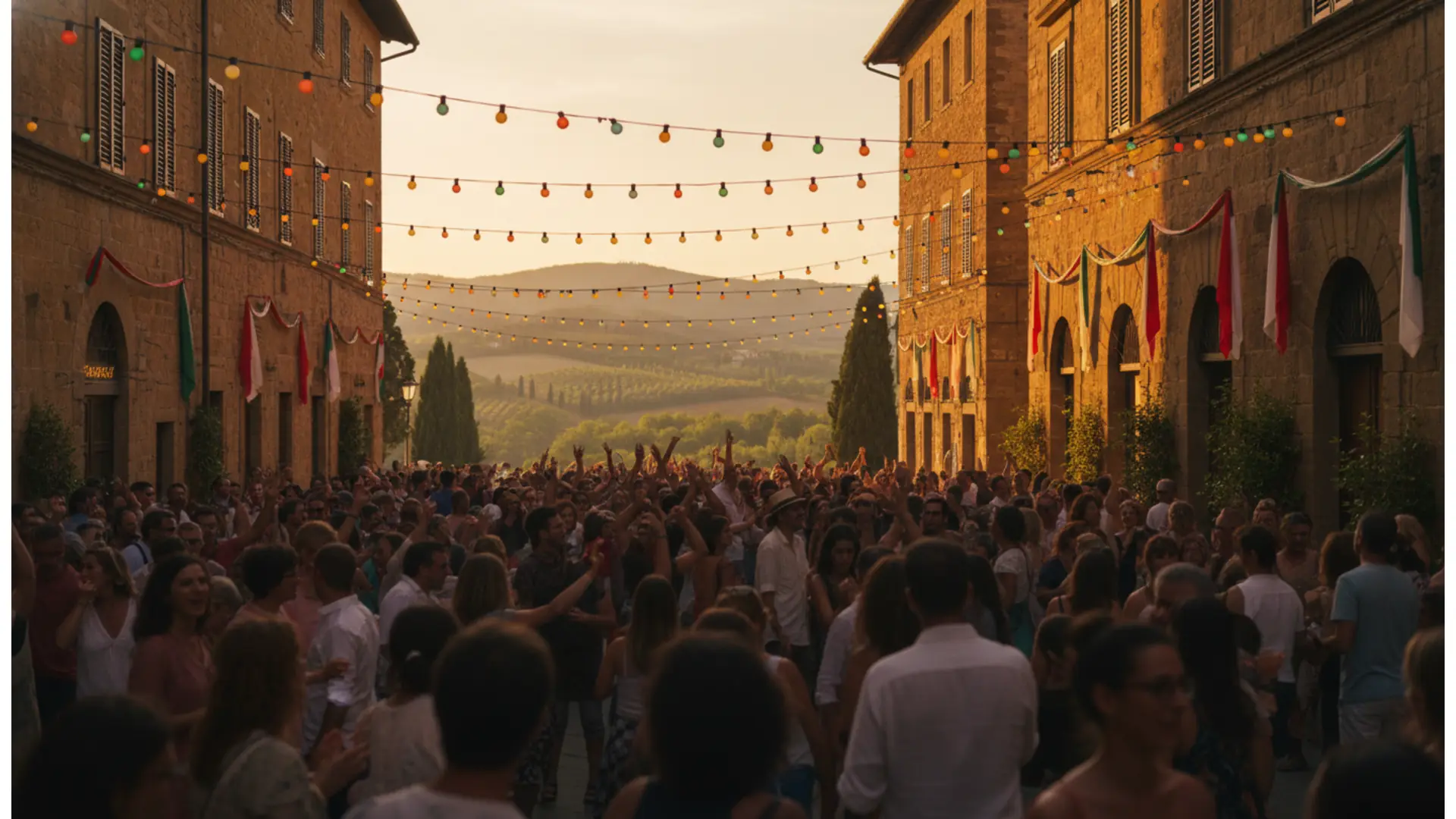
The Madonna di Acquaviva Festival is one of the most beloved and characteristic traditions of lower Salento. It is celebrated in Marittima, a tiny and charming hamlet in the Municipality of Diso, in the province of Lecce—a village perched on a promontory just a stone's throw from the Adriatic coast, rich in ancient palaces and characteristic alleys. The festival combines popular devotion with one of the most beautiful natural settings in the area: Cala dell'Acquaviva, an inlet that owes its name to the numerous freshwater springs that emerge among the rocks, with its clear, cobalt-hued waters.
The legend of the Madonna of Constantinople
The cult is rooted in a legend deeply felt by the community. It is said that around 1600, the parish priest of Marittima, Father Domenico Coluccia, saw a bright glow near the woods and, together with the faithful, discovered a stone slab bearing the image of the Madonna and Child. A votive shrine was built to house the image, followed by a chapel for public devotion. Tradition holds that the stone mysteriously returned to the place of its discovery three times: interpreting this as divine will, the community built the Sanctuary of Santa Maria di Costantinopoli right there, part of an ancient Franciscan convent, which still houses the stone fresco today.
The sea procession
The most spectacular and defining element of the festival is the sea procession. After the solemn mass, the image of the Virgin is placed on a boat and carried along the coast from Marina di Marittima to the evocative Cala dell'Acquaviva, in a procession of boats accompanying the Madonna amidst prayers and hymns. Upon returning, the faithful participate in an evening candlelight procession that brings the icon back to its sanctuary, while traditional pizzica salentina music and dance enliven the village. The day concludes with a fireworks display over the sea.
In the heart of the Adriatic Salento
Marittima and Cala dell'Acquaviva are located within the Costa Otranto-Santa Maria di Leuca and Bosco di Tricase Regional Natural Park, not far from Castro and Otranto, in one of the wildest and most fascinating stretches of the Apulian coast. Participating in the Madonna di Acquaviva Festival means experiencing an authentic Salento tradition, where popular faith intertwines with the landscape, the sea, and the music of the Salento land.
Madonna di Acquaviva — edition 2026
Official dates and the program for the 2026 edition of the Madonna di Acquaviva Festival in Marittima, a hamlet of Diso (LE), have not yet been published. The festival follows a consolidated tradition linked to the cult of the Madonna of Constantinople, with the sea procession towards Cala dell'Acquaviva, the evening candlelight procession, the music and dance of the pizzica salentina, and fireworks. The updated calendar will be communicated by the Marittima parish and the festival committee closer to the event.
Practical information — Madonna di Acquaviva
Where it takes place
The festival is held in Marittima, a hamlet of Diso (LE), between the historic center of the village, the Sanctuary of Santa Maria di Costantinopoli, and Cala dell'Acquaviva, on the Adriatic coast of lower Salento.
How to get there
Marittima di Diso can be reached by car via the SS 275 towards Capo di Leuca, taking the exit for Diso and Marittima. The nearest train stations are those of the Ferriere Sud Est in the Maglie and Poggiardo area. During the festival days, it is recommended to park in the village and walk down to the marina.
Admission
Participation in the religious celebrations and the sea procession is free and open to all.
Tips
Cala dell'Acquaviva is suitable for swimming and has facilities: you can combine the festival with a day at the beach. Wear comfortable shoes for the village alleys and the path leading down to the cove.
Festival-goer photos
No photos yet. Share yours!
Share your photos
5 photos max, 5 MB per photo (JPG, PNG, WebP)
Noticed an error or missing information?
Help us keep this listing up to date. Every proposal is verified by our team before publication.
Festival-goer reviews
No rating yet — be the first!
No comments yet. Be the first!
Were you there?
Share your experience with the community.
Published by Valentin Contard, festival listings writer. Reviewed, corrected and approved by Christophe Contard, editor-in-chief. .
Where does it take place — Madonna di Acquaviva
Santuario di Santa Maria di Costantinopoli e Cala dell'Acquaviva, Marittima