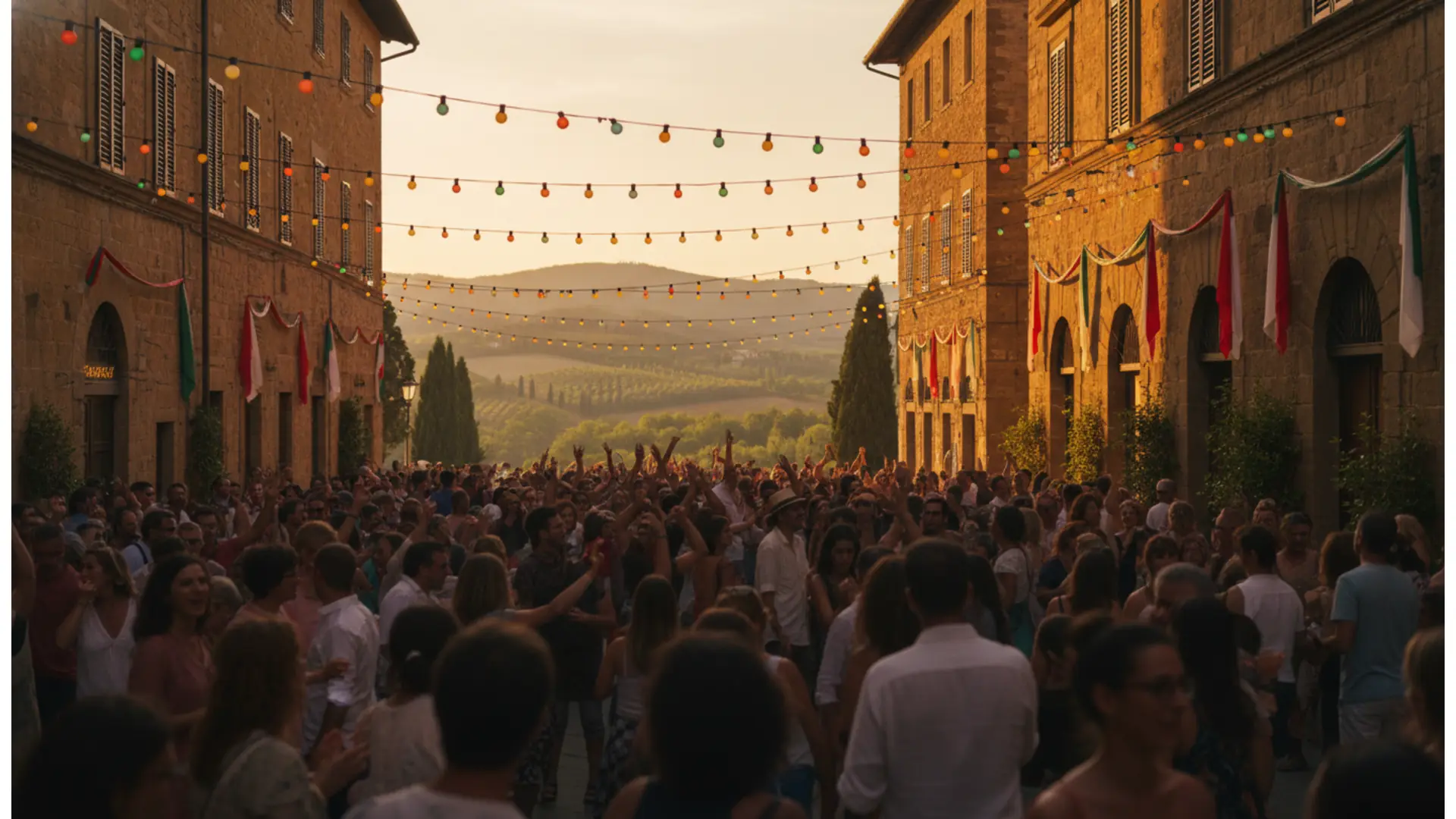
Madonna delle Grazie Festival in Pollica
Devotion, «cente» votive offerings, and fireworks in this Cilento village, every July 2nd
About Madonna delle Grazie
A centuries-old festival in the heart of Cilento
On July 2nd, the Church celebrates the Madonna delle Grazie, and in Pollica, a town in the province of Salerno, Campania, this date marks the most anticipated moment of the year. Marian devotion linked to this feast has Franciscan roots and spread throughout the Cilento region, where numerous towns celebrate it; in Pollica, however, the festival has developed its own unique character over the centuries, defined by rituals, sounds, and gestures passed down through generations.
The Santa Maria delle Grazie Convent
The heart of the celebration is the Franciscan convent of Santa Maria delle Grazie, founded in the early 17th century by the Capano princes and completed in 1611. Inside, one can admire paintings attributed to Nicola Malinconico, an 18th-century wooden choir behind the altar, a coffered ceiling by Giuseppe Marrocco da Celso, and above all, the statue of the Madonna delle Grazie, housed in a niche framed by elegant polychrome stuccoes by Pietro Sernicola. It is from this church that the procession departs each year toward the village.
The «cente», the most iconic symbol
The most distinctive ritual involves the «cente»: decorated votive structures carried in pilgrimage by the faithful, accompanied by the brass band. They depart from Piazza della Cortiglia and ascend to the church of the Madonna delle Grazie in a procession that unites local families, returning emigrants, and devotees from neighboring towns. It is an ancient gesture of thanksgiving, common to many Cilento communities, but one that retains a particularly deep level of participation in Pollica.
The rhythm of the day
The festival is not limited to July 2nd: it begins much earlier with the solemn novena that opens the days of preparation, followed by a day structured around fixed appointments.
- The dawn greeting to Mary, while the village is still silent
- The arrival of the brass band and their traditional tour through the historic center
- Morning masses, including those dedicated to the benefactors, the committee, and the festival volunteers
- The pilgrimage of the «cente» and the solemn mass, followed by the first part of the procession
- The Holy Rosary and evening mass in the parish church, with the second part of the procession
- The final fireworks display over the village
Devotion and secular festivities
Alongside the religious rites, overseen by the local confraternity and animated by the parish choir, the secular side of the festivities takes place: theatrical performances, comedy and music nights in the square, illuminations, and market stalls. The organization relies heavily on volunteers: the Pro Loco Pollica promotes fundraising evenings every year featuring traditional Cilento dishes, with all proceeds going toward the festival costs.
Pollica, between Monte Stella and the sea
The ancient village of Pollica clings to the slopes of Monte Stella at an altitude of about 370 meters, dominated by the Capano princes' castle and overlooking a stretch of coast that includes the seaside hamlets of Acciaroli and Pioppi, the latter considered one of the birthplaces of the Mediterranean diet. The entire territory is part of the Cilento, Vallo di Diano and Alburni National Park, a UNESCO World Heritage site: visitors arriving for the festival will find an authentic popular ritual, an intact historic center, and the sea just a few kilometers away.
Why it is worth visiting
This is a festival not created for tourism, which is precisely why it retains such rare value: you are witnessing a lived ritual, not a reenactment. We recommend arriving in the village in the morning, following the path of the «cente», and staying until the evening, when the procession returns and fireworks light up the hill. From that moment, the Pollica summer officially begins, with a calendar of food festivals, concerts, and evenings that will animate the village and the seaside areas until September.
Madonna delle Grazie — edition 2026
July 2nd, 2026 in Pollica
In 2026, the community of Pollica, in the province of Salerno, renewed its appointment with the Madonna delle Grazie on the traditional date of July 2nd, which fell on a Thursday. The organizational machine was set in motion well in advance: the solemn novena began on June 23rd in the parish church, while on June 28th, the Pro Loco hosted a convivial self-financing evening with Cilento cuisine and music to support the festival costs.
Rituals and tradition
As every year, the center of the ritual was the pilgrimage of the «cente», which traveled from Piazza della Cortiglia accompanied by the brass band to the church of the Madonna delle Grazie, followed by the solemn mass and the procession, split between morning and evening, with a fireworks display closing the day. The festival marks the beginning of the Pollica summer, which continues with events in the village and the seaside hamlets of Acciaroli and Pioppi.
Programme Madonna delle Grazie 2026
Preparation
- June 23, 2026 — Start of the solemn novena in preparation for the festival
- Sunday, June 28, 2026 — Fundraising evening organized by Pro Loco Pollica, featuring swordfish paccheri, sausage sandwiches with roasted eggplant, hot 'graffe' (donuts), draft beer, and red wine; all proceeds were donated to the festivities
Thursday, July 2nd — Solemnity of the Madonna delle Grazie
The day followed the traditional established schedule of the Pollica festival:
- Dawn greeting to Mary
- Arrival of the brass band and traditional tour through the village streets
- Morning masses, including the one for benefactors, the committee, and volunteers
- Pilgrimage of the traditional «cente» from Piazza della Cortiglia to the church of the Madonna delle Grazie, accompanied by the band
- Solemn mass and the first part of the procession
- Holy Rosary and evening mass in the parish church
- Second part of the procession and, in conclusion, a fireworks display
Exact times and the complete secular program (theatrical performances, musical and comedy evenings in the square) are announced locally by the festival committee and the parish in the days immediately preceding the event.
Highlights Madonna delle Grazie 2026
- The pilgrimage of the «cente» from Piazza della Cortiglia to the 17th-century convent
- The brass band parading through the village from the early morning hours
- The solemn mass and the two-part procession, morning and evening
- The final fireworks display over the Pollica hill
- The Pro Loco gastronomic fundraising evening on June 28th
Prices Madonna delle Grazie 2026
Practical information — Madonna delle Grazie
How to get there
By car: Take the Vallo della Lucania-Castelnuovo Cilento exit on the SS18, then follow provincial roads toward Pollica (approx. 25 km). By train: Vallo della Lucania-Castelnuovo station, connected by local bus lines; in summer, Acciaroli and Pioppi are also reachable by sea via coastal ferry services. Nearest airport: Salerno-Costa d'Amalfi.
Parking and access
The historic center is pedestrianized during the festival days: it is best to leave your car in the parking areas at the entrance to the village and continue on foot. The path to the convent is uphill with cobblestone sections: comfortable shoes are recommended.
Costs
Participation in religious rites, the procession, and the fireworks display is free. Only the optional gastronomic fundraising evenings organized by the Pro Loco require payment.
Where to stay and eat
Accommodation is available throughout the village of Pollica and the coastal hamlets of Acciaroli and Pioppi, including B&Bs, farm stays, and seaside properties. On the menu: Cilento dishes such as 'menaica' anchovies, handmade fusilli, white figs, extra virgin olive oil, and local wines.
Tips
As this is a deeply felt patronal feast, respectful attire is requested during celebrations and the procession. For final schedules, it is advisable to check the notices posted by the parish and the festival committee in the days leading up to the event.
Festival-goer photos
No photos yet. Share yours!
Share your photos
5 photos max, 5 MB per photo (JPG, PNG, WebP)
Noticed an error or missing information?
Help us keep this listing up to date. Every proposal is verified by our team before publication.
Festival-goer reviews
No rating yet — be the first!
No comments yet. Be the first!
Were you there?
Share your experience with the community.
Published by Valentin Contard, festival listings writer. Reviewed, corrected and approved by Christophe Contard, editor-in-chief. .
Where does it take place — Madonna delle Grazie
Centro storico di Pollica, chiesa parrocchiale di San Nicola di Bari e convento di Santa Maria delle Grazie
Piazza della Cortiglia, 84068 Pollica