La Zeza of Cesinali – Carnival
The carnival-theatre of Irpinia, Intangible Heritage of the Campania Region
About La Zeza of Cesinali
La Zeza of Cesinali: when carnival becomes theatre
In the heart of the Sabato Valley, just a few kilometers from Avellino, the Municipality of Cesinali preserves one of the most vibrant carnival traditions in Campania: La Zeza, officially recognized as Intangible Heritage of the Campania Region. This is no mere masquerade parade, but a genuine piece of popular theatre, acted and sung, that spills out from homes into the squares, courtyards, and streets of the town throughout the Carnival season.
An ancient popular comedy
La Zeza has its roots in 17th-century Neapolitan theatre and the Commedia dell'Arte. The plot revolves around the domestic conflict between Pulcinella, a jealous and suspicious father, and his wife Zeza, who instead encourages the courtship of their daughter — known in the Cesinali version as Porzia — by Don Zenobbio, a student from Calabria. Surrounding the protagonists are the capozeza, with his wooden sword and broken French, Don Bartolo, the flower girl Cosetta, and other grotesque figures, all amidst bawdy jokes, songs, dances, and final quadrilles.
In the second half of the 19th century, the performance was banned from the streets due to its allegedly licentious allusions, finding refuge in popular theatres and the countryside: this is how La Zeza became deeply rooted in the towns of Irpinia. One rule, however, has never changed and remains to this day: all roles, including female parts, are played by men, just as it was when women were not permitted to perform in public.
A traveling carnival in the Sabato Valley
La Zeza of Cesinali does not remain within municipal borders: the troupe is itinerant, bringing its show to neighboring towns in the Province of Avellino during the Carnival, acting as a true cultural glue between neighboring communities. In recent years, stops have included:
- Atripalda, with participation in the Atripalda Carnival;
- Avellino, with a parade along Corso Vittorio Emanuele;
- Altavilla Irpina and San Michele di Serino, as guests of their respective carnivals;
- Aiello del Sabato, a stop that kicks off Shrove Tuesday;
- Cesinali, with performances in front of local businesses and shops.
The final Zezone around the bonfire
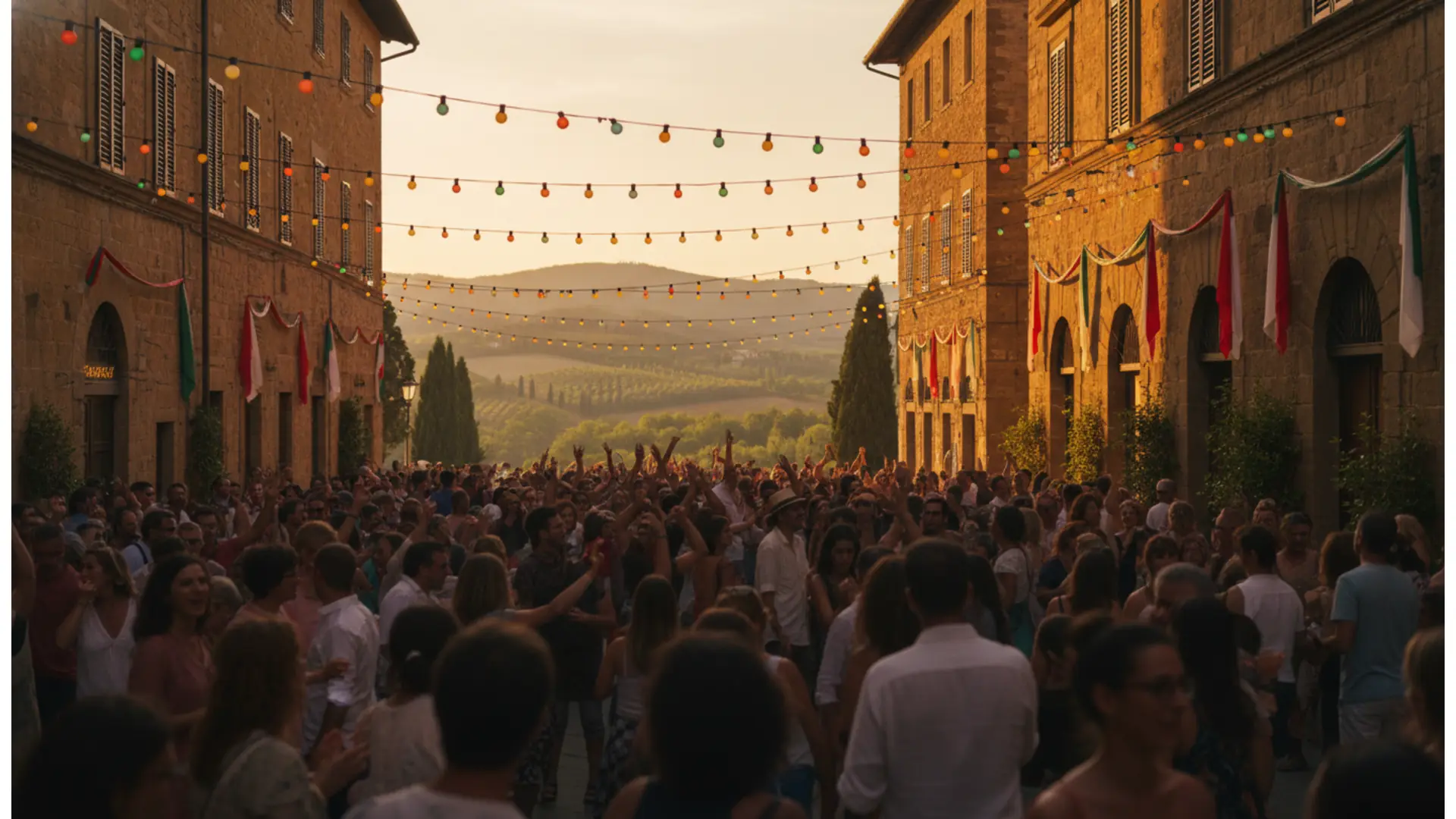
The most anticipated moment is the Zezone, the concluding performance on Shrove Tuesday in Piazza Enrico Cocchia, in the historic center. The town gathers around the focarone, the great carnival bonfire, where the troupe gives its final and longest performance of the season, with the audience singing and dancing alongside the actors. In the afternoon, before the Zezone, there is also space for the little ones with the children's Zeza gathering in Piazza Saverio Urciuoli, featuring entertainment and mascots.
Carnival flavors
The festival is also a gastronomic event, with the featured dish changing from year to year according to Irpinian peasant tradition: the Gnocchi and Cotechino Sausage in Sauce Festival in 2026, and the Grilled Pork Festival in 2025. In both cases, local wine is offered to those present, in a convivial atmosphere that continues into the evening with DJ music.
Who keeps the tradition alive
The event is promoted by the La Zeza of Cesinali association together with the Pro Loco Cesinali and the Municipality of Cesinali, with the support of the Campania Region. It is a work of transmission that involves different generations: the youngest learn the verses and movements from the elders of the troupe, ensuring the continuity of an oral repertoire.
Why it is worth the trip
The Zeze of Irpinia — in Cesinali, Mercogliano, Bellizzi, and Montemiletto — are one of the rare cases where the Italian Carnival has preserved its original theatrical form instead of turning into a parade of allegorical floats. Attending the Zezone of Cesinali means seeing a piece of Campanian popular culture up close, still practiced by the community that created it: dialect, music, satire, and shared food, without any tourist filters.
La Zeza of Cesinali — edition 2026
The 2026 edition of the La Zeza of Cesinali officially opened the Irpinian Carnival on Sunday, February 8, with the traditional parade and the first performances in the town. In the following days, the troupe moved to the neighboring towns of the Province of Avellino, bringing the comedy of Pulcinella, Zeza, and Porzia to the Atripalda Carnival, along Corso Vittorio Emanuele in Avellino, and to Altavilla Irpina.
Shrove Tuesday, February 17, concentrated the most intense moments: the stop at the Aiello Carnival, the gathering of the Zeza with children in Piazza Saverio Urciuoli with entertainment and mascots from the Un Sorriso per la Vita association, performances at local venues, and finally the final Zezone in Piazza Enrico Cocchia, around the bonfire. The evening concluded with the Gnocchi and Cotechino Sausage in Sauce Festival, local wine offered to all, and music by Vinyl Gianpy DJ.
The initiative was promoted by the La Zeza of Cesinali association with the Pro Loco Cesinali, the Municipality of Cesinali, and the Campania Region, as part of the recognition of the Zeza as Intangible Heritage of the Campania Region.
Programme La Zeza of Cesinali 2026
Sunday, February 8, 2026 — opening
- 9:30 AM — official opening of the Carnival with the traditional parade through the streets of Cesinali
- 10:00 AM — performance at Dolce Angolo
- 11:00 AM — performance at Andy Bar
Saturday, February 14, 2026 — Atripalda
- 3:00 PM — parade and performance at the Atripalda Carnival
Sunday, February 15, 2026 — Avellino and Altavilla Irpina
- 10:30 AM — parade along Corso Vittorio Emanuele in Avellino
- 5:00 PM — parade and performance at the Altavilla Irpina Carnival
Tuesday, February 17, 2026 — final Zezone
- 4:00 PM — parade at the Aiello Carnival, in Aiello del Sabato
- 5:00 PM — Piazza Saverio Urciuoli, Zeza gathering with children, entertainment, and mascots of Un Sorriso per la Vita
- 6:00 PM — performances at local venues (Andy Bar, La Gondola Gelateria)
- 7:30 PM — Piazza Enrico Cocchia: final Zezone around the bonfire, with the Gnocchi and Cotechino Sausage in Sauce Festival and local wine offered
- to follow — musical entertainment with Vinyl Gianpy DJ
Highlights La Zeza of Cesinali 2026
- Final Zezone on Shrove Tuesday in Piazza Enrico Cocchia, around the bonfire
- Gnocchi and Cotechino Sausage in Sauce Festival with local wine offered
- Traveling carnival: Cesinali, Atripalda, Avellino, Altavilla Irpina, Aiello del Sabato
- Children's Zeza gathering in Piazza Saverio Urciuoli with entertainment and mascots
- Closing DJ set with Vinyl Gianpy DJ
- Performance recognized as Intangible Heritage of the Campania Region
Prices La Zeza of Cesinali 2026
Practical information — La Zeza of Cesinali
Where it takes place
The heart of the festival is the historic center of Cesinali (AV), in particular Piazza Enrico Cocchia for the final Zezone and Piazza Saverio Urciuoli for the children's gathering. Other performances are held in Atripalda, Avellino, Altavilla Irpina, and Aiello del Sabato.
How to get there
By car: take the Avellino Est exit from the Avellino–Salerno motorway junction, then the SS 88 and provincial roads towards the Sabato Valley; Cesinali is about 6 km from Avellino. By train: Avellino station, then local bus to the Sabato Valley. By plane: Naples Capodichino airport, about 60 km away.
Costs
Parades and performances are free to attend. During the final Zezone, local wine is offered to those present.
Tips
The squares in the historic center fill up quickly: it is advisable to arrive a little early and park outside the center. The February weather in Irpinia is cold and damp, especially in the evening outdoors: warm clothing is recommended.
Information
Municipality of Cesinali, Piazza Municipio 1 — tel. +39 0825 666125. Updates on the La Zeza of Cesinali association's Facebook page.
Festival-goer photos
No photos yet. Share yours!
Share your photos
5 photos max, 5 MB per photo (JPG, PNG, WebP)
Noticed an error or missing information?
Help us keep this listing up to date. Every proposal is verified by our team before publication.
Festival-goer reviews
No rating yet — be the first!
No comments yet. Be the first!
Were you there?
Share your experience with the community.
Published by Valentin Contard, festival listings writer. Reviewed, corrected and approved by Christophe Contard, editor-in-chief. .
Where does it take place — La Zeza of Cesinali
Piazza Enrico Cocchia e centro storico
Piazza Enrico Cocchia, 83020 Cesinali