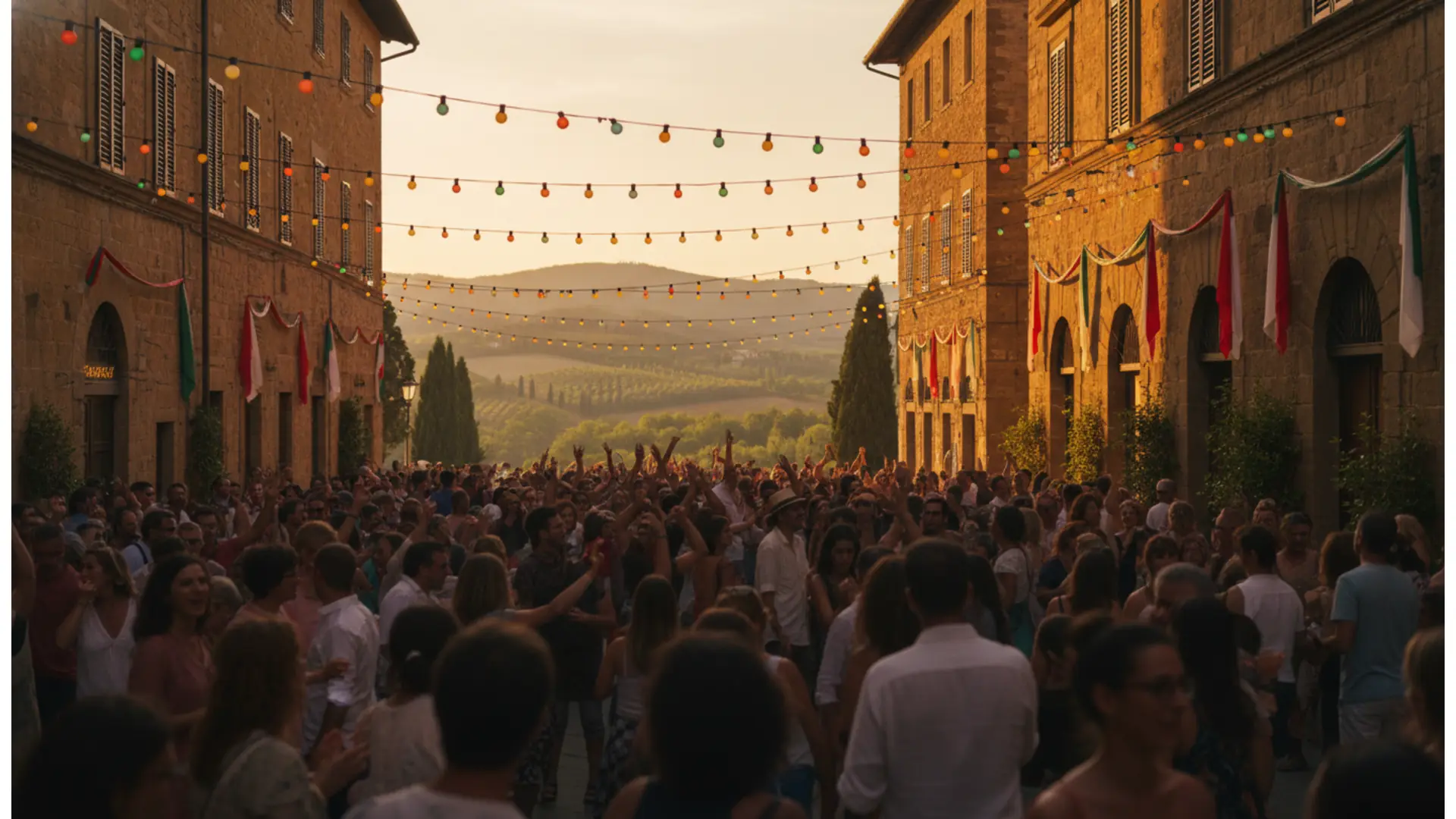
Historic Carnival of Gallipoli
Papier-mâché floats, masks, and folk rituals in the beautiful city of Salento
About Gallipoli Carnival
One of the historic carnivals of Salento
The Historic Carnival of Gallipoli is among the most deeply rooted carnival celebrations in Puglia and the entire Salento region. Originating in the 1940s, the carnival of this Ionian city, located in the province of Lecce, has grown into a defining identity event for the entire community, drawing thousands of visitors along Corso Roma and through the streets of the historic center overlooking the sea.
Papier-mâché floats and master craftsmen
The heart of the festival lies in the allegorical papier-mâché floats, divided into first and second categories and crafted over many months of hard work by Gallipoli's master artisans. These giants of paper and color parade alongside competing costumed groups, bringing ironic and satirical messages about current events and society to the streets. The processions are traditionally opened by flag-wavers and musicians, who accompany the entrance of the carnival sovereigns, Re Candallinu and Regina Mendula Riccia.
Lu Titoru, the symbolic mask
The most characteristic element of the Gallipoli carnival is the figure of Lu Titoru (Teodoro), the city's historic mask. Legend tells of a young soldier who, having returned to Gallipoli to celebrate the carnival, died of suffocation after eating too many meatballs before the Lenten fast. The representation of Lu Titoru, organized by the Parish of San Lazzaro, culminates on Shrove Tuesday with the famous funeral procession: the funeral cart travels through the historic center to Piazza Duomo, in a moment of public and collective mourning that marks the end of the carnival and the beginning of Lent.
An identity-defining event for the Municipality of Gallipoli
The event is organized by the Municipality of Gallipoli, which entrusts its production to the company Carta Bianca srl, with the patronage of Puglia Culture. The parades are concentrated on the Sundays of the carnival and on Shrove Tuesday, transforming the old town into an open-air stage filled with confetti, music, and masks. Today, the carnival represents one of the main winter events on the Ionian coast of Salento, an opportunity to discover Gallipoli and its folk traditions outside the summer season.
Why experience the carnival in Gallipoli
- Impressive allegorical papier-mâché floats, the result of the art of local master craftsmen.
- The historic mask of Lu Titoru and the unique ritual of the Shrove Tuesday funeral procession.
- A picturesque historic center overlooking the Ionian Sea as the backdrop for the parades.
- A family-friendly carnival featuring flag-wavers, costumed groups, and music.
Gallipoli Carnival — edition 2026
The Historic Carnival of Gallipoli 2026 spanned several days between February 8 and 17. The opening ceremony was held on Sunday, February 8, at 12:00 PM in the historic center, with the reading of the Edict and the greeting of the sovereigns Re Candallinu and Regina Mendula Riccia. In the afternoon, at 3:00 PM, the first major parade of allegorical papier-mâché floats, of both first and second categories, and costumed groups began on Corso Roma, opened by flag-wavers and musicians.
The second parade was held on Sunday, February 15, also at 3:00 PM along Corso Roma, featuring the procession of the Sovereigns and the performance of the historic mask of Lu Titoru, organized by the Parish of San Lazzaro. The closing took place on Shrove Tuesday, February 17: at 4:30 PM, the funeral procession of Lu Titoru's cart departed from Via Raimondo Pasca, crossing the historic center to Piazza Duomo for the moment of public mourning that marks the end of the carnival.
The organization of the event was entrusted by the Municipality of Gallipoli to the company Carta Bianca srl, with the free patronage of Puglia Culture.
Programme Gallipoli Carnival 2026
- Sunday, February 8, 12:00 PM — Opening in the historic center: reading of the Edict and greeting of the Sovereigns.
- Sunday, February 8, 3:00 PM — First parade of allegorical floats and costumed groups on Corso Roma.
- Sunday, February 15, 3:00 PM — Second parade on Corso Roma and performance of Lu Titoru.
- Tuesday, February 17, 4:30 PM — Funeral procession of Lu Titoru from Via Raimondo Pasca to Piazza Duomo.
Highlights Gallipoli Carnival 2026
Prices Gallipoli Carnival 2026
Practical information — Gallipoli Carnival
How to get there
Gallipoli can be reached by car via the Lecce-Gallipoli expressway. The Gallipoli train station is served by Ferrovie del Sud Est with connections from Lecce. The nearest airport is Brindisi airport is Brindisi-Salento Airport.
Where it takes place
The parades are held along Corso Roma and in the historic center of Gallipoli. The funeral procession of Lu Titoru concludes in Piazza Duomo.
Tips
The main parades take place on the afternoons of the carnival Sundays; it is advisable to arrive early to find a good spot along the route. Many events are free to access.
Festival-goer photos
No photos yet. Share yours!
Share your photos
5 photos max, 5 MB per photo (JPG, PNG, WebP)
Noticed an error or missing information?
Help us keep this listing up to date. Every proposal is verified by our team before publication.
Festival-goer reviews
No rating yet — be the first!
No comments yet. Be the first!
Were you there?
Share your experience with the community.
Published by Valentin Contard, festival listings writer. Reviewed, corrected and approved by Christophe Contard, editor-in-chief. .
Where does it take place — Gallipoli Carnival
Corso Roma e centro storico