Cappeddha Fair – Salento Pottery Craft Market
The historic terracotta and Salento pottery fair in Taviano
About Cappeddha Fair
The Cappeddha Fair in Taviano
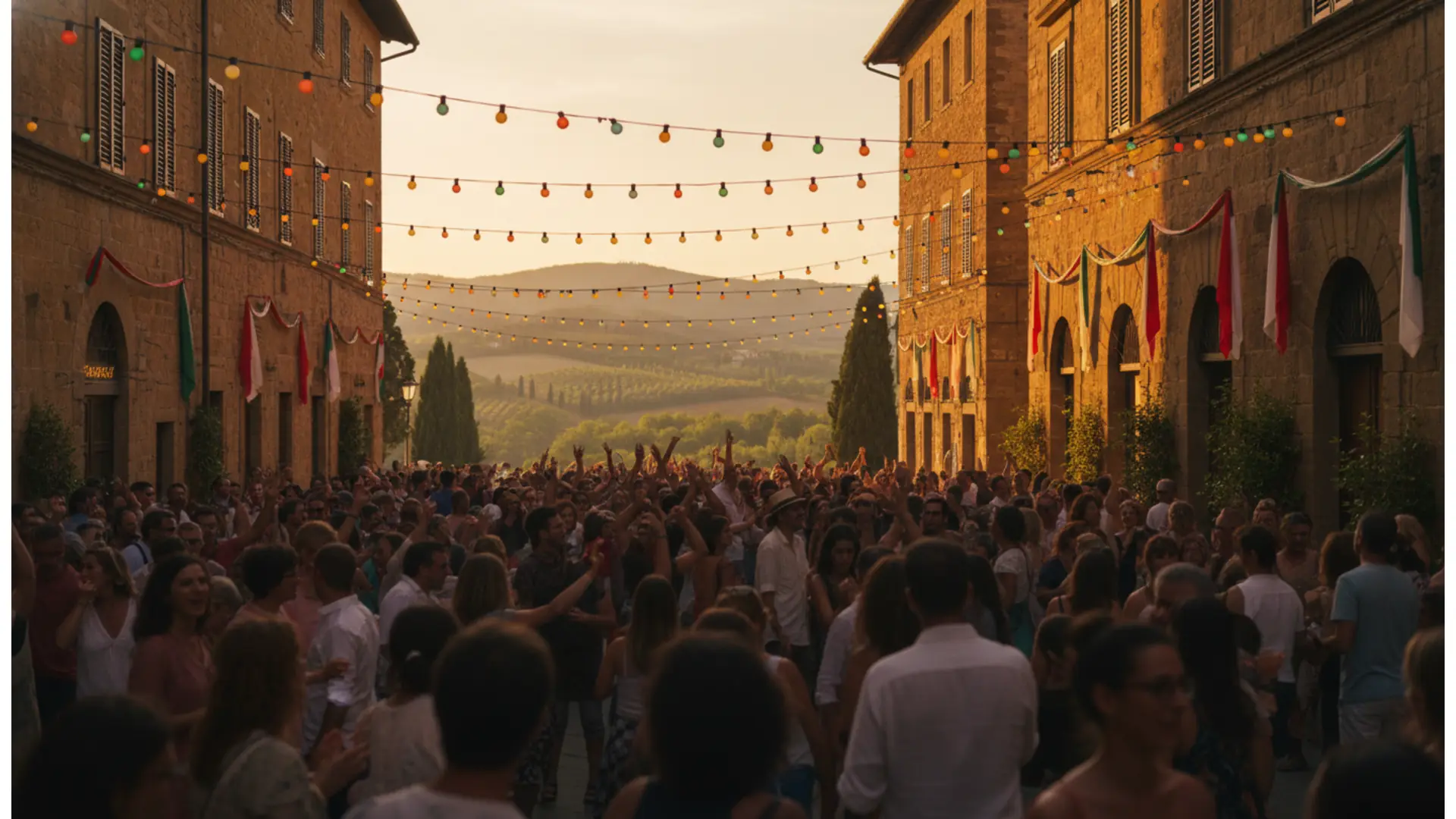
Every year, at the beginning of September, the historic center of Taviano, in the province of Lecce, comes alive with the Cappeddha Fair, the historic market exhibition dedicated to Salento pottery craftsmanship. For two days, the village streets – Corso Vittorio Emanuele II, Via Immacolata, and Piazza San Martino – turn into a true open-air museum, where the skilled hands of potters shape terracotta according to a millenary tradition.
The origins: faith, commerce, and the Madonna delle Grazie
The fair was officially established by a decree of the King of Naples Ferdinand II of Bourbon on November 17, 1831, but its roots reach back to the Middle Ages, around the 14th century, when the event represented a union of faith and commerce: the faithful flocked for the religious celebration while artisans and merchants enlivened the market. The name derives from the Cappeddha (or Cappeddhuzza), the small, now deconsecrated chapel of the Madonna delle Grazie, affectionately named so by the people of Taviano, located along Corso Vittorio Emanuele II. To this day, the fair takes place during the feast of the Madonna delle Grazie.
Salento pottery art
The heart of the event is pottery craftsmanship: the term "figulo" refers to the artisan capable of shaping clay with mastery, bringing to life objects for daily use and decorative pieces of great artistic value. In the past, the Cappeddha was the market where people stocked up on terracotta utensils essential for life at the time – pots, pans, jugs, bowls, mugs, and plates. Children especially awaited the fair for the whistles, which became the symbol of the event, along with coppi, miniature reproductions of household objects. This ceramic tradition has ancient origins: the Messapians, between the 4th and 3rd centuries BC, perfected the working techniques by producing the famous trozzella, the two-handled amphora.
An open-air museum
During the fair, the streets of the center host exhibitions of pottery, decorative whistles, and Messapian amphorae, accompanied by artisan workshops, photographic and painting exhibitions, and visits to the Permanent Museum of Peasant Civilization. There is no shortage of food stands with typical Salento dishes and the traditional mustazzolo, as well as musical moments that accompany the evenings, from the band concert of the City of Taviano to folk music performances.
Taviano and Salento
Located in southern Salento, a few kilometers from the Ionian coast, Taviano is known as the "city of flowers" for its floricultural vocation. The Cappeddha Fair represents one of the identity-defining events for the Municipality of Taviano and the entire Puglia region, an opportunity to rediscover ancient crafts, traditional ceramics, and the community spirit that has linked the town to its most beloved fair for centuries.
Cappeddha Fair — edition 2026
The Cappeddha Fair 2026 returns to Taviano (LE) on September 7 and 8, 2026, for the feast of the Madonna delle Grazie. As per tradition, the historic center will host the market exhibition of Salento pottery, with ceramics, whistles, workshops, and food stands. The detailed program for the 2026 edition has not yet been published: organizers will soon announce the scheduled cultural and musical events.
Prices Cappeddha Fair 2026
Practical information — Cappeddha Fair
Where
Historic center of Taviano (LE): Corso Vittorio Emanuele II, Via Immacolata, and Piazza San Martino.
How to get there
By car: Taviano can be reached via the SS274 Gallipoli-Leuca. By train: Casarano or Gallipoli station on the Ferrovie del Sud Est lines, with a bus connection. Nearest airport: Brindisi-Salento.
Admission
Access to the public areas of the fair is free.
When
The fair is traditionally held at the beginning of September, on the evening of the first day and the morning of the second, coinciding with the feast of the Madonna delle Grazie.
Festival-goer photos
No photos yet. Share yours!
Share your photos
5 photos max, 5 MB per photo (JPG, PNG, WebP)
Noticed an error or missing information?
Help us keep this listing up to date. Every proposal is verified by our team before publication.
Festival-goer reviews
No rating yet — be the first!
No comments yet. Be the first!
Were you there?
Share your experience with the community.
Published by Valentin Contard, festival listings writer. Reviewed, corrected and approved by Christophe Contard, editor-in-chief. .
Where does it take place — Cappeddha Fair
Centro storico – Corso Vittorio Emanuele II e Piazza San Martino
Corso Vittorio Emanuele II, 73057 Taviano