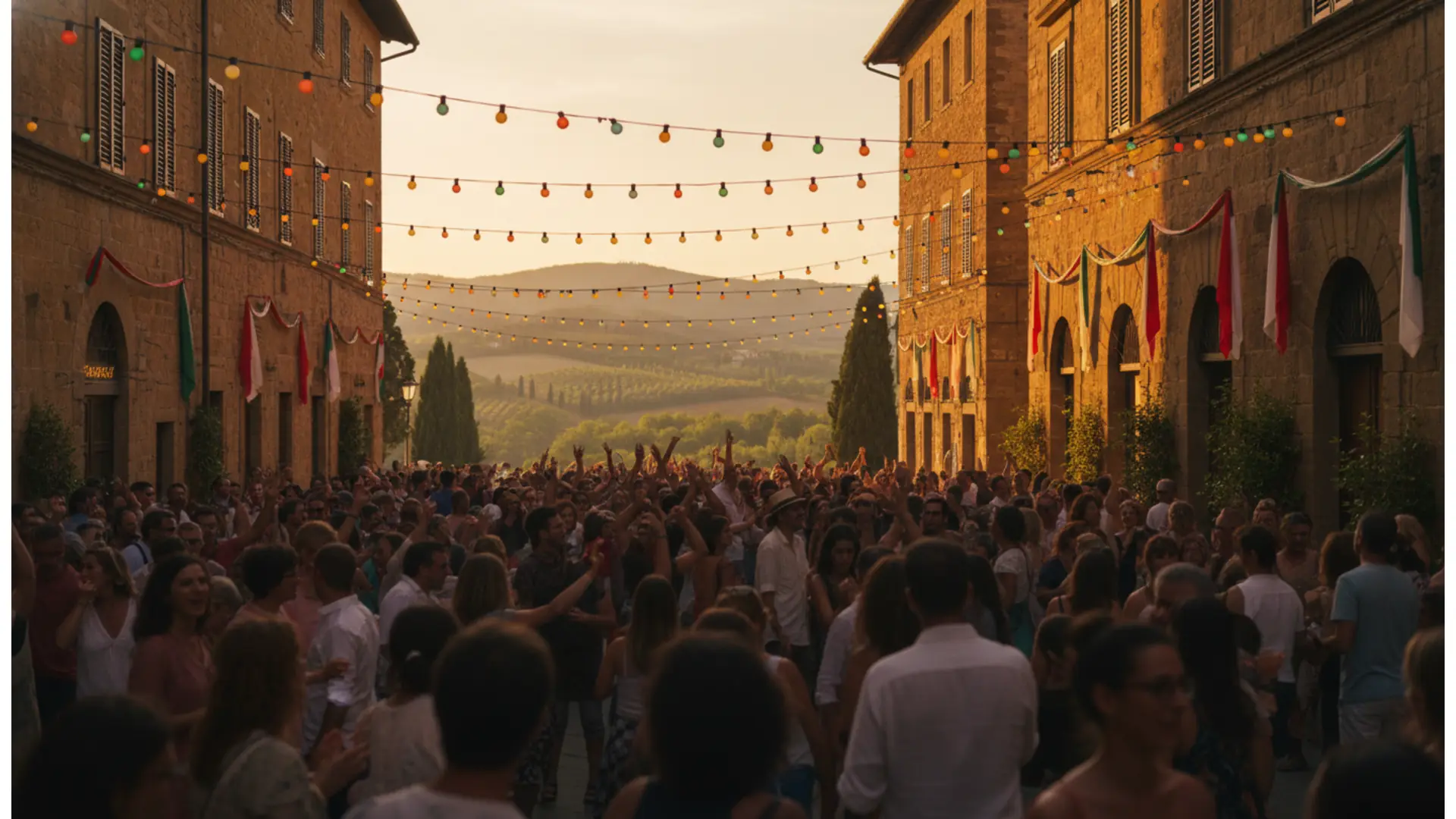
Feast of Saint Anthony of Padua
Cineto Romano's centuries-old devotion to the Saint of Padua, featuring fireworks, processions, and the Festarolo ritual
About Feast of Saint Anthony
A devotion born from the plague
In the small municipality of Cineto Romano, perched on a spur of Monte Peschiero in the Sabine Mountains overlooking the Aniene Valley, the Feast of Saint Anthony of Padua is celebrated every year on June 13th. The cult of the Franciscan Saint, born in Lisbon in 1195 and who died in Padua at just thirty-six, has its roots here in the terrible plague of 1635: during that crisis, the community entrusted itself to Saint Anthony alongside other protectors invoked against the disease, such as Saint Agatha, Saint Andrew, and Saint Roch. Since then, the devotion has never ceased and continues to mark the calendar of the village, one of the smallest in the Metropolitan City of Rome Capital, in the Lazio region.
The Festarolo ritual
The most poignant moment of the festival is the handing over of the small statue of Saint Anthony. The small image is entrusted year by year to a local family, according to a rotation that empowers the entire community: the designated custodian, known as the Festarolo, keeps it in their home for two years. "It is a simple gesture, yet full of responsibility toward the entire community," as recounted by the parish. After a period during which the statue remained in the church, the tradition of keeping it in private homes has been renewed, bringing the Saint back into the heart of the daily life of the local people.
Two days of celebrations
The festival takes place over the weekend. On Saturday, the eve of the anniversary, fireworks and festive bells announce the start of the celebrations; during the evening Holy Mass, the solemn handover of the statue to the new Festarolo takes place. Sunday is dedicated to the Eucharistic celebration and the solemn procession, which accompanies the image of the Saint through the streets and houses of the village, bringing his blessing to every corner of the town. The day also includes moments of the parish's communal journey, such as the ritual linked to the Symbol of the Creed for those who have completed the stages of their faith journey.
The village of Cineto Romano
Known until 1882 by the name Scarpa, Cineto Romano was born around a powerful baronial castle, a fiefdom first of the Orsini and then of the Borghese families. The historic center, dominated by the bulk of the fortress and the 13th-century Church of Saint John the Baptist — the patron saint of the town — preserves the intimate atmosphere of the villages of the Lazio Apennines. Located about forty kilometers northeast of Rome, the town is an ideal starting point for excursions between the Lucretili Mountains and the Aniene Valley. For a community of just under six hundred inhabitants, the Feast of Saint Anthony represents the identity-defining event that brings together residents and those who have returned for the occasion.
An opportunity to discover the Roman hinterland
Beyond its deep religious significance, the festival is the perfect opportunity to discover an authentic and off-the-beaten-path corner of Lazio, far from mass tourism circuits. Those arriving in Cineto Romano during the Saint Anthony weekend will find a village in celebration, the warmth of the locals, and the chance to breathe in a popular tradition that has remained alive and genuine, passed down from generation to generation for nearly four centuries.
Feast of Saint Anthony — edition 2026
2026 Program
Celebrations opened on Saturday with fireworks and festive bell ringing. During the evening Holy Mass, presided over by Father Salvador Magaña, the small statue of Saint Anthony was handed over to the new Festarolo, Gianluca Colasanti, who will keep it for the next two years, reviving the tradition of keeping it at home after a period spent in the church.
On Sunday, the community gathered for the Holy Mass presided over by Father Alan Ventura, followed by the ritual of the delivery of the Symbol of the Creed for those who completed the "Tiberias" stage of the parish journey. The day concluded with the solemn procession in honor of Saint Anthony through the village streets.
Programme Feast of Saint Anthony 2026
Saturday, June 13
- Fireworks and festive bells
- Evening Holy Mass presided over by Father Salvador Magaña
- Handover of the Saint Anthony statue to the new Festarolo Gianluca Colasanti
Sunday
- Holy Mass presided over by Father Alan Ventura
- Ritual of the delivery of the Symbol of the Creed ("Tiberias" stage)
- Solemn procession in honor of Saint Anthony through the village
Highlights Feast of Saint Anthony 2026
- The handover of the statue to the new Festarolo Gianluca Colasanti
- The fireworks and festive bells on the eve of the feast
- The solemn procession through the historic center
Prices Feast of Saint Anthony 2026
Practical information — Feast of Saint Anthony
How to get there
By car: from Rome, take the A24 Rome-L'Aquila motorway, exit at Vicovaro-Mandela, then follow signs for Cineto Romano along the Aniene Valley (about 40 km from Rome). By train: the nearest station is Mandela-Sambuci on the Rome-Avezzano-Pescara line, from where you can continue by car to the village.
Admission
The religious festival and the procession are free and open to the public.
Contacts
Parrocchia San Giovanni Battista, Via della Curia 4, 00020 Cineto Romano (RM). Phone: +39 0774 010804.
Tips
Wear comfortable shoes to follow the procession along the sloping streets of the historic center. In the surrounding area, you can visit the baronial castle and the nearby Aniene Valley, which is ideal for hiking in the Lucretili Mountains.
Festival-goer photos
No photos yet. Share yours!
Share your photos
5 photos max, 5 MB per photo (JPG, PNG, WebP)
Noticed an error or missing information?
Help us keep this listing up to date. Every proposal is verified by our team before publication.
Festival-goer reviews
No rating yet — be the first!
No comments yet. Be the first!
Were you there?
Share your experience with the community.
Published by Valentin Contard, festival listings writer. Reviewed, corrected and approved by Christophe Contard, editor-in-chief. .
Where does it take place — Feast of Saint Anthony
Chiesa di San Giovanni Battista e centro storico
Via della Curia 4, 00020 Cineto Romano