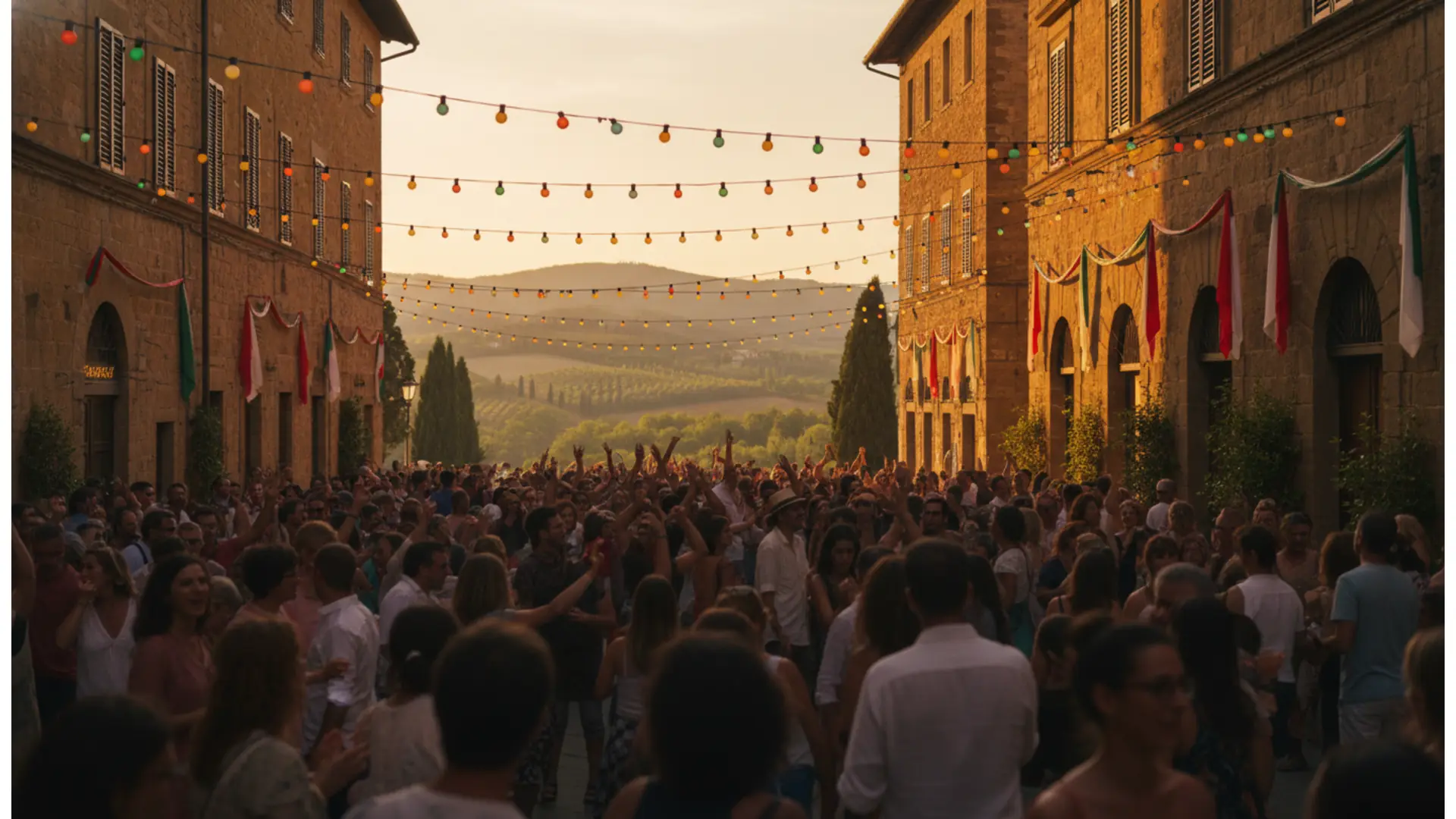
Winter Feast of Saint Potitus the Martyr
The winter patronal feast of Ascoli Satriano in the Monti Dauni
About Saint Potitus the Martyr
The winter patron saint of Ascoli Satriano
Every year, on January 13th and 14th, Ascoli Satriano renews its devotion to its patron saint, Saint Potitus the Martyr, with one of the most deeply felt religious and popular celebrations in the entire province of Foggia. This winter recurrence is distinct and, in many ways, more intimate than the grand summer festival held in August; here, the community of the Monti Dauni gathers in the depths of winter around the figure of the young martyr, protector of the city and the Diocese of Cerignola-Ascoli Satriano.
The novena and the days of the feast
The festivities are preceded by a novena, which marks the days leading up to the feast with the recitation of the Rosary and Holy Mass with sung Vespers in the Co-Cathedral. On the eve of January 13th, the First Solemn Vespers are celebrated, often presided over by the diocesan Bishop, introducing the solemnity of the following day.
The procession and the Pontifical Mass
January 14th, the day of the feast, begins early in the morning with the firing of mortars. The silver bust of the Saint is carried in a solemn procession through the streets of the historic center, accompanied by the town marching band playing traditional tunes. A solemn Pontifical Mass is celebrated in the Co-Cathedral, featuring the evocative kissing of the relic of the Martyr's arm, which has been venerated in Ascoli Satriano for centuries.
The "ciuccio di San Potito" and the fireworks
The most anticipated and characteristic moment arrives in the evening: the lighting of the "ciuccio di San Potito" (the donkey of Saint Potitus), a large papier-mâché donkey silhouette filled with firecrackers and fireworks, which kicks off the pyrotechnic show in the square. It is the most recognizable symbol of the festival, drawing both young and old into a blaze of light that concludes the day of devotion.
Popular traditions and the food of the eve
The festival preserves ancient customs linked to the rural culture of the Monti Dauni. Traditionally, the eve required abstinence from meat, compensated by simple and tasty dishes such as fritters, salt cod, eels, and conger eel. In the past, bonfires were lit at night in the various districts of the city, while the statue of the Saint was assigned for the procession following an auction among the faithful.
Ascoli Satriano and the Monti Dauni
Situated on three hills in the Daunian sub-Apennines, in the province of Foggia, Ascoli Satriano is a village rich in history, from the famous marble Griffins of the Daunian age to the archaeological heritage of ancient Ausculum. The festival of Saint Potitus is the perfect opportunity to discover the Municipality of Ascoli Satriano and the Monti Dauni territory, amidst faith, culture, and the authentic landscapes of inland Puglia.
Saint Potitus the Martyr — edition 2026
The festivities in honor of Saint Potitus the Martyr in January 2026 brought back the ritual of the winter patronal feast in Ascoli Satriano on the traditional dates of January 13th and 14th. The novena prepared for the solemnity with the recitation of the Rosary and Holy Mass with sung Vespers; on January 14th, the day featured the procession of the saint's silver bust through the streets of the center, the solemn Pontifical Mass in the Co-Cathedral, and, in the evening, the lighting of the "ciuccio di San Potito" with a fireworks display in the square.
Programme Saint Potitus the Martyr 2026
Novena (January 5-13)
- Recitation of the Holy Rosary
- Holy Mass with sung Vespers in the Co-Cathedral
January 13 - Eve
- Morning Eucharistic celebration
- First Solemn Vespers of the solemnity
January 14 - Patron Saint's Day
- Firing of mortars and start of the festivities
- Solemn procession of the silver bust of Saint Potitus with the town band
- Pontifical Mass and kissing of the relic
- Evening: lighting of the "ciuccio di San Potito" and fireworks display
Highlights Saint Potitus the Martyr 2026
- Procession of the saint's silver bust with the marching band
- Pontifical Mass in the Co-Cathedral
- Lighting of the "ciuccio di San Potito" and fireworks
Prices Saint Potitus the Martyr 2026
Practical information — Saint Potitus the Martyr
How to get there
By car: A16 Naples-Canosa motorway exit (direction Candela) or via the SS655 Bradanica; Ascoli Satriano can be reached via the provincial roads of the Monti Dauni. By train: reference stations are Foggia and Cerignola, followed by bus connections. By plane: Bari-Karol Wojtyła Airport or Foggia-Gino Lisa Airport.
Admission and hours
All religious and civil events are free and open to the public. The highlight is the evening of January 14th with the fireworks display and the lighting of the "ciuccio".
Where to stay
Accommodation facilities, farmhouses, and B&Bs are available in the village and the neighboring towns of the Monti Dauni.
Festival-goer photos
No photos yet. Share yours!
Share your photos
5 photos max, 5 MB per photo (JPG, PNG, WebP)
Noticed an error or missing information?
Help us keep this listing up to date. Every proposal is verified by our team before publication.
Festival-goer reviews
No rating yet — be the first!
No comments yet. Be the first!
Were you there?
Share your experience with the community.
Published by Valentin Contard, festival listings writer. Reviewed, corrected and approved by Christophe Contard, editor-in-chief. .
Where does it take place — Saint Potitus the Martyr
Concattedrale di Ascoli Satriano