St. Joseph's Bonfires
The night of the bonfires in the districts of Itri, blending ancient rituals, folk music, and traditional flavors
About St. Joseph's Bonfires
A night of fire in the heart of the Gulf
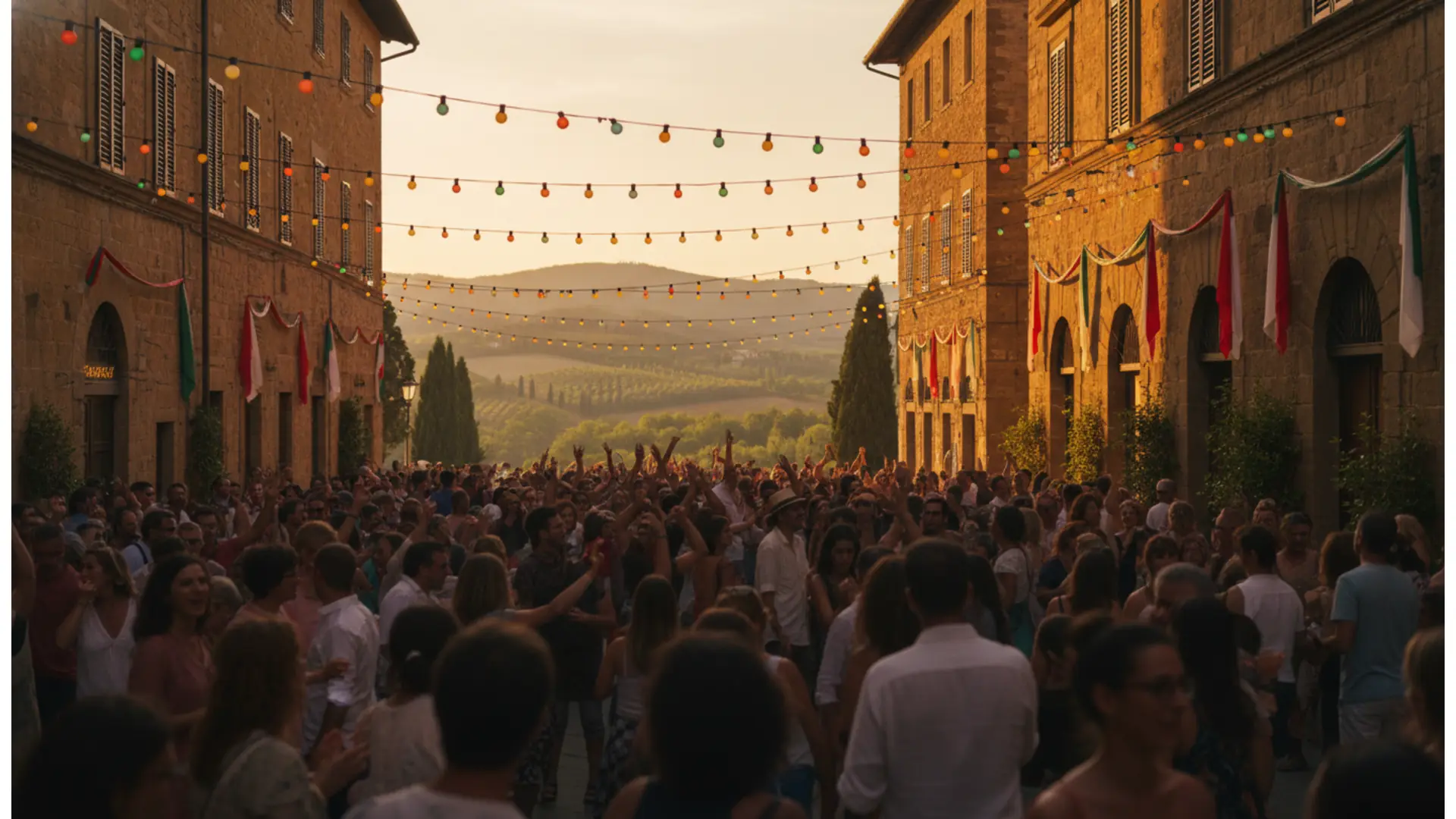
The St. Joseph's Bonfires are one of the most iconic traditions of Itri, a village in the province of Latina nestled between the Aurunci Mountains and the sea of the Gulf of Gaeta, in southern Lazio. Every year, on the evening of March 19th, the town celebrates the carpenter saint by lighting large bonfires in its districts: at 8:00 PM, the pyres are set ablaze almost simultaneously, filling the historic center with light, warmth, and voices.
This is more than just a religious observance. The ritual is rooted in archaic traditions linked to the changing of the seasons: fire burning the old to make way for the new, purification, and the arrival of spring. In Itri, the sacred and the profane coexist seamlessly, and the flame becomes the focal point around which the community gathers.
The memory of woodworkers
Tradition speaks of a direct link to woodworking trades. During the winter months, carpenters and artisans would set aside sawdust, shavings, and scraps; the districts would collect and jealously guard them until the day of the festival, in a friendly competition to see who could build the most impressive bonfire. That neighborhood rivalry remains the spirit of the evening today.
Over time, concerns regarding timber cutting had made the custom difficult. Collaboration between the municipal administration and forestry authorities has allowed for its revival: the wood used comes from controlled supply chains, ensuring the festival can continue without impacting the Aurunci woodland heritage.
Ten districts, ten experiences
The heart of the event is its decentralized structure. There is no single stage or central location: the districts themselves host the festival, each with its own bonfire, food stand, and music. Visitors arriving in Itri on March 19th walk from one fire to the next along an itinerary, tasting something at every stop and changing the soundtrack at every square.
- San Gennaro District (Largo Luigina Sinapi) — beef stew, bread, marzioline cheese, and olives
- Santo Spirito District — dry sausage, marzioline cheese, bruschetta with olive oil, lamb skewers
- and the other historic center districts, each with its own gastronomic and musical offerings
The flavors of the evening
Gastronomy is an integral part of the ritual. Among the recurring favorites are penne with sausage sauce, polenta with wild boar sauce, roasted sausage, beef stew, bruschetta, and grilled sausage sandwiches. To finish, the inevitable zeppolata: St. Joseph's zeppole, the symbolic pastry of the occasion throughout Central and Southern Italy. Local cheeses, legumes, and rustic Aurunci dishes are also staples.
Folk music in the streets
Accompanying the bonfires is live folk music, which begins when the fires are lit and continues late into the night. Tarantellas, accordions, and traditional central-southern songs: the festival is meant to be danced as well as tasted. In addition to the groups hosted in individual districts, a roving band travels through the alleys, bringing music from square to square and connecting the various bonfires.
Itri, beyond the festival
It is worth arriving a few hours early. The historic center of Itri is dominated by the Medieval Castle with its cylindrical tower, and the town houses the Brigandage Museum, dedicated to a controversial and fascinating page in the history of the Mezzogiorno: Itri is the birthplace of Michele Pezza, the famous Fra Diavolo. During the festival, cultural sites often offer special opening hours.
The municipal territory, located between the Aurunci Mountains Natural Park and the Tyrrhenian coast, is also a land of extra virgin olive oil and ancient paths: the Appian Way crosses the valley in one of its most evocative stretches.
Why go
The St. Joseph's Bonfires are not a spectacle staged for tourists: they are a celebration that the people of Itri hold for themselves and gladly open to those who arrive. This is the main reason to be there — the authenticity of a ritual repeated for generations, where the visitor is not a spectator but a guest, invited to sit by the fire with a warm plate in hand.
St. Joseph's Bonfires — edition 2026
The 2026 St. Joseph's Bonfires in Itri
On Thursday, March 19, 2026, Itri renewed one of its most cherished traditions. At 8:00 PM, the bonfires were lit almost simultaneously in ten districts of the town, creating an itinerary of fire, scents, and music in the historic center.
Each district offered its own gastronomic selection and musical accompaniment, with organization shared between the Municipality of Itri, district committees, associations, and local entities. The evening continued late into the night with folk dances and tastings.
The trail through the districts
Among the featured spots, the San Gennaro District in Largo Luigina Sinapi, with beef stew, bread, marzioline cheese, and olives, accompanied by I Briganti dell'Appia; and the Santo Spirito District, with dry sausage, marzioline cheese, bruschetta with olive oil, and lamb skewers, to the notes of Malerva.
The table
On the evening's menu: penne with sausage sauce, polenta with wild boar sauce, roasted sausage, beef stew, bruschetta, grilled sausage sandwiches, and, to finish, the St. Joseph's zeppolata.
Programme St. Joseph's Bonfires 2026
Thursday, March 19, 2026
- 8:00 PM — Simultaneous lighting of the bonfires in the ten districts of Itri
- Following, in each district: food stands and live folk music until late in the evening
Some districts and their offerings
- San Gennaro District (Largo Luigina Sinapi) — beef stew, bread, marzioline cheese, and olives · music: I Briganti dell'Appia
- Santo Spirito District — dry sausage, marzioline cheese, bruschetta with olive oil, lamb skewers · music: Malerva
Musical groups of the 2026 edition
- I Briganti dell'Appia
- La Controra
- Nova Folk Band
- I Dissonanti
- Palomma 2.0
- Accordions by maestro Marco Iannucci
- Bifolk
- Ivan Virgulto — Quartetto Partenopeo
- Musici Viatores
- Malerva
- Musicanti degli Aurunci — roving group through the town streets
Highlights St. Joseph's Bonfires 2026
- Simultaneous lighting of the bonfires at 8 PM in ten districts
- The roving group Musicanti degli Aurunci connecting the fires through the alleys
- Eleven folk music groups distributed in the squares of the historic center
- The St. Joseph's zeppolata to close the evening
- Polenta with wild boar sauce and penne with sausage sauce, the festival's signature dishes
Prices St. Joseph's Bonfires 2026
Practical information — St. Joseph's Bonfires
How to get there
By car: A1 motorway, Cassino exit, then SS630 and SS7 Appia towards Itri. From the coast, Itri is about ten kilometers from Formia and Gaeta.
By train: Formia-Gaeta station on the Rome-Naples line via Formia, connected to Itri by local bus lines. The Itri station is served only by some regional trains.
Hours and admission
Bonfires are lit at 8:00 PM on March 19th, simultaneously across the districts. Free admission: you only pay for what you consume at the district food stands, with affordable prices.
Tips
It is a March evening in the hills: dress in layers and wear comfortable shoes for the uphill alleys of the historic center. It is best to park outside the center, which is subject to traffic restrictions during the evening. For information: Municipality of Itri, Department of Culture, tel. +39 0771 732208.
Festival-goer photos
No photos yet. Share yours!
Share your photos
5 photos max, 5 MB per photo (JPG, PNG, WebP)
Noticed an error or missing information?
Help us keep this listing up to date. Every proposal is verified by our team before publication.
Festival-goer reviews
No rating yet — be the first!
No comments yet. Be the first!
Were you there?
Share your experience with the community.
Published by Valentin Contard, festival listings writer. Reviewed, corrected and approved by Christophe Contard, editor-in-chief. .
Where does it take place — St. Joseph's Bonfires
Rioni del centro storico di Itri