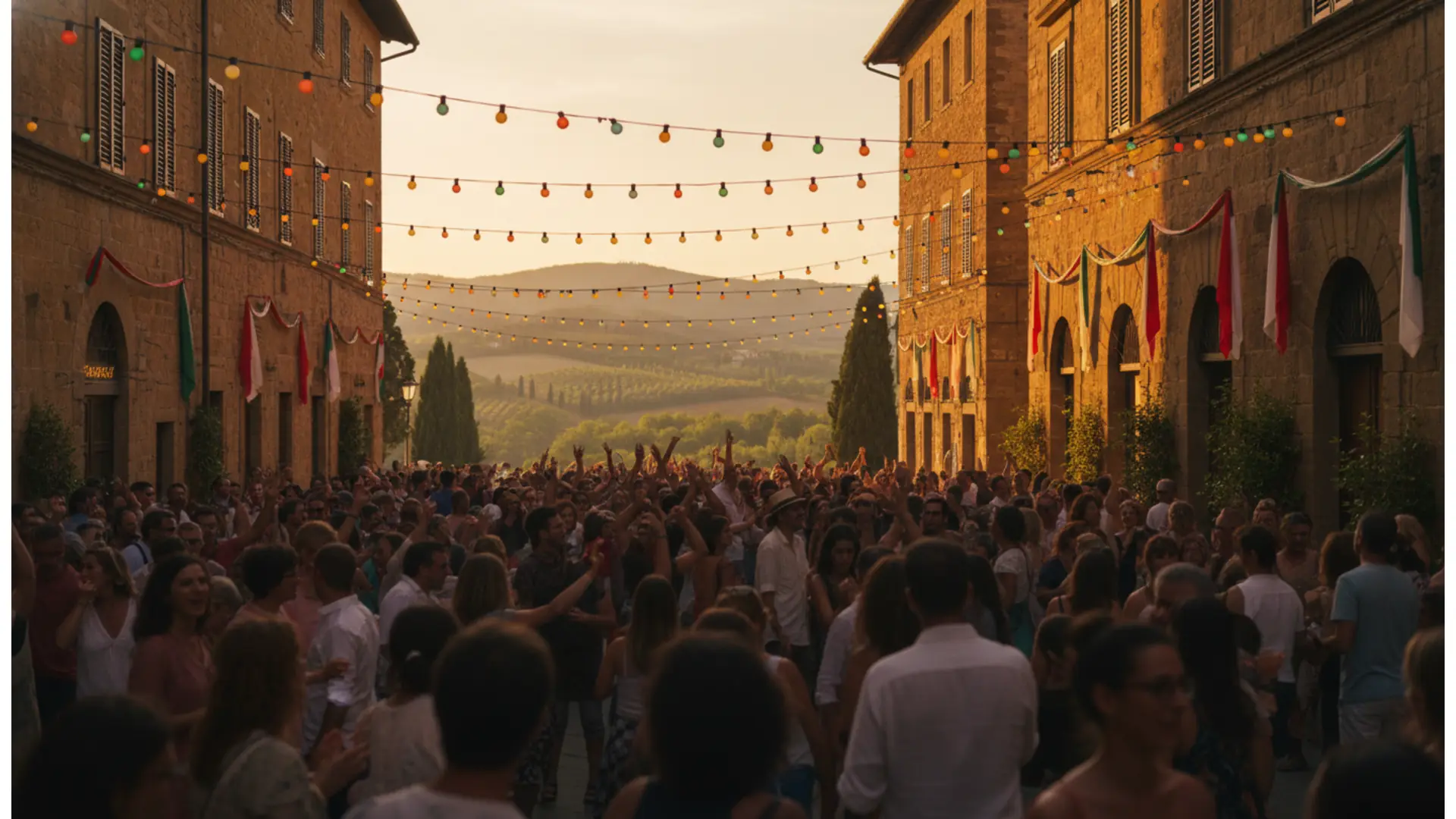
Sant'Angelo August Festival (Mid-August)
The mid-August patronal feast in Licata, blending faith, the sea, and the historic runs of the silver urn
About Sant'Angelo in August
The mid-August patronal feast in Licata
The Sant'Angelo August Festival, known to locals as the mid-August feast, is one of the two major celebrations dedicated to the patron saint of Licata, in the heart of the Agrigento province, Sicily. Held annually on the Sunday following Ferragosto, it complements the better-known May 5th festival, sharing the same religious rites, processions, and traditional urn runs.
The origins: the vow against the 1625 plague
The August festival is rooted in a dramatic chapter of the city's history. In June 1625, Sicily was struck by a violent plague epidemic, and Licata was devastated. According to tradition, it was in August that the city was finally freed from the contagion, a miracle attributed to the intercession of Saint Angelo the Martyr, a Carmelite friar linked to the town. As a sign of gratitude, the community renews its vow every year with celebrations that trace the sites affected by the plague, keeping a four-century-old collective memory alive.
The procession and the runs of the urn
The heart of the festival is the procession of the silver urn containing the saint's relics. The fercolo is carried on the shoulders of young, barefoot sailors dressed in white, along a route that winds from the new Cassaro through the old Marina district down to the sea. The most spectacular moment is the runs of the urn: the bearers, guided by helmsmen and preceded by hundreds of barefoot children, sprint with the heavy fercolo for hundreds of meters while the band plays solemn marches. These runs commemorate the ancient flight of the relics, which were carried to safety during raids by Turkish pirates along the southern Sicilian coast.
The bond with the sea
In August, the festival also renews Licata's historic bond with the sea: the fercolo is traditionally brought to the beach for the blessing of the sea, a gesture through which the fishing community invokes protection and abundance. The days are marked by masses, vespers, fireworks near the port, and the classic August fair, with stalls enlivening the town's squares.
A living tradition
Organized by the Diocesan Sanctuary of Sant'Angelo, run by the Carmelite Order, and supported by the Municipality of Licata, the mid-August feast unites religious devotion with civic identity. It is an event that draws back emigrants for their holidays, tourists, and the faithful, capturing the history, faith, and maritime culture of this corner of the Agrigento region in just a few days.
Sant'Angelo in August — edition 2026
Sant'Angelo August Festival 2026
In 2026, Ferragosto falls on Saturday, August 15th: the main procession of Sant'Angelo is therefore expected on Sunday, August 16th, the first Sunday following the Assumption, according to Licata tradition. The preceding days include vespers, masses, and the peregrinatio of the urn through the sites affected by the 1625 plague, while the octave concludes on Sunday, August 23rd with an open-air mass in front of the church.
The precise program with the times of the services, the evening procession, and civil events will be released by the Diocesan Sanctuary of Sant'Angelo and the Municipality of Licata as the festival approaches. Traditional elements remain confirmed: the procession of the silver urn carried on the shoulders of barefoot sailors, the runs of the fercolo, and the celebrations in the historic center.
Highlights Sant'Angelo in August 2026
Prices Sant'Angelo in August 2026
Practical information — Sant'Angelo in August
How to get there
Licata is located on the southern coast of Sicily, in the province of Agrigento. By car, it can be reached via the SS115 Agrigento-Gela highway. The Licata train station is on the Canicattì-Gela line; the nearest airport is Comiso, followed by Catania-Fontanarossa and Palermo-Punta Raisi.
When
Festivities are concentrated on the Sunday following Ferragosto, with the octave concluding the following Sunday. Religious services and the main procession generally take place in the evening.
Tips
Admission to the celebrations and the procession is free. It is advisable to arrive early for the evening procession and to book accommodation in the city well in advance, given the overlap with the peak Ferragosto holiday period.
Festival-goer photos
No photos yet. Share yours!
Share your photos
5 photos max, 5 MB per photo (JPG, PNG, WebP)
Noticed an error or missing information?
Help us keep this listing up to date. Every proposal is verified by our team before publication.
Festival-goer reviews
No rating yet — be the first!
No comments yet. Be the first!
Were you there?
Share your experience with the community.
Published by Valentin Contard, festival listings writer. Reviewed, corrected and approved by Christophe Contard, editor-in-chief. .
Where does it take place — Sant'Angelo in August
Santuario di Sant'Angelo e centro storico