San Rufo Carnival
Float parades, horses, and the traditional 'peasant months' performance in local dialect across the districts of San Rufo
About San Rufo Carnival
The return of the San Rufo Carnival
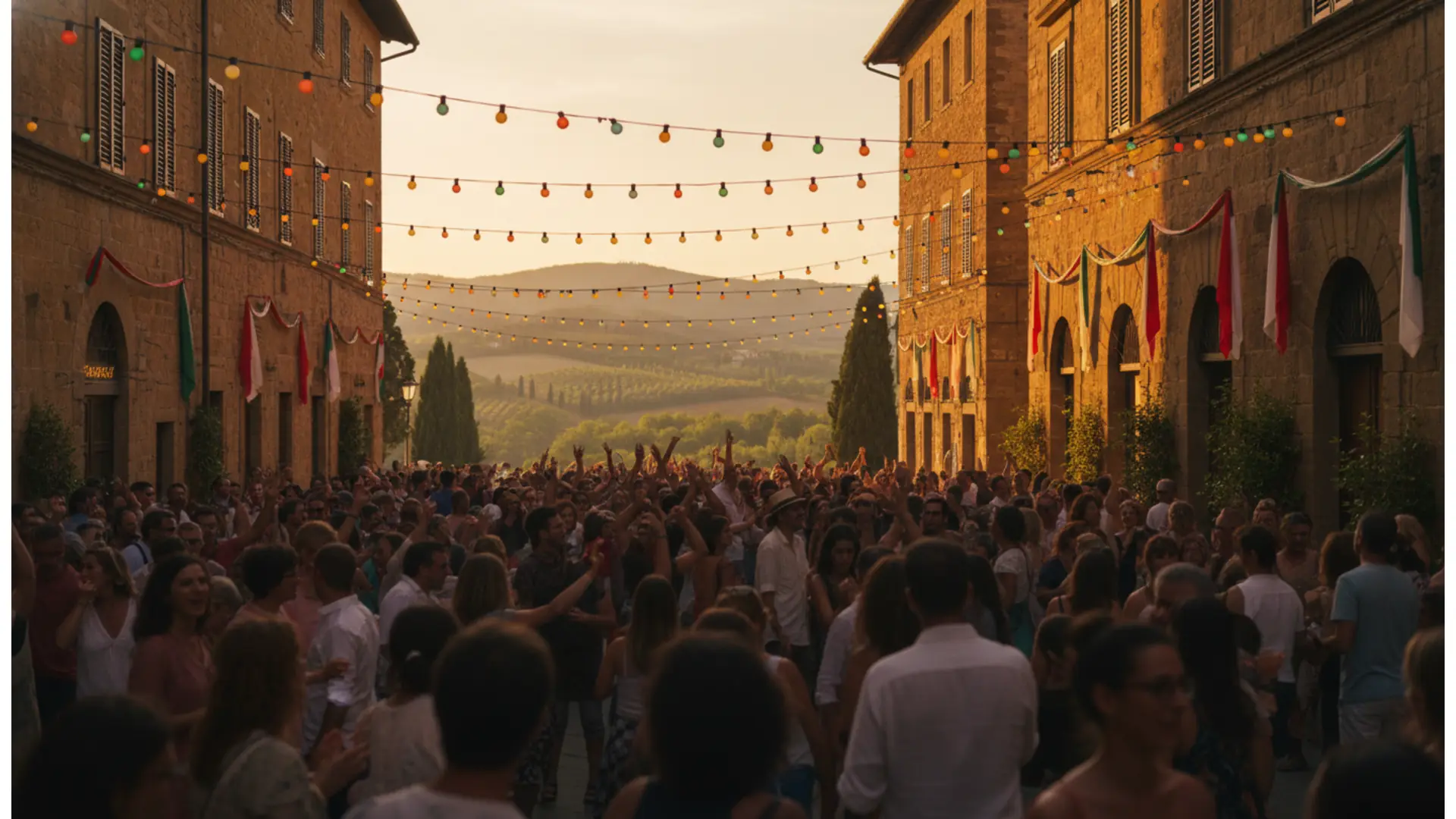
After a hiatus, the San Rufo Carnival has returned to enliven the streets and districts of San Rufo, a village of just over 1,500 inhabitants nestled at an altitude of 640 meters in the Vallo di Diano, in the province of Salerno, Campania. It is no coincidence that the 2026 edition was titled "The Return of the San Rufo Carnival": the event stems from the desire of the Tempa in Festa association and the "I Ragazzi di San Rufo" group to revive a celebration that belongs to the town's collective memory and had for years remained only a distant recollection for the older generations.
The float parade through the districts
The heart of the day is the allegorical float parade, which is not limited to the town center but traverses the entire municipal territory. The caravan sets off early in the morning from Contrada Musciano and proceeds slowly through the districts, accompanied by horses and riders: a detail that makes the San Rufo procession distinct from large city carnivals and ties it to the rural and pastoral vocation of this part of inland Campania. A midday stop is scheduled at the Fontana Vaglio hamlet, where the festivities pause before heading back up toward the main town. The route, more than just a parade, is a way to bring the Carnival to every doorstep, even where only a few families live.
The 'peasant months' in the San Rufo dialect
Upon arrival in Piazza Municipio, the most iconic moment of the event takes place: the performance of the peasant months, recited in the San Rufo dialect. This is a form of popular theater widespread in many areas of Southern Italy, where the months of the year become masked characters, each with their own costume, tools, and verses: they recount the work in the fields, the harvests, the winter cold, and the anticipation of spring. For San Rufo, this moment is the thread that binds the Carnival to the agricultural civilization of the Vallo di Diano, and serves as a concrete exercise in preserving the local language, entrusted to the voices of those who still speak it every day.
Shows, music, and community dinner
The celebration does not end with the parade. In the late afternoon, the Ex Cinema Hall hosts a show by local school children, while the evening features entertainment with Kristaball (Patapumfete Animation), a buffet dinner, and live music with the Cava Agostino Band. It is the classic epilogue to Southern village festivals: eating together, dancing, and staying in the square as long as the February chill allows.
An open and inclusive festival
The San Rufo Carnival also stands out for its social dimension: the preparation of the floats and the organization of the day involve the beneficiaries of the SAI project (Reception and Integration System) active in the area, alongside volunteers and local youth. In a small town where every hand counts, the Carnival becomes an opportunity for encounter between those born in San Rufo and those who have recently arrived.
San Rufo and the Vallo di Diano
The Municipality of San Rufo is located between the Spina dell'Ausino and the Cucuzzo delle Puglie, in a transit position toward the Calore Salernitano valley via the Passo della Sentinella, at the gateway to the Cilento, Vallo di Diano and Alburni National Park. The village preserves the Church of Santa Maria Maggiore, the Church of Sant'Antonio, the Church of San Michele Arcangelo, and the Baronial Palace, while Roman-era artifacts have been found in the Campanella hamlet, and the ruins of a medieval castle remain in Calvanello. The local festival calendar is rich: in addition to the Carnival, there is the feast of the Madonna della Tempa in September, with the characteristic wax candle procession, the Chestnut Festival in autumn, and the summer festival Tempa in Festa, organized by the same association that brought the carnival parade back to life.
Why it is worth visiting
Those looking for a spectacular and monumental Carnival will find more imposing floats elsewhere. One visits San Rufo for another reason: to see a small community telling its own story, in dialect, amidst horses, masks, and homemade food. It is one of the most authentic ways to understand the Vallo di Diano outside the tourist season.
San Rufo Carnival — edition 2026
A full day of celebration
The 2026 edition marked the return of the San Rufo Carnival to the calendar of the Municipality of San Rufo, in the province of Salerno. The organization was handled by the Tempa in Festa association together with the "I Ragazzi di San Rufo" group, with the involvement of the beneficiaries of the SAI project active in the area.
The chosen format is that of an itinerant festival: the parade started in the morning from the rural outskirts of the town and climbed up through the districts to the center, where the afternoon was dedicated to popular theater and the evening to indoor shows. A structure that allowed for the involvement of both families with children and residents of the hamlets furthest from the main town.
Programme San Rufo Carnival 2026
Sunday, February 15, 2026
- 9:00 AM — Departure of the allegorical float parade from Contrada Musciano, with horses and riders, and crossing of the municipal districts.
- 1:00 PM — First stop of the caravan at Fontana Vaglio.
- 2:00 PM — Resumption of the parade toward the main town.
- Around 4:00 PM — Arrival at Piazza Municipio and performance of the peasant months in the San Rufo dialect.
- 6:00 PM — School children's show at the Ex Cinema Hall.
- 7:30 PM — Entertainment show with Kristaball (Patapumfete Animation), buffet dinner, and live music with the Cava Agostino Band.
Highlights San Rufo Carnival 2026
- Allegorical float parade accompanied by horses and riders through the districts of San Rufo.
- The performance of the peasant months in the San Rufo dialect in Piazza Municipio, popular theater linked to the agricultural civilization of the Vallo di Diano.
- The school children's show in the Ex Cinema Hall.
- Evening with Kristaball entertainment, buffet dinner, and concert by the Cava Agostino Band.
- Participation of SAI project beneficiaries in the preparation of the festival.
Prices San Rufo Carnival 2026
Practical information — San Rufo Carnival
How to get there
San Rufo can be reached from the A2 del Mediterraneo Motorway, taking the Polla or Atena Lucana exits, then continuing along the local Vallo di Diano road network (about 15-20 minutes from the motorway exit). The town is about ninety kilometers from Salerno. In the absence of a train station in the municipality, a car remains the most practical means of transport; on festival days, it is advisable to leave it near the center and reach Piazza Municipio on foot.
Useful tips
- The village is located at an altitude of 640 meters: in February, warm clothing, comfortable shoes, and rain gear are necessary, as the parade is itinerant and takes place almost entirely outdoors.
- The parade covers several districts: to follow it in its entirety, you need to organize with a car or join the procession on foot from one of the transit points.
- To watch the performance of the months, it is advisable to be in Piazza Municipio around 4:00 PM.
Contacts
Associazione Tempa in Festa — tel. +39 333 7123213, e-mail [email protected]. Updates and posters are published on the association's Facebook page.
Festival-goer photos
No photos yet. Share yours!
Share your photos
5 photos max, 5 MB per photo (JPG, PNG, WebP)
Noticed an error or missing information?
Help us keep this listing up to date. Every proposal is verified by our team before publication.
Festival-goer reviews
No rating yet — be the first!
No comments yet. Be the first!
Were you there?
Share your experience with the community.
Published by Valentin Contard, festival listings writer. Reviewed, corrected and approved by Christophe Contard, editor-in-chief. .
Where does it take place — San Rufo Carnival
Piazza Municipio