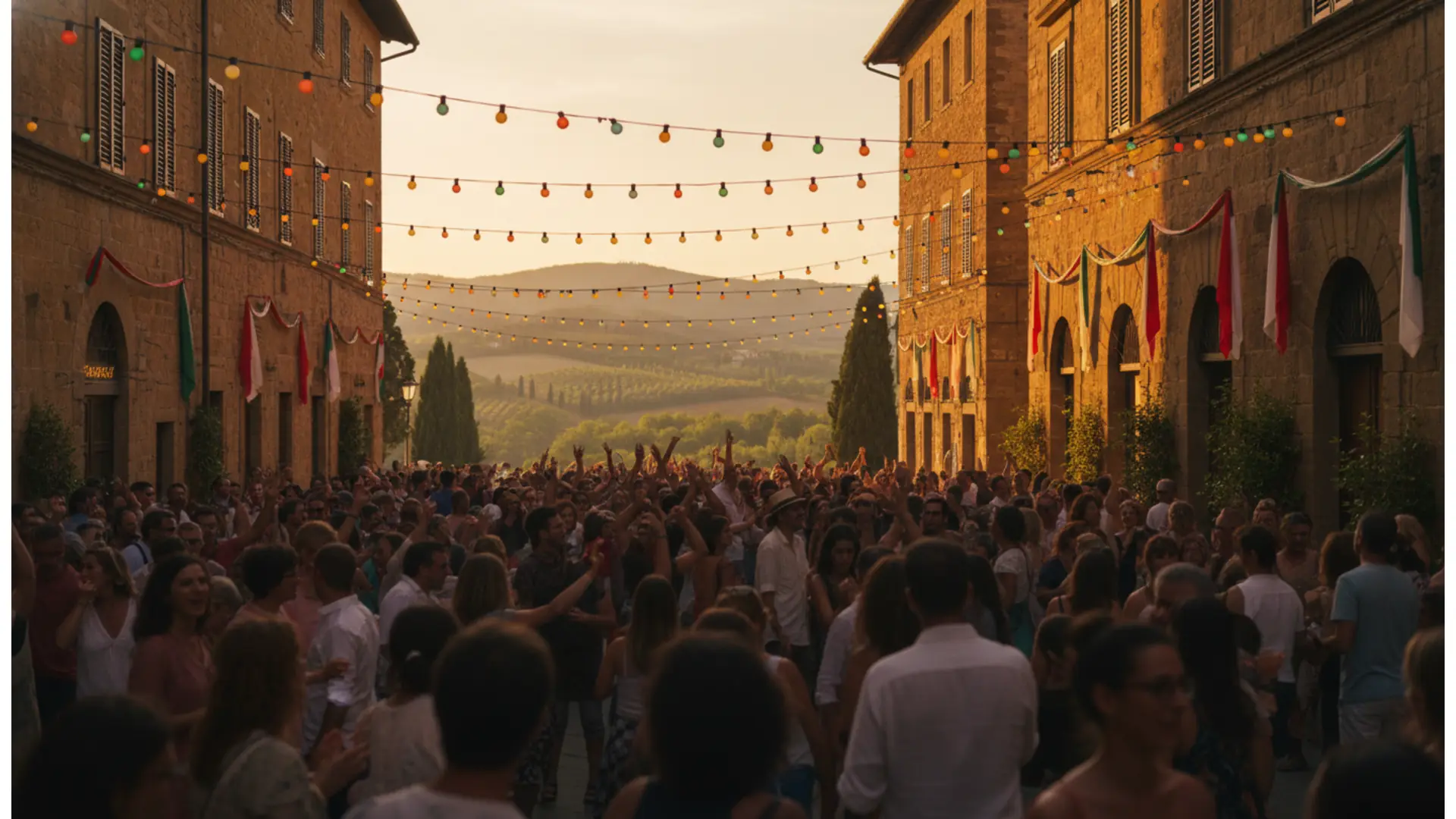
Saint Sebastian Festival (Patron Saint of Fumone)
The ritual of the 'festarolo', the panata soup, and the ciambelle rings in the medieval village of Ciociaria
Edition 2026 not confirmed to date
This edition has not been confirmed by the organiser to date. We recommend checking before going.
About Saint Sebastian in Fumone
A patronal feast that defines a village's identity
In the municipality of Fumone, in the province of Frosinone, the Saint Sebastian Festival is more than just a religious observance: it is the moment the entire community connects with its roots. The village, one of the most distinctive in southern Lazio, overlooks the Sacco Valley and the Ciociaria region with its medieval silhouette and famous castle. For centuries, a cycle of gestures, words, and flavors has revolved around the martyr Sebastian, passed down unchanged from generation to generation.
Origins: from the 9th century to 1186
The cult in Fumone dates back to the 9th century, when soldiers under siege chose the martyr as their special protector. The first documented popular religious feast took place in 1186, making this one of the oldest celebrations in the entire region. The statue leading the procession is the work of Roman silversmith Giovanni Giardini and dates back to around 1696: a precious artifact that leaves the church only during festival days.
The 'festarolo': a unique ritual
The heart of the Fumone tradition is the figure of the festarolo, the person tasked with organizing and funding the festivities for the following year. Every January 17th, at the town hall, the incoming 'festarolo' is chosen by drawing lots—an ancient practice known as 'al bussolo'—from among all those who have submitted their candidacy. On the evening of January 20th, the handover takes place: the outgoing 'festarolo' entrusts their successor with the mace, a staff topped with a bust of Saint Sebastian, which they will keep in their home for twelve months.
This is no mere symbolic role. The 'festarolo' is also responsible for providing the torches and the two large candles offered to the saint, carried during the procession by the torcere, two girls dressed identically according to traditional custom.
The flavors of the festival: sagne pelose, panata, and ciambelle
The Fumone festival is as much about food as it is about faith. On the evening before the mace is handed over, the outgoing 'festarolo's' home is decorated with laurel and myrtle arches, and guests are served sagne pelose, the village's signature pasta dressed with an anchovy sauce: a dish found only here, which has become a small gastronomic emblem of Ciociaria.
- Panata — a rustic soup made with 'occhio di lupo' pasta, tomato sauce, garlic, oil, parsley, desalted anchovies, and plenty of chili pepper, distributed to the population after the morning services along with bread and wine.
- Ciambelle — ring-shaped pastries tied to olive branches, tossed in the evening from the church terrace toward the crowd gathered in the square.
- Sagne pelose — served to the 'festarolo's' guests on the evening that kicks off the festivities.
Two events per year
What makes Fumone unique is that Saint Sebastian is celebrated twice: on January 20th, the martyr's liturgical day, and again on the Monday following Pentecost, when the warmer weather allows for a larger procession and even greater participation. The winter cycle actually spans several days, roughly from January 16th to 20th, featuring religious services, the distribution of 'panata', a brass band, and social gatherings in the historic center.
The return after the pandemic
Following the years of suspension due to the health emergency, the festival has returned to its "former glory," according to Mayor Matteo Campoli, who publicly thanked the Saint Sebastian committee, civil protection, local police, the brass band, and the town's volunteers. The procession with the patron saint's statue, followed by the distribution of 'panata' and the tossing of 'ciambelle', brought hundreds of people back to the square, confirming how vibrant this tradition remains for the people of Fumone.
Why it's worth the trip
Those who arrive in Fumone during these days find much more than a patronal feast: they find a village telling its own story through a ritual unmatched in Lazio. The drawing of the 'festarolo', the passing of the mace, the 'torcere', and the street food create an intangible heritage that stands the test of time. It is also the perfect opportunity to discover the rest: the castle of Fumone with its legends, the medieval alleys, and the views over the Ciociaria.
Saint Sebastian in Fumone — edition 2026
Saint Sebastian Festival 2026 in Fumone
In 2026, the village of Fumone, in the province of Frosinone, will once again renew its devotion to its patron saint according to the unchanging traditional calendar. The winter cycle revolves around January 17th, the day of the new 'festarolo's' appointment by lottery at the town hall, and January 20th, the martyr's liturgical feast, when the outgoing 'festarolo' hands the mace with the saint's bust to their successor.
As per custom, the procession with the 17th-century statue by Giovanni Giardini will wind through the alleys of the historic center, accompanied by the brass band and the 'torcere' carrying the large candles offered to the saint. After the morning services, the community will gather for the distribution of panata with bread and wine, while in the evening, ciambelle tied to olive branches will be tossed from the church terrace. The second event of the year, according to Fumone tradition, falls on the Monday following Pentecost.
Programme Saint Sebastian in Fumone 2026
Highlights Saint Sebastian in Fumone 2026
Prices Saint Sebastian in Fumone 2026
Practical information — Saint Sebastian in Fumone
How to get there
Fumone can be reached by car via the A1 Rome-Naples motorway, taking the Anagni-Fiuggi exit and following signs for Ferentino and Fumone (approx. 15 km). By train, the reference station is Anagni-Fiuggi on the Rome-Cassino line, with bus connections to the village. The journey from Rome takes about an hour and a half.
Parking and accessibility
The historic center is pedestrian-only and uphill: it is best to leave your car in the parking lots at the foot of the village and continue on foot. Comfortable shoes are recommended for the stone alleys, which can be slippery when it rains.
Costs
Participation in the rituals and the procession is free. The distribution of 'panata' and the tossing of 'ciambelle' are offered to the public without a ticket.
Information
Updates and dates are published by the Municipality of Fumone on their social media channels and the Visit Fumone tourist portal. It is recommended to check times and the program in the days immediately preceding the event.
Festival-goer photos
No photos yet. Share yours!
Share your photos
5 photos max, 5 MB per photo (JPG, PNG, WebP)
Noticed an error or missing information?
Help us keep this listing up to date. Every proposal is verified by our team before publication.
Festival-goer reviews
No rating yet — be the first!
No comments yet. Be the first!
Were you there?
Share your experience with the community.
Published by Valentin Contard, festival listings writer. Reviewed, corrected and approved by Christophe Contard, editor-in-chief. .
Where does it take place — Saint Sebastian in Fumone
Centro storico di Fumone e chiesa parrocchiale