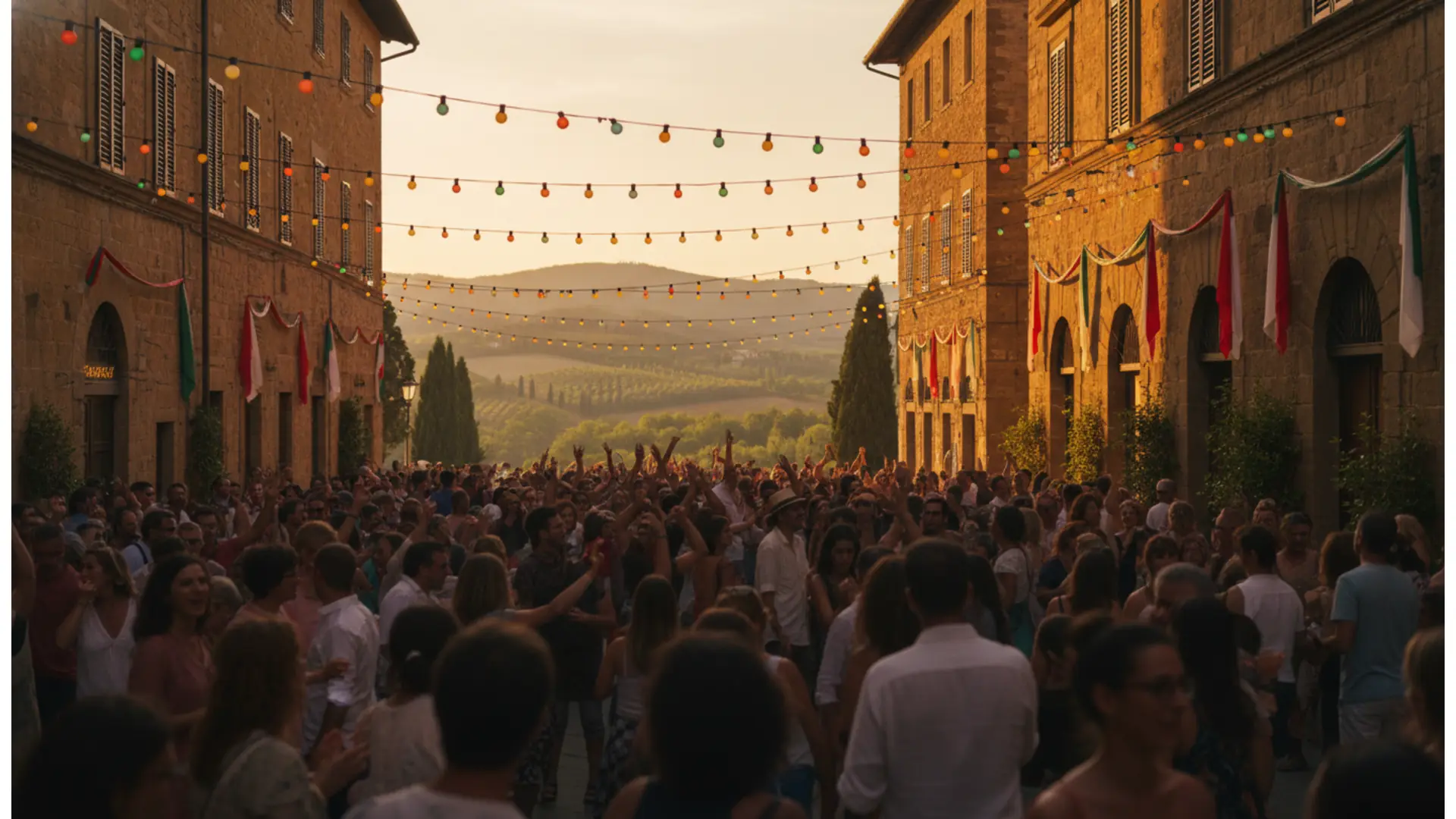
Saint Joseph Festival
Votive altars and the 'Saints' banquet in the village of the Sicani Mountains
About Saint Joseph in Chiusa Sclafani
The Saint Joseph Festival in Chiusa Sclafani
In the heart of the Sicani Mountains, in the province of Palermo, the village of Chiusa Sclafani celebrates the Saint Joseph Festival every year on March 19th, one of the most deeply felt occasions in the Sicilian religious and folk calendar. It is a festival of faith, community, and abundance, where the town's homes, churches, and monuments are filled with votive breads, the scent of bay leaves, and traditional sweets.
The Votive Altars
The absolute stars of the festival are the votive altars, elaborate structures consisting of a raised altar and a side table. At the center stands the image of Saint Joseph, surrounded by bay branches and characteristic votive breads, masterpieces of decorative baking. Among the most important breads are u vastuni (the staff) and u pisci (the fish), while the vuccidati, always in odd numbers and never fewer than three, represent the Holy Family.
The altars originated as a vow or as thanksgiving for a grace received. The tradition has ancient roots: according to legend, when the land became barren, the Sicilians promised altars covered in myrtle and bay leaves, along with breads shaped like flowers and vegetables, symbols of the desired harvest. With the arrival of Christianity, these altars dedicated to agricultural abundance were re-consecrated to Saint Joseph, protector of orphans and the poor.
Where to admire the altars
The altars are set up in numerous locations throughout the town, offering visitors a true itinerary through faith and folk art:
- the Badia monumental complex, the enchanting former Benedictine monastery;
- the Mother Church, with the Crypt of the Holy Face;
- the Church of San Michele;
- the parish hall of the San Carlo district;
- the "G. Reina" Comprehensive Institute, the Casa della Fanciulla, and Palazzo Bonfiglio.
The 'Saints' banquet and the flavors of the festival
The spiritual heart of the celebration is the 'Saints' banquet: the town's poor are called "Saints" and sit at the table to represent the Holy Family, consuming a ritual meal of charity and abundance. The tables are laden with pasta with toasted, sweetened breadcrumbs, fried asparagus and wild fennel, and traditional sweets: honey-drenched pignolata, sfinci (fried dough) with egg or rice, cannoli, and rice pastries. To complete the altars, seasonal fruits like oranges, lemons, and fennel are served, accompanied only by water and wine.
The Procession
The festival culminates on March 19th with the procession of the Holy Patriarch's statue through the streets of the historic center, preceded by a solemn Eucharistic celebration. In the evening, after the altars are opened to the public and the votive bread is distributed, the village in the Sicani Mountains gathers around Saint Joseph in an atmosphere of devotion and celebration, renewing a centuries-old tradition of the Municipality of Chiusa Sclafani and all of Sicily.
Saint Joseph in Chiusa Sclafani — edition 2026
Saint Joseph Festival 2026
The 2026 edition was held in Chiusa Sclafani on March 18th and 19th. As per tradition, the votive altars were set up at the Badia monumental complex and in numerous other locations in the historic center, laden with votive breads, fruit, fried delicacies, and traditional sweets.
The day of the festival, March 19th, featured the solemn Eucharistic celebration, the opening of the altars to the public in the afternoon with the distribution of votive bread, the 'Saints' banquet representing the Holy Family, and, in the evening, the procession of the Holy Patriarch's statue through the streets of the Sicani Mountains village.
Programme Saint Joseph in Chiusa Sclafani 2026
Program for March 19th
- Morning: Eucharistic celebration
- Afternoon and Evening: Opening and viewing of the votive altars with distribution of votive bread (Badia, Mother Church, Church of San Michele, and other center locations)
- Evening: Procession of the Holy Patriarch's statue through the town streets
Highlights Saint Joseph in Chiusa Sclafani 2026
- Votive altars at the Badia, former Benedictine monastery
- Traditional votive breads: u vastuni, u pisci, i vuccidati
- 'Saints' banquet representing the Holy Family
- Procession of the Holy Patriarch's statue
Prices Saint Joseph in Chiusa Sclafani 2026
Practical information — Saint Joseph in Chiusa Sclafani
How to get there
Chiusa Sclafani is located in the Sicani Mountains, in the hinterland of the province of Palermo. By car from Palermo, take the SS118 towards Corleone and Bisacquino (about 1 hour and 30 minutes). The nearest airport is Palermo Falcone-Borsellino.
Visits and opening hours
The votive altars can be visited for free in the afternoon and evening of March 19th. During the festival, a free shuttle service is often available departing from Piazza Castello to reach the various altar locations.
Tips
Wear comfortable shoes to explore the historic center and the altars distributed among churches and palaces. For updated schedules, it is advisable to check the website of the Municipality of Chiusa Sclafani.
Festival-goer photos
No photos yet. Share yours!
Share your photos
5 photos max, 5 MB per photo (JPG, PNG, WebP)
Noticed an error or missing information?
Help us keep this listing up to date. Every proposal is verified by our team before publication.
Festival-goer reviews
No rating yet — be the first!
No comments yet. Be the first!
Were you there?
Share your experience with the community.
Published by Valentin Contard, festival listings writer. Reviewed, corrected and approved by Christophe Contard, editor-in-chief. .
Where does it take place — Saint Joseph in Chiusa Sclafani
Complesso monumentale della Badia