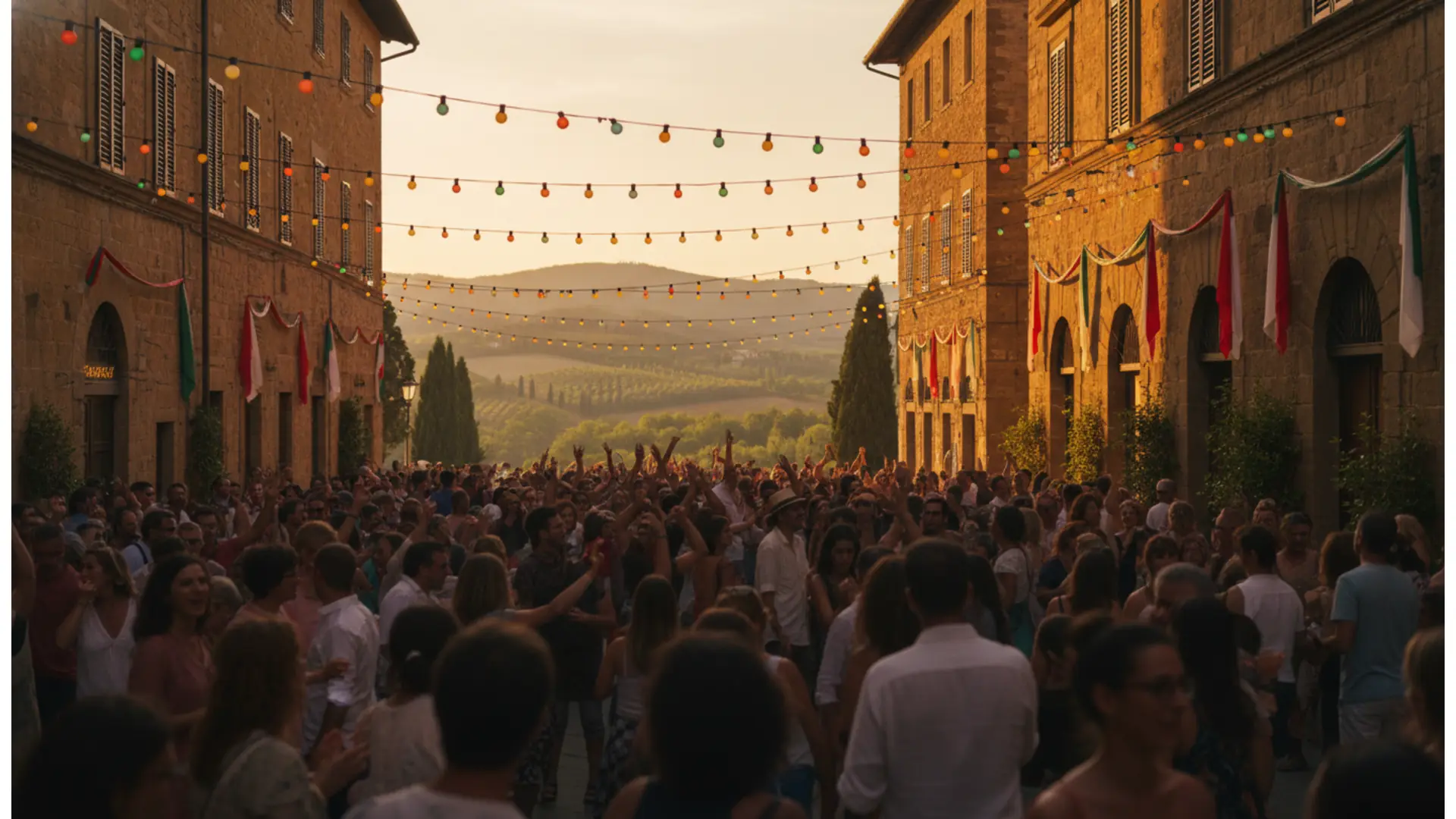
Piana degli Albanesi Carnival (Kalivari)
The Arbëreshë Kalivari, where masked women invite men to dance
About Piana degli Albanesi Carnival
The Kalivari: A unique carnival in Sicily
The Carnival of Piana degli Albanesi, a town in the Province of Palermo and the heart of the Arbëreshë (Italo-Albanian) community in Sicily, is known locally as Kalivari. It is one of the most curious and fascinating secular events in the entire region, passed down through generations by a community that has preserved its own language, rituals, and traditions for centuries.
What makes this carnival so special is the reversal of roles compared to traditional patriarchal Sicilian society: here, the woman is the true protagonist. Strictly disguised with her face covered to remain anonymous, she has the power to choose, mock, and invite men to dance. And according to custom, an invitation to dance cannot be refused.
Dance halls in the Corso Kastriota clubs
For several weeks, from the period following Epiphany until Shrove Tuesday, the recreational clubs along Corso Giorgio Kastriota transform into vibrant dance halls decorated for the occasion. In the evenings, to the rhythm of music, masked women enliven the venues with dances and pranks, in an atmosphere of play and freedom that is the hallmark of this festival. Access to the halls is primarily reserved for women in costume.
Allegorical floats and the grand parade
The highlight of the event is the afternoon parade of allegorical floats and masked groups—the "Kalivaratat"—which travel along Corso Kastriota and Piazza Vittorio Emanuele, filling the town streets with color, music, and popular satire. The event also includes an award ceremony for the Best Mask.
Traditional sweets: loshka and petulla
No Arbëreshë carnival would be complete without its typical sweets. Loshka and petulla, which are spherical and flattened, are made from fried, sweetened leavened dough; they are traditionally eaten during the final days of the festival, accompanied by the convivial atmosphere that characterizes the entire community.
A festival for the whole community
Beyond the evening dances, the Kalivari also reserves space for the little ones, with themed afternoons dedicated to children. The event is promoted by the Pro Loco of Piana degli Albanesi and represents a key identity event for the entire community, attracting visitors every year who are curious to discover a tradition that has no equal in the rest of Sicily.
Piana degli Albanesi Carnival — edition 2026
The 2026 Kalivari
The Arbëreshë Carnival of Piana degli Albanesi (PA) enlivened the town from January 16 to February 13, 2026, opening the festivities on Friday, January 16 at 9:00 PM. As per tradition, the recreational clubs of Corso Kastriota hosted the masked dance evenings, with women in costume playing the role of absolute protagonists.
The dance halls lit up especially on weekends and on the key dates in early February, featuring live music and the Best Mask competition. The event concluded with the parade of allegorical floats along Corso Kastriota and Piazza Vittorio Emanuele, accompanied by the tasting of traditional loshka and petulla sweets.
Programme Piana degli Albanesi Carnival 2026
Opening
- Friday, January 16, 2026, 9:00 PM — Official start of the Kalivari
Dance halls in the Corso Kastriota clubs
Throughout the period, on weekends and key evenings, the recreational clubs of Corso Kastriota transformed into decorated dance halls, opening from 9:00 PM with live music. Masked women invited men to dance according to the ancient Arbëreshë custom.
Grand Finale
- Afternoon parade of allegorical floats and masked groups ("Kalivaratat") along Corso Kastriota and Piazza Vittorio Emanuele
- Best Mask award ceremony
- Tasting of traditional loshka and petulla sweets
Themed afternoons dedicated to children were also held during the festival period.
Highlights Piana degli Albanesi Carnival 2026
Prices Piana degli Albanesi Carnival 2026
Practical information — Piana degli Albanesi Carnival
Location
The celebrations are concentrated along Corso Giorgio Kastriota and in Piazza Vittorio Emanuele, in the center of Piana degli Albanesi (PA), Sicily.
How to get there
By car from Palermo, Piana degli Albanesi can be reached in about 40 minutes via the SS624 (Palermo-Sciacca) and then the SP5. The nearest airport is Palermo-Punta Raisi. It is recommended to park outside the town center and reach the festival streets on foot.
Admission and costs
Participation in public events and the parade is free. For information regarding the dances in the clubs, you can contact the Pro Loco at +39 338 215 1989.
Festival-goer photos
No photos yet. Share yours!
Share your photos
5 photos max, 5 MB per photo (JPG, PNG, WebP)
Noticed an error or missing information?
Help us keep this listing up to date. Every proposal is verified by our team before publication.
Festival-goer reviews
No rating yet — be the first!
No comments yet. Be the first!
Were you there?
Share your experience with the community.
Published by Valentin Contard, festival listings writer. Reviewed, corrected and approved by Christophe Contard, editor-in-chief. .
Where does it take place — Piana degli Albanesi Carnival
Corso Kastriota e Piazza Vittorio Emanuele
Corso Giorgio Kastriota, 90037 Piana degli Albanesi