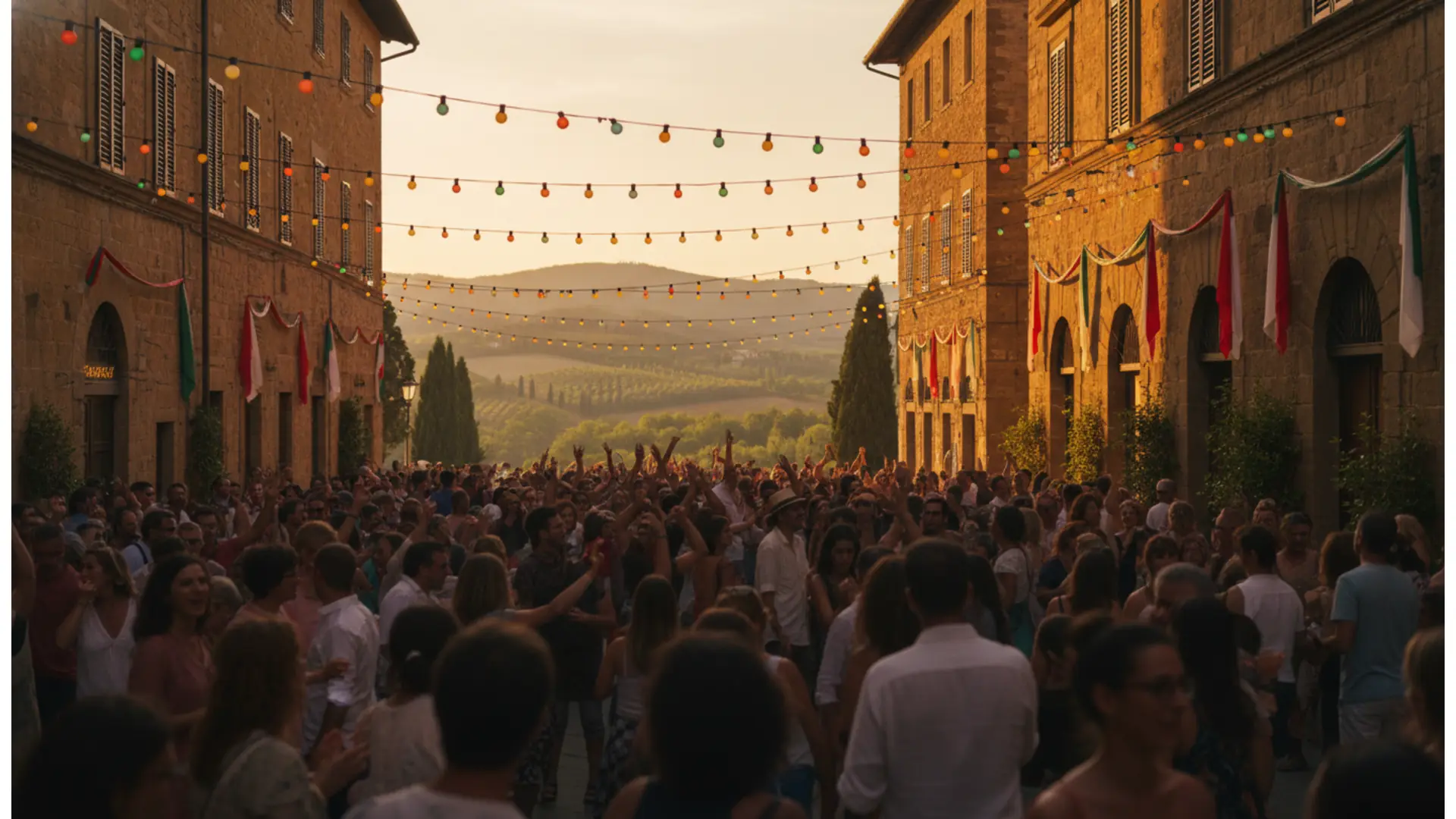
Madunnuzza Festival (Nativity of the Virgin Mary)
The rural festival of the Nativity of Mary at the Sanctuary of Scanzano, in Marineo
Edition 2026 not confirmed to date
This edition has not been confirmed by the organiser to date. We recommend checking before going.
About Madunnuzza Festival
An ancient devotion in the heart of the Marineo countryside
The Madunnuzza Festival is one of the most deeply rooted traditions in Marineo, a small town in the province of Palermo, Sicily. It is celebrated every year on September 8th, the day the Church commemorates the Nativity of the Blessed Virgin Mary. The festival centers on the Sanctuary of the Madonna di Scanzano, a small church dedicated to Santa Maria della Pietà, also known as the Madonna del Daino, set in the countryside just over a kilometer from the town, surrounded by ancient oaks, centuries-old olive trees, vineyards, and prickly pear fields.
The legend of the Madonna del Daino
The devotion is rooted in an ancient local legend: a hunter from the Marineo area, while chasing a wounded deer (daino), discovered an image of the Madonna painted in a cave where the animal had taken refuge. This discovery gave rise to the cult of the Madonna della Dayna. The Scanzano sanctuary was built in 1733, with permission from the Jesuit Fathers who owned the land, thanks to contributions from Marquis Ignazio Pilo and the voluntary labor of the local confraternity. In 1896, the confraternity restored the church, enriching it with large paintings, some of which are now preserved in the town's oratory.
A day of faith and celebration
The tradition, documented since the 19th century by local historian and priest Giuseppe Calderone (1818-1898), describes a festival that attracts people of all ages and backgrounds. On the evening before September 8th, according to custom, young people spend the night outdoors near the sanctuary; at dawn, families begin their pilgrimage to attend the religious services held throughout the day: rosaries, prayers, litanies, masses, and processions in honor of the Madunnuzza.
Between markets, gastronomy, and popular games
Beyond its religious dimension, the festival retains the character of an ancient rural fair. In the past, a street market selling food lined the paths: roasted meats, cheeses, bread, wine, dried fruits, and toasted almonds, with the typical sausage enjoyed in the shade of the trees. The day would conclude with performances and popular games that enlivened the countryside.
- The antinna (greasy pole), a soap-covered pole to be climbed to win the prize at the top
- Horse, mule, and donkey races, with prizes for the winners
- The traditional game of lu iocu di li pignati (pot-breaking game)
- Firecrackers set off to conclude the festivities
A festival that stands the test of time
Confirmed as a recurring event on the calendar of the Municipality of Marineo and the local parish, the Madunnuzza Festival continues to draw devotees and curious visitors to the green oasis of Scanzano. It is an opportunity to rediscover Marian spirituality, the rural landscape of the Sicilian mountains, and the conviviality of a community tied to its farming roots.
Madunnuzza Festival — edition 2026
For the 2026 edition of the Madunnuzza Festival in Marineo, in the province of Palermo, the official calendar and detailed program have not yet been published. The festival is linked to the Nativity of Mary, which the Church celebrates on September 8th, at the Sanctuary of the Madonna di Scanzano.
As every year, the customary pilgrimage to the sanctuary, religious services, and popular festivities are expected. Information will be updated as soon as the organizers announce dates and details.
Practical information — Madunnuzza Festival
Location
The festival is held at the Sanctuary of the Madonna di Scanzano (Santa Maria della Pietà or Madonna del Daino), in the countryside about one and a half kilometers from the center of Marineo, in the province of Palermo.
How to get there
By car: from Palermo, reach Marineo via the Corleonese provincial road in about 40 minutes. The sanctuary is then reached from the town by following the road toward the Scanzano area. The rural site requires walking the final stretch and climbing a few steps.
When
September 8th, the day of the Nativity of Mary. For updated dates and times, it is advisable to check the website of the Municipality of Marineo or the local parish.
Admission
Religious and popular festival with free admission.
Festival-goer photos
No photos yet. Share yours!
Share your photos
5 photos max, 5 MB per photo (JPG, PNG, WebP)
Noticed an error or missing information?
Help us keep this listing up to date. Every proposal is verified by our team before publication.
Festival-goer reviews
No rating yet — be the first!
No comments yet. Be the first!
Were you there?
Share your experience with the community.
Published by Valentin Contard, festival listings writer. Reviewed, corrected and approved by Christophe Contard, editor-in-chief. .
Where does it take place — Madunnuzza Festival
Santuario della Madonna di Scanzano (Santa Maria della Pietà o del Daino)