Patronal Feast of Saint Ciro
Peregrinatio, novena, and the January 31st solemnity in the municipality of Nocera Superiore
About Saint Ciro Feast
A festival that brings the city to a standstill
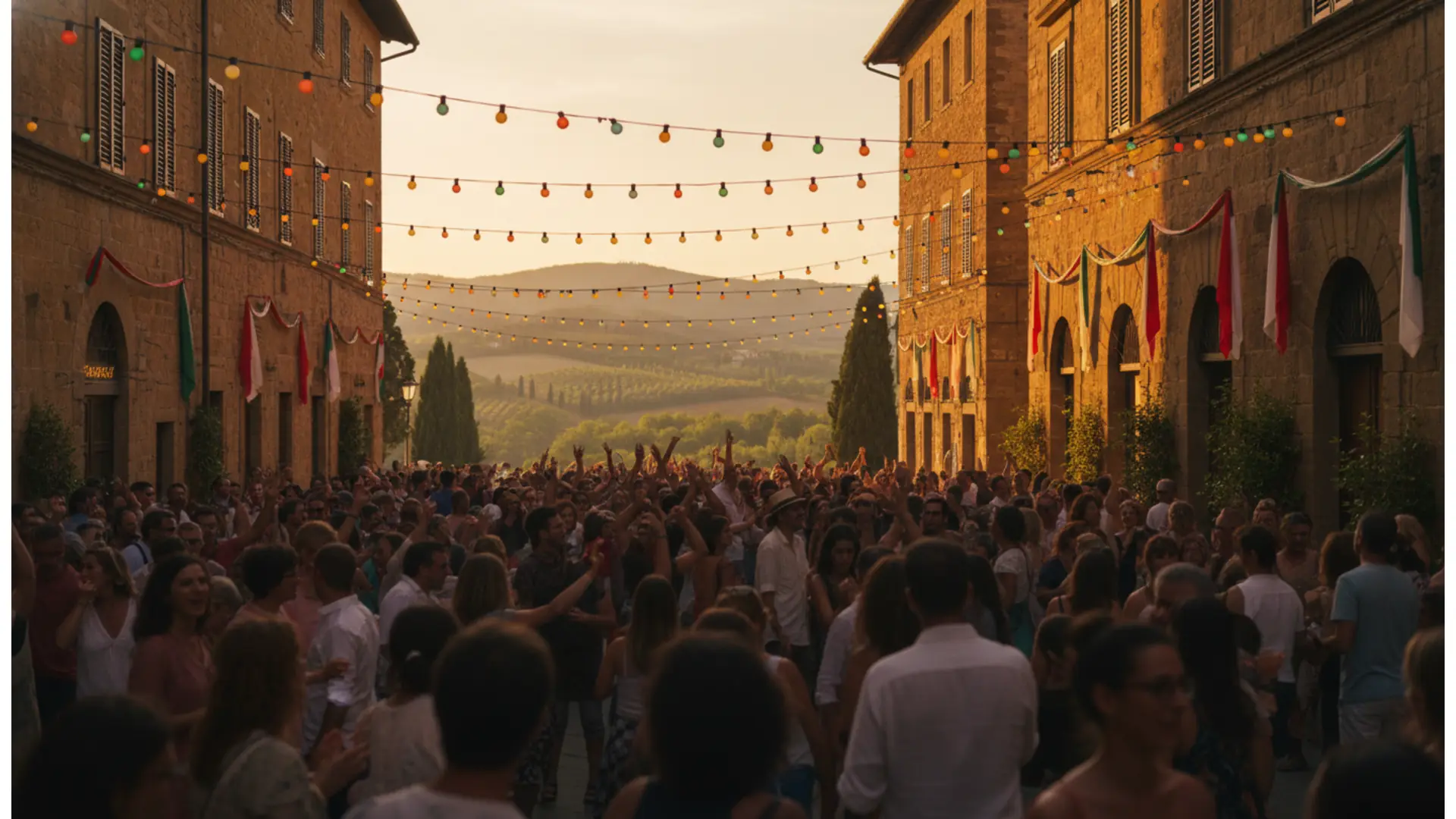
During the last two weeks of January, Nocera Superiore, a town in the province of Salerno in the heart of the Agro nocerino-sarnese, Campania, pauses its daily routine for the Patronal Feast of Saint Ciro. On January 31st, the day of the solemnity, city life revolves around the church of Pareti: bells mark the hours, celebrations follow one another from dawn until dusk, and devotion is visible in every district, from Pareti to Pucciano, from Croce Malloni to the town center. It is the most deeply felt date in the local calendar, even more so than civil holidays.
Saint Ciro, the physician who healed the poor
Ciro was born in Alexandria, Egypt, in the 3rd century. A physician by profession, tradition holds that he treated the poor for free; after escaping the persecution of Diocletian, he retired to Arabia to live as a hermit, only to return to Egypt and suffer martyrdom by beheading on January 31st. Hence the dual title by which the people of Nocera invoke him, hermit and martyr, and his patronage over the sick and those in the medical profession: a trait that is never merely symbolic during the festival, as every year the city's doctors are invited to receive a blessing before the statue.
From 1665 to today: the birth of the cult
The devotion of Nocera to Saint Ciro dates back to 1665, when Pope Alexander VII donated the saint's skull to the Marquis Girolamo Pilo. However, the popular cult took root primarily thanks to Father Antonio Majorino, parish priest of Pareti from 1880, who obtained a bone relic of the saint from the Gesù Nuovo church in Naples, authenticated in 1883 by Bishop Francesco Vitagliano. On June 10, 1883, the statue sculpted by the Neapolitan artist Melfi was placed in the church of San Bartolomeo Apostolo, and it is still carried in procession today; on June 25, 1954, Saint Ciro was officially proclaimed patron saint of Nocera Superiore. Since then, the name Ciro has become one of the most common in the city's baptismal registers.
The peregrinatio: the saint visiting the neighborhoods
The festival is not confined to a single location. Before the novena, the patron's effigy leaves Pareti for the peregrinatio, a visit to the other city parishes, which over the years has included San Giovanni Battista in Pucciano, Santa Maria Maggiore, and San Michele Arcangelo. The return takes place in a solemn procession, with a ritual stop in front of the Town Hall, where the mayor and the parish priest welcome the statue: a gesture that unites civil and religious authorities and concludes with a blessing entrusting the community to the patron saint.
The novena in Pareti
From January 22nd to 30th, the church of San Bartolomeo Apostolo hosts the novena: every evening features the rosary and the chaplet of Saint Ciro, followed by Holy Mass, with preaching entrusted to priests and deacons from the diocese who explore an aspect of the saint's life or a pastoral theme chosen by the parish each night. These are also the days when the community prepares for the festival, from decorating the church to welcoming pilgrims arriving from neighboring towns in the Agro.
January 31st: the solemnity
At midnight between January 30th and 31st, the bells of Pareti ring out to announce the patron's day. On the 31st, Holy Masses are held from the early morning until evening, in an almost uninterrupted flow of faithful before the statue and the relic. Two gestures are more anticipated than any other: the offering of bread by the city's bakers, an ancient sign of solidarity and sharing, and the blessing of the physicians, which recalls the saint's profession. There is also a Mass with the blessing of the sick and the veneration of the relics, a moment when the line of the faithful often spills out of the church doors.
The church of Saint Ciro, the heart of devotion
The focal point of everything is the church of San Bartolomeo Apostolo, which the locals simply call the "church of Saint Ciro": it stands at the foot of Monte Albino, west of the Pareti district. Built around 1450, likely on the site of the older church of San Marcello, it has been a parish seat since 1588; downsized in the 18th century with the demolition of the side chapels, it was severely damaged by the 1980 earthquake and returned to worship in 2016 after a long restoration.
Around the festival: what to see
Those arriving in Nocera Superiore for the solemnity will find a city with a layered past: the Paleochristian Baptistery of Santa Maria Maggiore, with its rare circular plan in Italy, the Hellenistic-Roman Theater, and the Domus of the Decumanus tell the story of the Roman-era Nuceria Alfaterna. A half-day visit pairs well with the patronal festival, which remains the moment when the community's social fabric is on full display, among different generations, confraternities, bakers, and simple devotees.
Saint Ciro Feast — edition 2026
Saint Ciro 2026 in Nocera Superiore
The 2026 edition followed the established rhythm of the patronal feast. From January 16 to 18, the effigy of Saint Ciro was welcomed in the parish of San Michele Arcangelo for the peregrinatio: three days during which, as the parish community recalled, the saint walked as a pilgrim among the homes of the neighborhood. On Sunday, January 18, the procession moved up from Croce Malloni to the Town Hall, where Mayor Gennaro D'Acunzi and Father Andrea Amato received the statue; the return to the church of San Bartolomeo Apostolo in Pareti concluded with the blessing entrusting the city to the patron saint.
Starting Thursday, January 22, the novena began in the church of Pareti, with evening Mass and preaching entrusted each night to priests from the diocese. At midnight between Friday, January 30, and Saturday, January 31, the bells of Pareti rang out, announcing the beginning of the solemnity.
Saturday, January 31, Holy Masses were held throughout the day. The most attended moment was the 6:30 PM celebration, presided over by His Excellency Monsignor Giuseppe Giudice, Bishop of Nocera Inferiore-Sarno, followed by the blessing of the physicians, in memory of Saint Ciro's work as a doctor and hermit. Traditional gestures returned alongside the celebrations: the offering of bread by the city's bakers and the veneration of the patron's relic.
Programme Saint Ciro Feast 2026
Highlights Saint Ciro Feast 2026
- The peregrinatio of the statue in the parish of San Michele Arcangelo, from January 16 to 18
- The procession from Croce Malloni to the Town Hall and the welcome by the mayor and the parish priest
- The blessing entrusting the city to the patron saint upon returning to Pareti
- The bells of Pareti ringing at midnight between January 30 and 31
- The solemn 6:30 PM Mass on January 31 presided over by Bishop Giuseppe Giudice
- The blessing of the physicians, the festival's most defining gesture
Prices Saint Ciro Feast 2026
Practical information — Saint Ciro Feast
Location
Church of San Bartolomeo Apostolo (Saint Ciro Church), via Pareti 106, 84015 Nocera Superiore (SA). Celebrations also involve other city parishes and the Town Hall, located at corso Giacomo Matteotti 23.
How to get there
By train: Nocera Superiore station on the Naples-Salerno line, a few minutes from the center; the Pareti district can then be reached by bus or car. By car: Nocera-Pagani exit on the A3 Naples-Salerno motorway, then follow signs for Pareti and Monte Albino. By plane: Naples Capodichino airport, approximately 50 km away.
Costs
All celebrations are free and open to the public.
Tips
On January 31st, Masses are held from early morning until evening: those wishing to avoid the crowds should choose the early morning celebrations, while the evening Mass presided over by the bishop is the most attended. During the days of the peregrinatio and on the day of the solemnity, the streets around Pareti may be closed to traffic: it is advisable to park further down and continue on foot. January in Campania is mild but humid, especially in the evening: layered clothing is recommended.
Festival-goer photos
No photos yet. Share yours!
Share your photos
5 photos max, 5 MB per photo (JPG, PNG, WebP)
Noticed an error or missing information?
Help us keep this listing up to date. Every proposal is verified by our team before publication.
Festival-goer reviews
No rating yet — be the first!
No comments yet. Be the first!
Were you there?
Share your experience with the community.
Published by Valentin Contard, festival listings writer. Reviewed, corrected and approved by Christophe Contard, editor-in-chief. .
Where does it take place — Saint Ciro Feast
Chiesa di San Bartolomeo Apostolo (chiesa di San Ciro), frazione Pareti
Via Pareti 106, 84015 Nocera Superiore