Palio del Velluto
Leonessa returns to the Renaissance: six Sesti, a velvet banner, and four days of living history
About Palio del Velluto
A Renaissance city in the Rieti Apennines
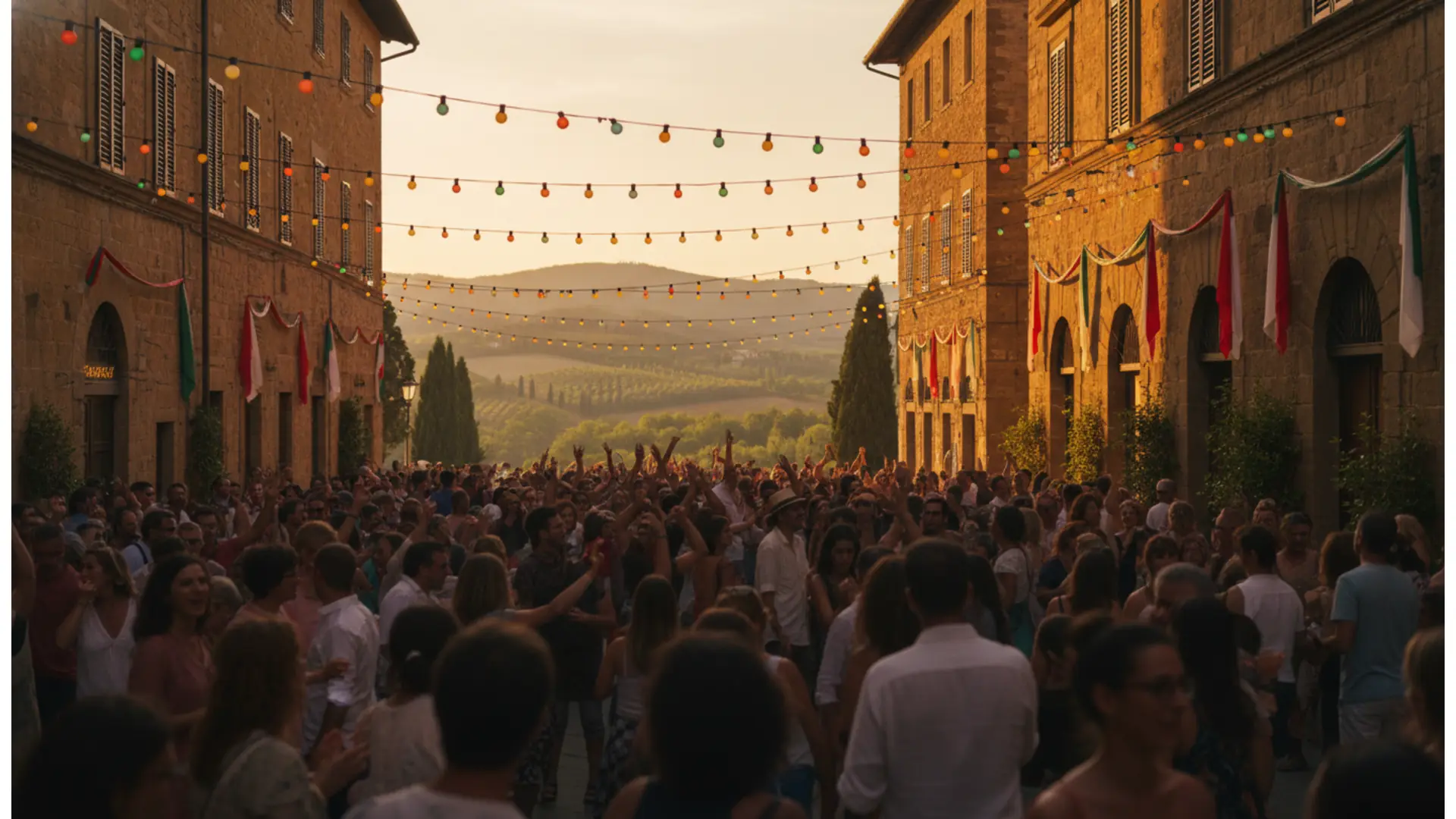
During the last week of June, the town of Leonessa, a village at an altitude of one thousand meters in the province of Rieti, Lazio, sets aside the present to return to the 16th century. The Palio del Velluto is now one of the most recognized historical re-enactments in the region: streets, squares, and doorways of the historic center fill with merchant stalls, street artists, men-at-arms, and noblewomen, while in the taverns, people eat and drink following Renaissance-inspired recipes. The period coinage, the carlino, returns to circulation as the festival's currency.
The history: Margaret of Austria and 1541
The event commemorates the games organized in 1541 for the solemn entry into the city of Margaret of Austria, daughter of Emperor Charles V, who had received Leonessa as a fief from her father. Local sources trace the first city palios back to the 15th century, before the celebrations were interrupted in the following century. The re-enactment in its current form was born in 1997 and has grown year after year to become the highlight of the Leonessa summer, curated by the Ente Palio with the scientific supervision of scholars of the period.
The six Sesti in competition
The competitive heart of the festival is the rivalry between the six Sesti into which Leonessa is divided, named after the castles that contributed to the founding of the village:
- Corno
- Croce
- Forcamelone
- Poggio
- Terzone
- Torre
At stake is the velvet banner, created each year by a different artist. The winning Sesto also earns the honor of selecting the Madonna who will portray Margaret of Austria in the following year's pageant.
Historical competitions
Three challenges award the Palio. The Pallagrossa is a team game similar to the Florentine historical football, physical and noisy, which ignites the crowd. The Bread Race sees six female competitors navigate an obstacle course while balancing a one-kilo loaf of bread. The Velvet Joust is the final equestrian event, with the knights of the Sesti striving to spear the ring at a gallop.
Pageants, drums, and fire shows
Alongside the competitions, an equally curated program unfolds: the Drummers' Joust, which opens the season a few days early, performances by flag-wavers, historical archery, parades of arts and crafts guilds, and the Grand Historical Pageant on Sunday, with hundreds of participants in costumes made from period patterns. The evenings conclude with itinerant theater and fire shows. The Children's Palio replicates the adults' challenges in a smaller version and involves the village families.
Why it's worth the trip
Leonessa is one of the most beautiful villages in the central Apennines, with its long arcaded square and Gothic churches; during the Palio, the entire urban fabric becomes a stage. Those arriving from Rome or Rieti find in just a few hours of travel a complete immersion in the Italian Renaissance, with a community of a few thousand inhabitants mobilizing entirely. It is an identity-driven festival, not a postcard reconstruction: and this, more than the spectacle, is why it deserves to be seen at least once.
Palio del Velluto — edition 2026
An edition between tradition and new projects
The 2026 Palio del Velluto confirmed the established four-day formula at the end of June, enriching it with a cultural work line promoted by the Ente Palio, chaired by Silvana Pasquali: the storytelling of the Margaritiane Cities, which involved schools and residents of centers linked to the figure of Margaret of Austria, and the competition for the banner, open to artists invited to reinterpret the palio with contemporary sensitivity but historical rigor.
The days
The prelude arrived on June 20 with the Drummers' Joust. On Friday, June 26, the taverns of the Sesti opened, and the inaugural ceremony took place, with the symbolic delivery of the city keys and the first Pallagrossa matches. Saturday, June 27 was dedicated to food culture, with a conference on the Renaissance banquet and the culinary competition «The Margaret of Austria Biscuit — Flavors of 1541», followed by the parade of guilds and evening itinerant shows. Sunday, June 28 was the highlight: open day of historical archery, Grand Historical Pageant, Velvet Joust, awarding of the Palio, and closing with the fire show by the Spadaccini di Assisi. Monday, June 29 featured the mass in costume, the Children's Palio, and the finale between theater and lottery.
After the Palio
The programming did not stop in June: workshops on historical jewelry, Renaissance hairstyles, and early music concerts accompanied the Leonessa summer until August 9.
Programme Palio del Velluto 2026
Saturday, June 20
- Drummers' Joust among the six Sesti
Friday, June 26
- Opening of the Sesti taverns with Renaissance-inspired cuisine
- Inaugural ceremony: delivery of the city keys to the Captain of the People and blessing of the knights
- First matches of the Pallagrossa
Saturday, June 27
- Conference on the banquet and nutrition in the Renaissance
- Culinary competition «The Margaret of Austria Biscuit — Flavors of 1541»
- Parade of arts and crafts guilds
- Bread Race
- Itinerant shows and scenic performances in the historic center
Sunday, June 28
- Open day of historical archery
- Performances by flag-wavers and musicians
- Grand Historical Pageant with about 600 participants and the Madonna dressed as Margaret of Austria
- Velvet Joust (horse ring joust) and awarding of the banner
- Fire show by the Spadaccini di Assisi
Monday, June 29
- Holy mass with costumed participants
- Children's Palio
- Concluding theatrical show and lottery draw
Summer extension
- Workshops on historical jewelry and Renaissance hairstyles
- Early music concerts, until August 9
Highlights Palio del Velluto 2026
- About 600 participants in Renaissance costume in the Grand Historical Pageant
- The challenge between the six Sesti: Corno, Croce, Forcamelone, Poggio, Terzone, and Torre
- The Pallagrossa, a team game similar to Florentine historical football
- The Bread Race, an obstacle course with a one-kilo loaf of bread in balance
- The Velvet Joust on horseback, the decisive test for the banner
- 2026 novelty: the Margaret of Austria biscuit competition
- The Sesti taverns, where you pay with the carlino, the festival's currency
Prices Palio del Velluto 2026
Practical information — Palio del Velluto
How to get there
By car from Rome: A1 motorway to Rome North, then SS4 Salaria towards Rieti and exit for Leonessa (about 2 hours). From Terni, you can reach the village through the Valnerina valley. The nearest train station is in Rieti, connected to Leonessa by regional bus lines; connections are limited on holidays, so a car remains the most convenient solution.
Parking and access
During the days of the Palio, the historic center is closed to traffic: you can park in areas outside the walls and continue on foot. Distances are short; the village can be crossed entirely in about ten minutes.
Costs
Access to the village and most street events is free. The taverns of the Sesti (Renaissance menus at popular prices) and some grandstands for the competitions are paid: updated information can be found on the official website ilpaliodelvelluto.it.
Tips
Leonessa is located at an altitude of one thousand meters: even at the end of June, the evenings are cool, so it is best to bring a light jacket. Wear comfortable shoes for the cobblestones. Book your accommodation well in advance; the village's capacity is limited and fills up during the Palio weekend.
Festival-goer photos
No photos yet. Share yours!
Share your photos
5 photos max, 5 MB per photo (JPG, PNG, WebP)
Noticed an error or missing information?
Help us keep this listing up to date. Every proposal is verified by our team before publication.
Festival-goer reviews
No rating yet — be the first!
No comments yet. Be the first!
Were you there?
Share your experience with the community.
Published by Valentin Contard, festival listings writer. Reviewed, corrected and approved by Christophe Contard, editor-in-chief. .
Where does it take place — Palio del Velluto
Centro storico di Leonessa