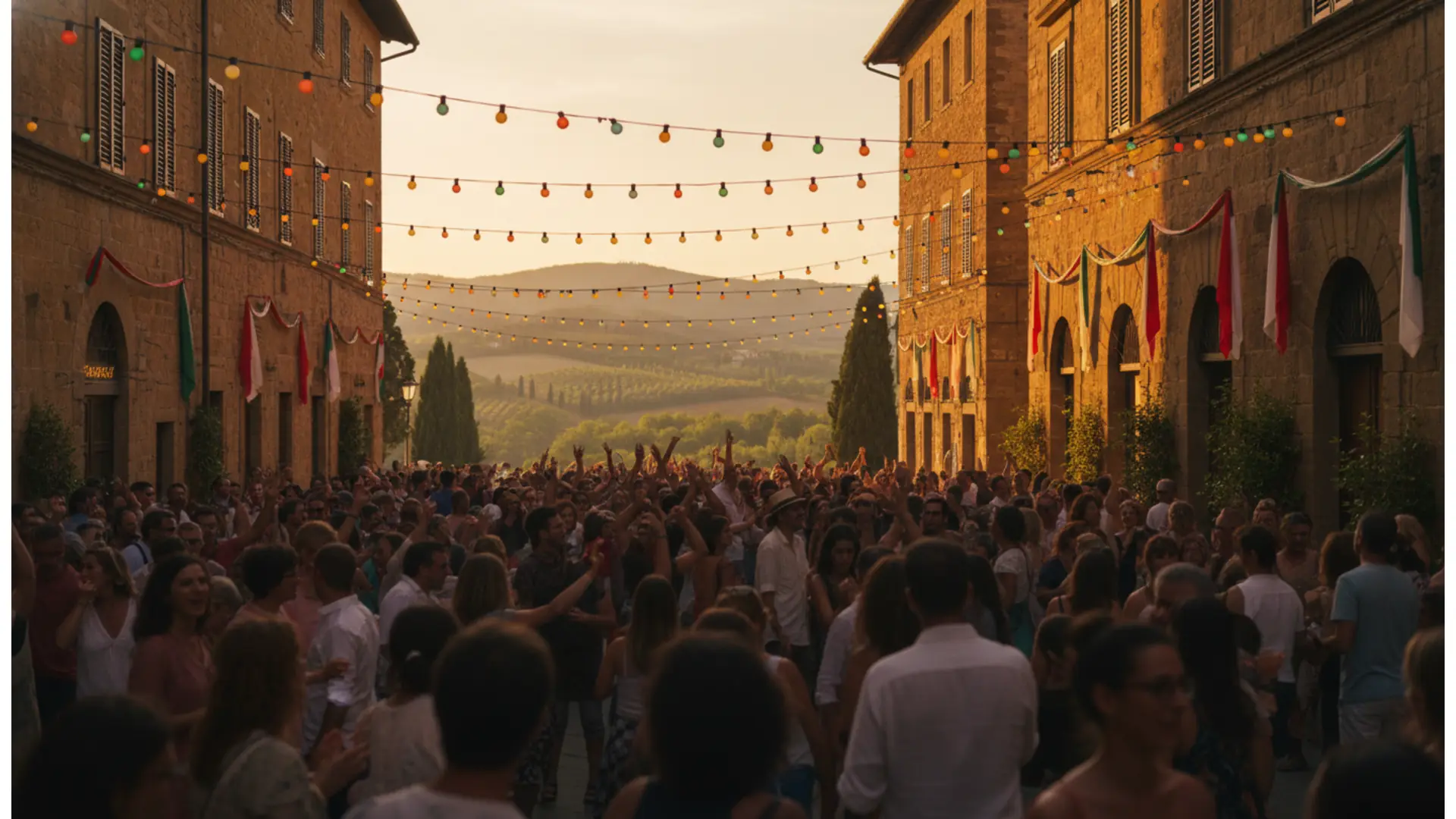
'Ndunduniata - Marcianise Carnival (with the Bottari)
The Carnival of the districts and the bottari in the city of Marcianise
About 'Ndunduniata
A Carnival you hear before you see
In Marcianise, a town of nearly forty thousand residents in the province of Caserta, Campania, Carnival is not announced by trumpets but by a dull, persistent rumble echoing from afar. It is the sound of barrels, vats, and scythes struck by the bottari, the percussionists of the traditional farming culture of the Terra di Lavoro. From that deep noise comes the name of the festival: the 'Ndunduniata, the Carnival with the bottari, which transforms the town's streets into a massive open-air stage every year.
The bottari, the sonic memory of Terra di Lavoro
The bottari play instruments that aren't really instruments: wooden barrels, vats, and iron scythes, beaten according to rhythms passed down from generation to generation in the villages around Caserta. In these communities, the practice is historically linked to the celebrations for Sant'Antuono — Saint Anthony the Abbot — and in Marcianise, it continues to thrive thanks to local groups who preserve the repertoire. Bringing the bottari into the Carnival means stitching together two folk rituals born from the same world: that of the fields, the fire, and the collective end-of-winter celebration.
The district allegorical floats
The heart of the event lies in the allegorical floats, built by hand by the districts and local groups in the months leading up to Carnival. Each float is the project of an entire neighborhood community: some work on the structure, others on the papier-mâché, and others on the choreography and costumes. The names, almost always in the Marcianise dialect, speak volumes about the spirit of the festival. In 2026, eleven floats paraded:
- Rione Palazzine
- E Wagliun Ro Rion Nuov
- Cor e Passion
- Puzzaniello
- A Passion Nov
- A tradizion e na Vot
- L'Ombra Scura
- A Cumpagnia Nov
- Musica e passion
- O Ritorn e na Passion
- Rione dei Felici
An association and a city
The 'Ndunduniata is organized by the Tiritò cultural association, which has been active for years in protecting local folk traditions, with the support of the Marcianise municipal administration, law enforcement, and civil protection — essential presences when tens of thousands of people pour into the streets behind the floats.
The popular vote for the best float
One of the most popular innovations of recent years is the online vote for the favorite float, which extends the festivities even after the parades and fuels healthy rivalry between the districts. In 2025, the verdict awarded Puzzaniello with 1,155 votes, ahead of E uagliun ro rion nuov (853 votes) and A gioventù nov (541 votes): numbers that tell the story of how deeply felt the competition is in the city better than any description.
When the unexpected changes the route
The Marcianise Carnival is a genuine street festival, and as such, it must contend with the reality of the city. In 2026, the collapse of a wall of an old building on Via Musone, at the corner of Via Sant'Anna, required the area to be cordoned off and the route to be modified: the floats bypassed Via Musone and Viale Europa, redrawing the path along Viale Gandhi and Viale Kennedy. It is a detail worth knowing if you are planning a visit: the final route is only announced a few days beforehand.
Why it's worth the trip
Those who arrive in Marcianise during the days of the 'Ndunduniata will not find a postcard-perfect carnival, but a festival that still belongs entirely to those who create it. There are no grandstands or tickets: you walk alongside the floats, linger with the bottari, or stop in front of a doorway where someone offers you a drink. It is a rare opportunity to understand how Carnival is experienced in the Campanian hinterland, far from tourist circuits, amidst dialect, music, and a sense of neighborhood belonging that has never been lost here.
'Ndunduniata — edition 2026
The sixth 'Ndunduniata
The 2026 edition of the Carnival with the bottari of Marcianise, organized by the Tiritò cultural association with the patronage of the Municipality, confirmed the well-established formula: an opening evening dedicated to the draw for the parade order and two great days of floats through the city streets in the province of Caserta.
Eleven allegorical floats, built in the preceding months by the districts and local groups, enlivened the two parades on February 15 and 17, accompanied by the percussion of barrels, vats, and scythes that give the event its name. The Shrove Tuesday finale, from the afternoon until late evening, drew thousands of people into the streets.
A structural unforeseen event — the collapse of a wall of an old building on Via Musone, at the corner of Via Sant'Anna — made it necessary to cordon off the area and modify the route, excluding Via Musone and Viale Europa and moving the parade to Viale Gandhi and Viale Kennedy.
Programme 'Ndunduniata 2026
Saturday, February 7, 2026 — The number draw
At 8:00 PM, the draw establishing the parade order for the floats took place, hosted by Ida Piccolo. This is the ranking that emerged from the urn:
- Rione Palazzine
- E Wagliun Ro Rion Nuov
- Cor e Passion
- Puzzaniello
- A Passion Nov
- A tradizion e na Vot
- L'Ombra Scura
- A Cumpagnia Nov
- Musica e passion
- O Ritorn e na Passion
- Rione dei Felici
Sunday, February 15, 2026 — First float parade
From 10:00 AM to 9:00 PM, the eleven allegorical floats crossed the city streets, accompanied by masked groups and the bottari.
Tuesday, February 17, 2026 — Final parade
Gathering of the floats at 3:00 PM near Via Evangelista; the parade continued along Viale Gandhi and Viale Kennedy until 9:30 PM. Compared to the initially planned route, Via Musone (at the intersection with Via Sant'Anna) and Viale Europa were excluded for safety reasons related to the wall collapse.
Highlights 'Ndunduniata 2026
- Sixth edition of the event, organized by the Tiritò cultural association.
- Eleven hand-built allegorical floats from the districts of Marcianise.
- Public draw for the parade order on February 7, hosted by Ida Piccolo.
- Percussion of the bottari on barrels, vats, and scythes, the festival's sonic trademark.
- Two parades: Sunday, February 15 (10:00 AM - 9:00 PM) and Shrove Tuesday, February 17 (3:00 PM - 9:30 PM).
- Route modified on the fly to Viale Gandhi and Viale Kennedy after the Via Musone collapse.
Prices 'Ndunduniata 2026
Practical information — 'Ndunduniata
How to get there
By car: A1 motorway, Caserta Sud exit, just a few minutes from the center of Marcianise. During the parade days, many streets in the center are closed to traffic: it is best to leave the car on the outskirts and continue on foot.
By train: The Marcianise railway station is served by regional trains; Caserta and Naples are a short distance away and well-connected.
Admission
All parades take place on the street and are free: there are no tickets or reserved paid areas.
Tips
- The route of the floats can change at the last moment: check for updates from the local press and the Tiritò association's channels.
- The parades last many hours and end in the evening: wear comfortable shoes and winter clothing.
- The event is family-friendly, but the crowd around the floats is intense: it is best to keep small children at a safe distance from the moving structures.
Festival-goer photos
No photos yet. Share yours!
Share your photos
5 photos max, 5 MB per photo (JPG, PNG, WebP)
Noticed an error or missing information?
Help us keep this listing up to date. Every proposal is verified by our team before publication.
Festival-goer reviews
No rating yet — be the first!
No comments yet. Be the first!
Were you there?
Share your experience with the community.
Published by Valentin Contard, festival listings writer. Reviewed, corrected and approved by Christophe Contard, editor-in-chief. .
Where does it take place — 'Ndunduniata
Strade e rioni di Marcianise