Muzzuni Festival
Italy's oldest folk festival, blending the sacred and the profane in the heart of the Nebrodi mountains
About Muzzuni
Italy's oldest folk festival
In the village of Alcara li Fusi, nestled in the heart of the Nebrodi Park in the province of Messina, the Muzzuni Festival is celebrated every year at the end of June. It is widely considered the oldest folk festival in Italy. Its roots reach back to Hellenic antiquity: it began as a propitiatory rite for the fertility of the land, but also serves as a hymn to nature, love, friendship, and youth, having survived unchanged through the centuries.
From the summer solstice to St. John
The festival originally coincided with the summer solstice and was celebrated on June 21st. With the advent of Christianity, it was moved to June 24th, the day dedicated to St. John the Baptist, the beheaded martyr. Since then, pagan and Christian elements have merged in this rite that has been repeated for centuries. The term 'muzzuni' itself refers to the neckless (or 'chopped') jug, the harvested wheat gathered in sheaves, and, in a religious sense, the beheaded saint.
The altars and the muzzuni
The heart of the festival lies in the preparation of altarini (small altars) in the most characteristic alleys and corners of the village. These altars house the muzzuni: a neckless jug covered in silk and gold jewelry, filled with stalks of wheat and barley. The altars are embellished with pizzare—hand-woven rugs made on wooden looms by the local women—and plates of laureddi, barley sprouts that young girls grow in the dark inside bowls in the days leading up to the festival, an ancient offering to the goddess Demeter.
Songs, dances, and the 'comparatico'
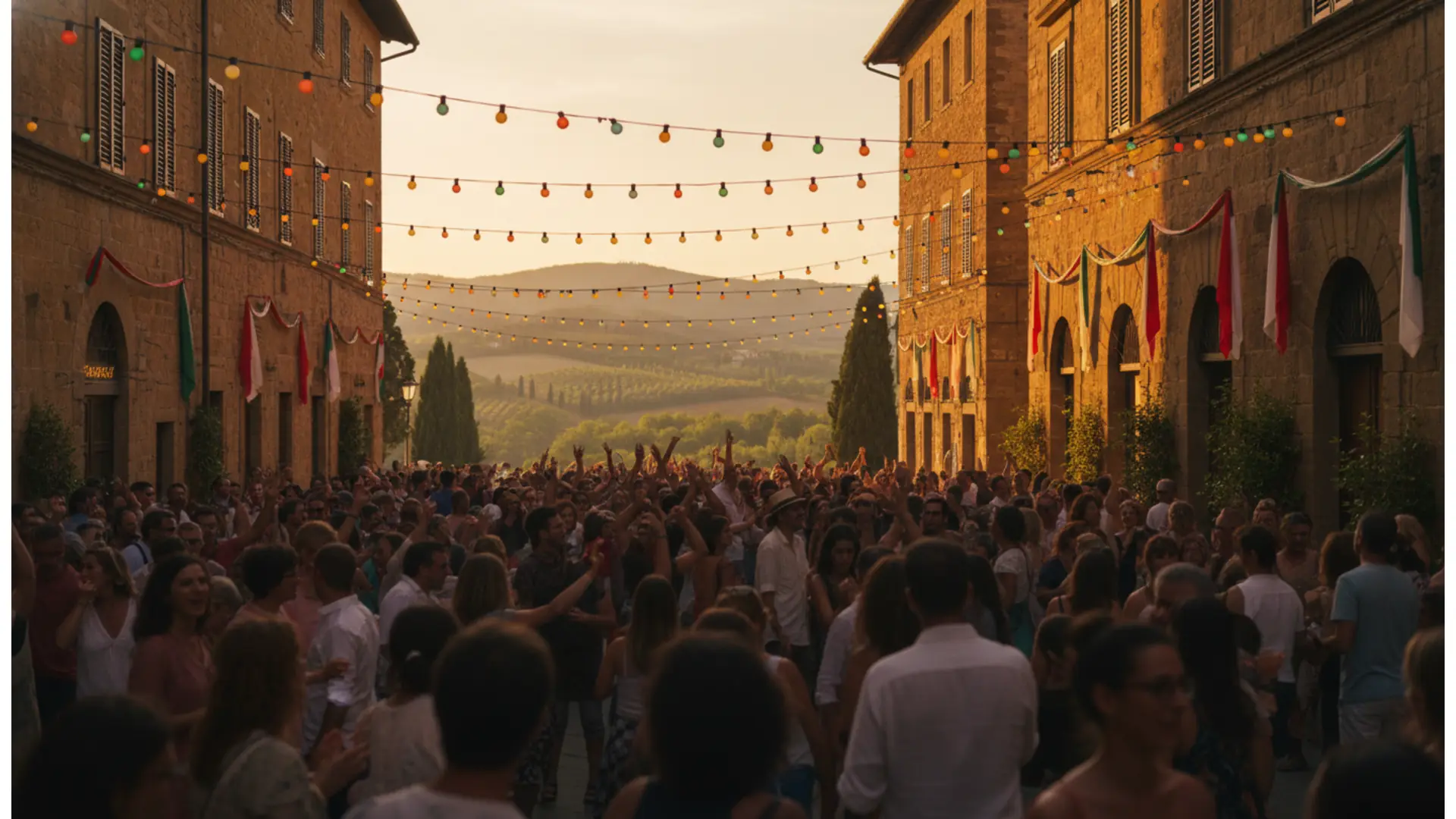
From the evening onwards, groups of folk musicians animate the streets with polyphonic songs known as chianote and ruggere, tracks that tell stories of peasant life and, above all, love. In front of the muzzuni, the rite of the comparatico is renewed, strengthening old friendships and forging new ones through the exchange of sweets and promises. The festival hosts Italian and international folk groups, creating a cultural exchange that draws numerous visitors to the Nebrodi mountains.
An intangible heritage of Sicily
Due to its cultural significance, the Muzzuni Festival is inscribed in the Register of Intangible Heritage of the Sicilian Region. It is an unmissable event for those wishing to discover the deep soul of Alcara li Fusi and the villages of the Nebrodi, where tradition, religion, and rural memory coexist in one of Sicily's most evocative celebrations.
Muzzuni — edition 2026
The 2026 Muzzuni Festival in Alcara li Fusi (Messina) runs from Saturday, June 20th, to Tuesday, June 24th, under the theme 'Rite, Earth, Rebirth'.
The weekend of June 20-21 offers a preview titled 'Waiting for the Muzzuni', with tastings of local delicacies and plenty of music. International folk groups are expected, including ensembles from Argentina and Poland.
The highlight is the night of June 24th, the Feast of St. John the Baptist: in the afternoon, there is Holy Mass and a procession with the statue of the saint from the Mother Church, followed in the evening by a historical re-enactment and the presentation of the Muzzuni, while altars are set up in the various neighborhoods with itinerant music and polyphonic singing. The rite of the comparatico is renewed in front of the muzzuni. Admission to all events is free.
Programme Muzzuni 2026
Preview
- June 20-21 — 'Waiting for the Muzzuni': tastings of local products and music
June 23 (Eve)
- Conference on the festival at the San Giovanni Hall
- Evening concert of traditional music
June 24 (Main Festival)
- Afternoon: Holy Mass and procession of St. John the Baptist from the Mother Church
- Evening: Historical re-enactment and presentation of the Muzzuni in the square
- Followed by: Setting up of altars in the neighborhoods with itinerant music, folk groups, and polyphonic songs (chianote and ruggere); rite of the comparatico
Highlights Muzzuni 2026
- 2026 Theme: 'Rite, Earth, Rebirth'
- 'Waiting for the Muzzuni' preview (June 20-21)
- International folk groups (Argentina, Poland)
- Procession of St. John the Baptist and Muzzuni re-enactment (June 24)
- Altars, polyphonic songs, and the 'comparatico' rite
Prices Muzzuni 2026
Practical information — Muzzuni
How to get there
Alcara li Fusi is located in the Nebrodi mountains, in the province of Messina. By car, take the A20 Messina-Palermo motorway, exit at Sant'Agata di Militello or Brolo, then follow the inland roads. The nearest train station is in Sant'Agata di Militello, on the Tyrrhenian line, from where you can continue by car or local bus.
Admission and tips
Participation in the festival is free. Events take place in the historic center, where streets and alleys are pedestrian-only: comfortable footwear is recommended. The highlight is the night of June 24th; it is advisable to arrive early to find parking in the areas outside the village.
Festival-goer photos
No photos yet. Share yours!
Share your photos
5 photos max, 5 MB per photo (JPG, PNG, WebP)
Noticed an error or missing information?
Help us keep this listing up to date. Every proposal is verified by our team before publication.
Festival-goer reviews
No rating yet — be the first!
No comments yet. Be the first!
Were you there?
Share your experience with the community.
Published by Valentin Contard, festival listings writer. Reviewed, corrected and approved by Christophe Contard, editor-in-chief. .
Where does it take place — Muzzuni
Centro storico di Alcara li Fusi