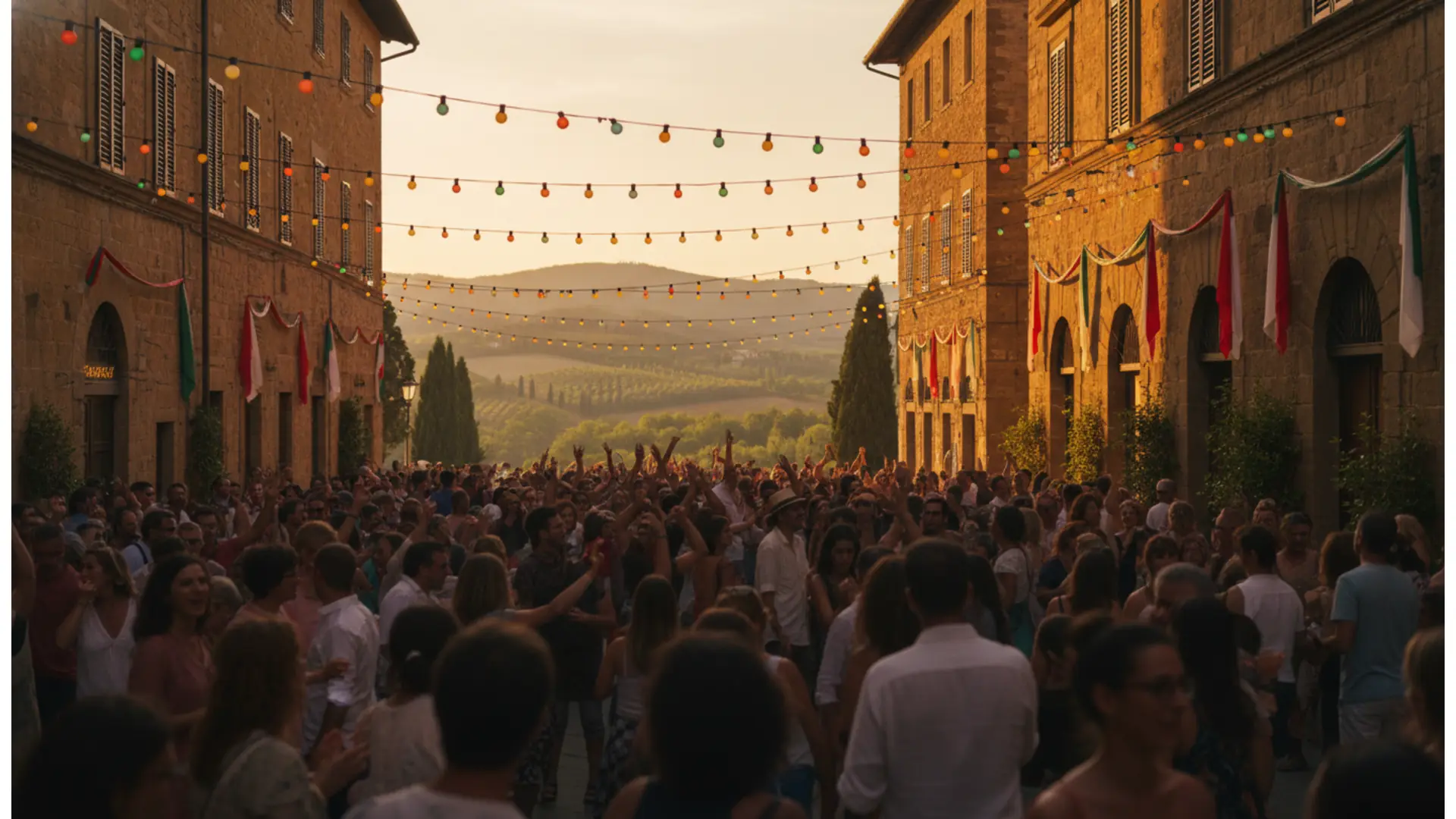
Micigliano Pasquarella
The itinerant Epiphany carols in the village at the foot of Mount Terminillo
About Micigliano Pasquarella
A tradition that spans the centuries
The Micigliano Pasquarella is the major winter event in Micigliano, a tiny municipality in the province of Rieti, in the Lazio region, nestled on the eastern slopes of Mount Terminillo. Every year, on the night of January 5th, the eve of Epiphany, the village transforms into a living nativity scene: groups of singers walk through the stone alleys, stopping at every door to perform their traditional well-wishing carols.
What is the Pasquarella?
The Pasquarella (or Pasquella, as it is known in the Marche and Umbria regions) is a ritual rooted in oral peasant tradition, found throughout the Apennine area spanning Lazio, Umbria, Marche, and Romagna. The name does not refer to Easter (Pasqua), but rather to the announcement of good news: the singers portray the shepherds bringing the news of Jesus' birth from door to door, anticipating the arrival of the Magi. The songs are woven with wishes for the New Year and a request for a small offering, usually in the form of money, food, or wine.
The pasquarellari, costumes, and instruments
The protagonists are the pasquarellari, who wear the historic pastoral attire of the Upper Velino Valley: heavy boots, wool leggings, sheepskins, velvet trousers, flannel shirts, and capes. They are accompanied by a small instrumental ensemble that has remained unchanged over time:
- Organetto — the diatonic accordion that carries the melody;
- Ciaramella — the double-reed instrument of the Apennine pastoral tradition;
- Tambourine — which sets the rhythm for the procession from house to house.
The lyrics are not written down; they are passed down orally from generation to generation, and every village in the Rieti area preserves its own version of verses and choruses. It is precisely this family-based transmission that makes the Micigliano Pasquarella such a fragile and precious intangible heritage.
The Pupazza, a fiery finale
The most anticipated moment comes at the end of the evening, when the singing fades and attention shifts to the Pupazza: a papier-mâché Befana covered in fireworks that is set alight in the square. The burning effigy recalls the propitiatory bonfires linked to seasonal transitions: when the flames die down, only charcoal and ash remain—symbols of renewal and good omens for the year ahead. The same ritual, with local variations, can be found in the nearby village of Borbona and other towns in the Rieti area.
The meaning of the festival today
Micigliano has only a few dozen permanent residents and is one of the least populated municipalities in Lazio. For this reason, the Pasquarella has a value that goes beyond folklore: it is the night the village comes back to life, as those who have moved to Rieti, Rome, or further away return to their family homes. The offerings collected during the rounds are shared in a communal dinner, following the ancient logic of the reciprocal gift.
Visiting the event
The Pasquarella is not a stage performance; it takes place in the streets and on doorsteps, and visitors are welcomed as part of the procession. Bring comfortable shoes for the sloping alleys and warm clothing, as temperatures in the mountains drop well below freezing in January. The event is organized by the Pro Loco Micigliano-Terminillo Tourist Association, which works every year with local families to keep the tradition alive.
In the surroundings
Micigliano is an ideal base for exploring the Upper Velino Valley: the Terminillo massif with its ski lifts and hiking trails, the Velino Gorges, and the nearby villages of Borbona, Posta, and Antrodoco, all in the province of Rieti. Those arriving for the Pasquarella can easily extend their stay by a day to visit Rieti, the provincial capital and the geographical center of Italy, located about 30 kilometers away.
Micigliano Pasquarella — edition 2026
Micigliano Pasquarella 2026
In 2026, the tradition was once again renewed on the evening of January 5th. Groups of singers traversed the historic center of Micigliano, in the province of Rieti, stopping in front of homes to perform the well-wishing verses passed down orally, accompanied by the traditional instruments of the Apennine pastoral culture.
As every year, the evening concluded with the lighting of the Pupazza, the papier-mâché Befana covered in fireworks that burns in the square to symbolize the end of the old year.
At the end of the event, the Pro Loco Micigliano-Terminillo Tourist Association published a thank-you note to the entire village population for their warmth and participation, confirming that the tradition remains alive and deeply felt despite the small size of the village.
Programme Micigliano Pasquarella 2026
The Pasquarella does not follow a stage program but the traditional ritual of the 'questua' (begging/caroling):
- Evening of January 5th — Gathering of the 'pasquarellari' in pastoral costumes (boots, wool leggings, sheepskins, cape).
- Itinerant caroling — Moving from house to house through the historic center, with well-wishing songs accompanied by organetto, ciaramella, and tambourine; at each stop, families offer food and wine to the singers.
- Finale in the square — Lighting of the Pupazza, the papier-mâché Befana covered in fireworks.
- Convivial gathering — Sharing the offerings collected during the evening.
Precise times are not announced in advance: the Pro Loco communicates them on their social media channels in the days immediately preceding the event.
Highlights Micigliano Pasquarella 2026
- The well-wishing Epiphany carols passed down orally from generation to generation.
- The historic pastoral costume of the Upper Velino Valley worn by the 'pasquarellari'.
- The traditional instrumental ensemble with organetto, ciaramella, and tambourine.
- The lighting of the Pupazza, the papier-mâché Befana covered in fireworks.
- The atmosphere of a mountain village that comes back to life for one night.
Prices Micigliano Pasquarella 2026
Practical information — Micigliano Pasquarella
When
Every year on January 5th, the eve of Epiphany, in the evening. The procession takes place through the streets of the historic center and concludes in the square with the lighting of the Pupazza.
How to get there
By car: From Rieti, take the SS4 Via Salaria towards Antrodoco, then climb towards Micigliano (approx. 30 km, 40 minutes). In January, mountain roads may be snowy: winter tires or snow chains are highly recommended.
By train: The nearest station is Antrodoco-Borgo Velino, on the Terni-Rieti-L'Aquila-Sulmona line; from there, you must continue by car or taxi.
From Rome: Approximately 110 km via the A24 motorway (Valle del Salto exit) or via the Via Salaria, just over two hours.
Admission and costs
The event is free and takes place outdoors. It is traditional to leave a small offering to the 'pasquarellari' when they knock on your door.
Tips
- Wear heavy winter clothing: you will be outdoors for a long time in the evening at high altitude.
- Wear shoes with non-slip soles for the stone alleys, which are often icy.
- Micigliano has very few accommodation options: for overnight stays, it is better to look in Terminillo, Antrodoco, or Rieti.
- For updated schedules, follow the Pro Loco di Micigliano Facebook page, which publishes the program in the days leading up to the event.
Festival-goer photos
No photos yet. Share yours!
Share your photos
5 photos max, 5 MB per photo (JPG, PNG, WebP)
Noticed an error or missing information?
Help us keep this listing up to date. Every proposal is verified by our team before publication.
Festival-goer reviews
No rating yet — be the first!
No comments yet. Be the first!
Were you there?
Share your experience with the community.
Published by Valentin Contard, festival listings writer. Reviewed, corrected and approved by Christophe Contard, editor-in-chief. .
Where does it take place — Micigliano Pasquarella
Centro storico di Micigliano