La Damigella del Re - Medieval Festival
Three days of Aragonese 15th-century life in the village of Roccarainola, featuring a castle, historical pageant, and the Palio dei Casali
About La Damigella del Re
Three days of the Middle Ages in Roccarainola
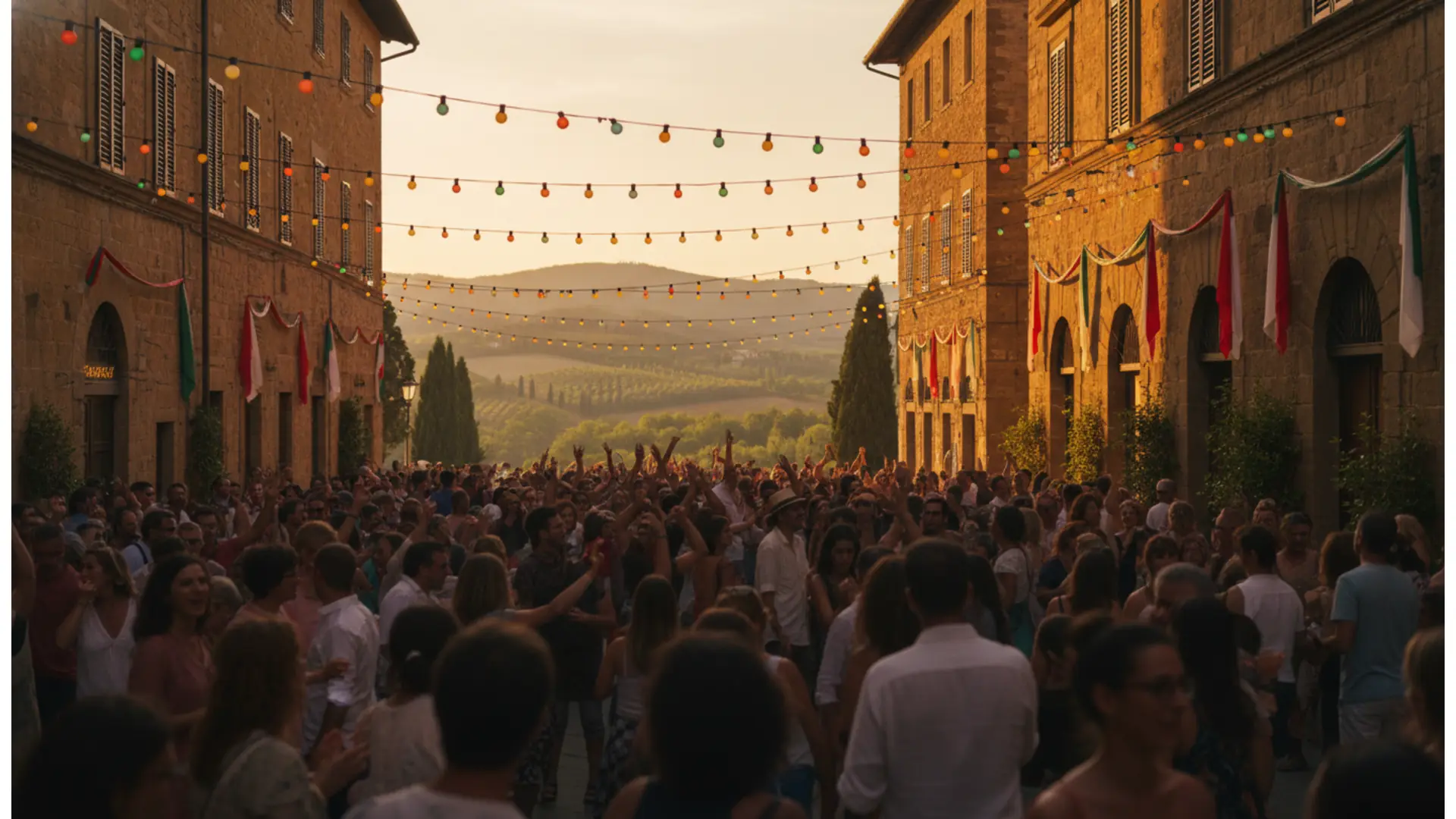
La Damigella del Re is the medieval festival of Roccarainola, a town in the Nola area of the province of Naples, in Campania. Every year in July, the village pauses the present to embrace the 15th century: the streets of the historic center fill with costumed figures, artisan stalls, musicians, and taverns, while the Norman Castle returns to being the scenic heart of the community. It is not merely a costume parade, but a collective event involving local associations and hundreds of volunteers who dedicate months to its preparation.
The history behind the festival
The re-enactment focuses on the visit of Alfonso of Aragon, King of Naples, to the castle of Roccarainola, where he was a guest of the d'Alagno family in the 15th century. At the center of the story is Lucrezia d'Alagno, the young noblewoman linked to the sovereign, who has been part of the local Nola folklore for centuries. The narrative is intertwined with the historical-legendary novel Il Romito di San Donato, set in the final decades of the Aragonese Kingdom, from which the festival draws much of its inspiration. Each edition features different actors in the main roles; in recent years, well-known television actors have taken the stage, accompanied by local young women chosen to play the role of the Damigella.
The medieval village
Throughout the event, the town center transforms into a period village, open from the afternoon until late at night. The program, which varies from year to year, revolves around several staple events:
- street artist performances, including jugglers, fire-eaters, acrobats, and duelists;
- medieval games and educational workshops designed for children and families;
- falconry displays and demonstrations of ancient weaponry in the weapons field;
- 15th-century music and dance performed by historical groups, drummers, and flag-wavers;
- a medieval market with artisan stalls and local products;
- taverns and inns where you can sample dishes inspired by ancient recipes.
The Palio dei Casali and the grand historical pageant
The competitive heart of the festival is the challenge between the casali (districts) of Roccarainola, who compete for the Cencio, a banner painted each year by a different artist and awarded to the winning district. The presentation of the Cencio, a few days before the opening, is an event in itself and is often accompanied by an art exhibition. The festival culminates on Sunday evening with the grand historical pageant, which winds through the town with hundreds of participants in period costumes and concludes under the castle with a fireworks display.
Among woods, castles, and heritage
Roccarainola is more than just a backdrop: during the festival, you can book guided tours of the town's artistic and cultural sites and excursions into the state forest surrounding the area. It is a way to connect the re-enactment to the real heritage of the territory, exploring the castle ruins, ancient churches, and trails that climb toward the Cicala and Partenio mountains.
Who organizes the event
La Damigella del Re is promoted by the Lucrezia d'Alagno Cultural Association in collaboration with the Municipality of Roccarainola and local associations. Access to the medieval village and shows is traditionally free; only food and drinks in the taverns and some guided tours require payment. It is an event designed for all ages, which has become one of the most anticipated summer appointments in the Nola area.
Why it is worth the trip
Less than an hour from Naples, La Damigella del Re offers the atmosphere of an authentic village festival, where the Middle Ages are not a theme-park set, but a pretext to revive local memory, craftsmanship, and cuisine. Those who arrive on Sunday will experience the most spectacular moment; those who stay for all three days will discover the more intimate side of the event, filled with workshops, artisan shops, and small theatrical scenes played out in the alleys.
La Damigella del Re — edition 2026
The 11th edition, from July 10 to 12, 2026
For the 2026 edition, La Damigella del Re occupied the historic center of Roccarainola for three days, from Friday, July 10, to Sunday, July 12. The official presentation was held on June 5 in the municipal council hall, in the presence of Mayor Giuseppe Russo and the participating associations.
The performers
The role of Lucrezia d'Alagno was entrusted to the young Giusy Peccerella, while actor Sebastiano Somma, originally from Castellammare di Stabia, took on the role of King Alfonso of Aragon. The new Cencio, the banner awarded in the challenge between the districts, was created by the artist Ernesto Santaniello from Nola.
What the festival offered
As in previous editions, the program alternated between a medieval village, street artists, ancient games, period music and dances, artisan stalls, and taverns with traditional dishes, concluding with the grand historical pageant and the proclamation of the winning district.
Programme La Damigella del Re 2026
Structure of the event
Three days, from Friday, July 10, to Sunday, July 12, 2026, with the historic center of Roccarainola transformed into a medieval village and the Norman Castle as the backdrop for the event.
- Friday, July 10 - opening of the medieval village, artisan stalls, taverns, and first roving performances by street artists.
- Saturday, July 11 - day dedicated to medieval games, workshops for children, period music and dances, performances by historical groups, and guided tours.
- Sunday, July 12 - final day with the challenge between the districts for the Cencio and, in the evening, the grand historical pageant with hundreds of participants in 15th-century costumes.
Protagonists of the 2026 edition
- Lucrezia d'Alagno: Giusy Peccerella
- King Alfonso of Aragon: actor Sebastiano Somma
- 2026 Cencio painted by Nola artist Ernesto Santaniello
The detailed schedule of individual events was released by the organizers in the days leading up to the event via the festival's Facebook page and the channels of the Municipality of Roccarainola.
Highlights La Damigella del Re 2026
- 11th edition of the medieval festival, presented on June 5, 2026, in the council hall
- Sebastiano Somma as King Alfonso of Aragon
- Giusy Peccerella in the role of Lucrezia d'Alagno
- New Cencio signed by artist Ernesto Santaniello from Nola
- Medieval village, taverns, and street artists in the historic center
- Grand closing historical pageant on Sunday evening
Prices La Damigella del Re 2026
Practical information — La Damigella del Re
How to get there
By car: from the A16 Naples-Canosa motorway, take the Nola exit, then the SS7bis and provincial roads toward Roccarainola (about 10 km). From Naples, the journey takes approximately 45 minutes. During the festival, the historic center is closed to traffic: it is best to leave your car in the parking areas at the edge of the village and continue on foot.
By train and bus: Nola station on the Circumvesuviana (EAV) line from Naples Porta Nolana, then a connecting bus to Roccarainola.
Admission and hours
Free admission to the medieval village and shows. Taverns and some guided tours require payment. Activities run from late afternoon until late at night, with daytime openings on the weekend.
Tips
Wear comfortable shoes: the festival route includes uphill roads and cobblestones. For the Sunday evening historical pageant, it is advisable to arrive early to find a good spot along the route. Those wishing to stay overnight can find accommodation in Nola, Cicciano, and the surrounding Nola area.
Contacts
Municipality of Roccarainola, tel. +39 081 8293449. Lucrezia d'Alagno Cultural Association, [email protected]. Updates and program details are available on the festival's Facebook page.
Festival-goer photos
No photos yet. Share yours!
Share your photos
5 photos max, 5 MB per photo (JPG, PNG, WebP)
Noticed an error or missing information?
Help us keep this listing up to date. Every proposal is verified by our team before publication.
Festival-goer reviews
No rating yet — be the first!
No comments yet. Be the first!
Were you there?
Share your experience with the community.
Published by Valentin Contard, festival listings writer. Reviewed, corrected and approved by Christophe Contard, editor-in-chief. .
Where does it take place — La Damigella del Re
Centro storico e Castello Normanno di Roccarainola