Fera 'Mpessima (Mule and Crosses Fair)
The ancient Lenten fair in the Grico village of Sternatia
About Fera 'Mpessima
An ancient fair in the heart of Grecìa Salentina
The Fera 'Mpessima is one of the most deeply rooted traditions of Sternatia, a small village of just over two thousand residents in the province of Lecce, in the heart of Grecìa Salentina—the Hellenophone area of Salento where people still speak Grico, an ancient language of Greek origin. A centuries-old fair, the 'Mpessima has its roots in an era when village life revolved around agriculture and livestock, and farmers eagerly awaited this event to purchase the working animals needed for their fields.
Two fairs during Lent
The unique feature of the 'Mpessima is that it is divided into two distinct events during the Lenten period, both linked to the liturgical calendar:
- The Mule Fair, held on the second Sunday of Lent: this is the historic livestock fair, once dedicated to the buying and selling of mules and pack animals.
- The Covered Crosses Fair, also known as the Heifer Fair, held on the fifth Sunday of Lent: the name refers to the respect for the Lenten period and the proximity to Passion Sunday, when crosses in churches were traditionally veiled.
According to local tradition, Sternatia once hosted three fairs; one was reportedly traded to the neighboring town of Corigliano d'Otranto in exchange for the papier-mâché statue of Saint George, the town's patron saint.
Why is it called 'Mpessima?
The curious name 'Mpessima (meaning "terrible" or "worst") is said to derive from the adverse weather conditions that consistently accompanied these early spring days: cold, rain, and wind, however, have never stopped the fair, which continues to be held every year regardless of the weather.
What you will find at the fair
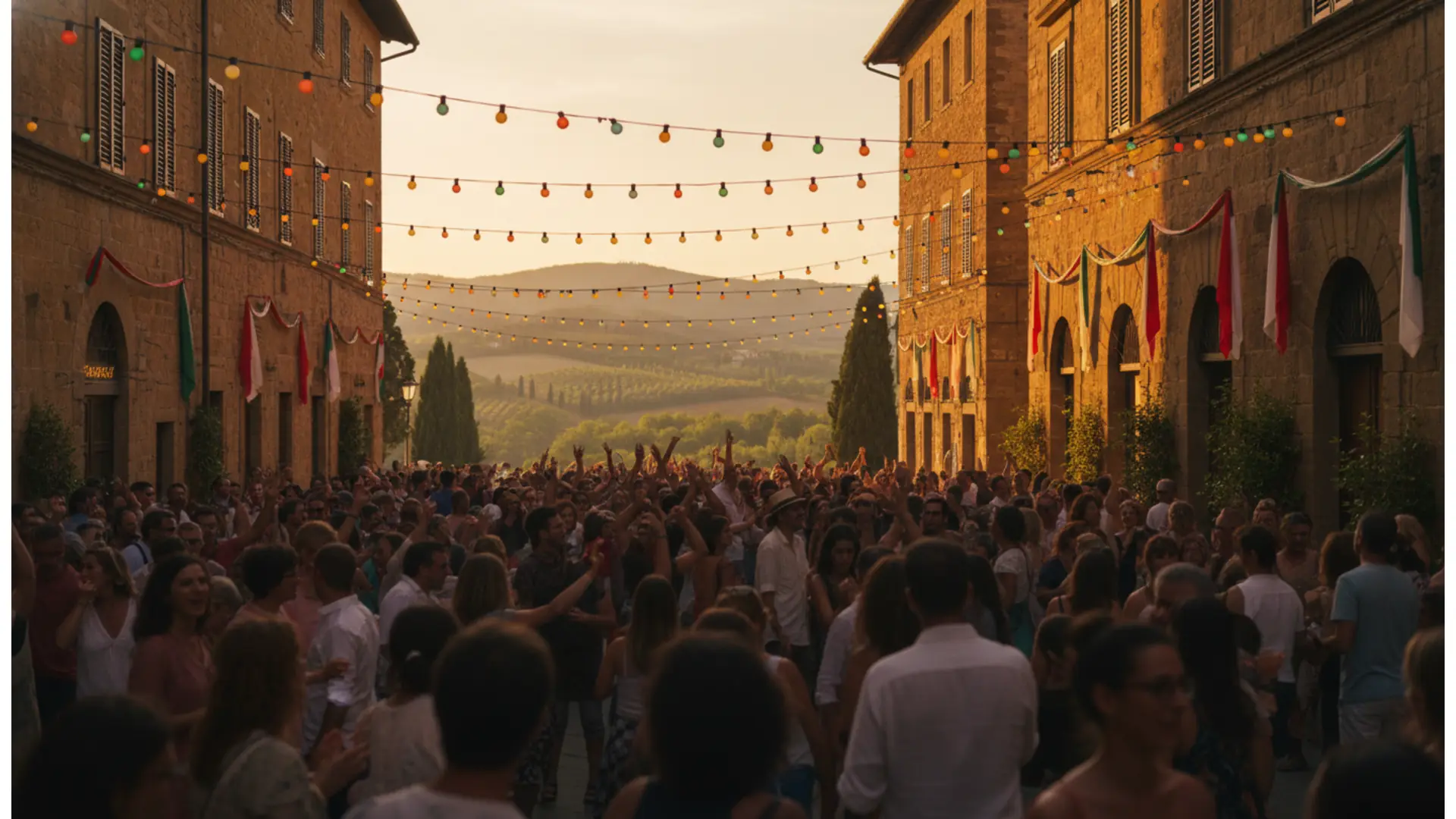
Today, the 'Mpessima has lost its original function as a livestock market, but it remains a lively popular event that fills the squares and streets of the historic center. Among the colorful stalls, you will find agricultural tools, small birds and poultry, household items, sweets, and toys. There is no shortage of rides for children and the rediscovery of culinary specialties linked to peasant tradition, such as lu schiattiddhu (salted sardines and scapece served on bread, accompanied by wine). For the town, it is above all a moment of collective gathering: once an opportunity for young couples to take their first struscio (stroll) among the stalls, today it is a community festival that enlivens the Grico village at the beginning of spring.
Sternatia, a land of Grico language and culture
Visiting Sternatia during the Fera 'Mpessima is also an opportunity to discover one of the most fascinating villages in Salento: the Baroque Palazzo Granafei, the Church of Maria SS. Assunta with its 18th-century bell tower, the menhirs, and traces of the millennial Byzantine presence. A cultural heritage that, together with the Grico language, makes this Puglia town a unique place in the regional landscape.
Fera 'Mpessima — edition 2026
The 2026 Fera 'Mpessima renewed the centuries-old tradition of Sternatia with its two Lenten events. On March 1st, the Mule Fair, the historic livestock market, was held; on March 15th, it was the turn of the Covered Crosses Fair (also known as the Heifer Fair), exceptionally brought forward from the fifth Sunday of Lent due to a referendum.
On both days, the historic center of the Grico village came alive with stalls selling agricultural tools, small birds, household goods, and sweets, while there was no shortage of children's rides and the rediscovery of specialties like lu schiattiddhu. The event, promoted by the Radici e Tradizioni association, confirmed its role as a community and identity-building event for Sternatia and the entire Grecìa Salentina.
Programme Fera 'Mpessima 2026
Sunday, March 1, 2026 — Mule Fair
- Historic fair in the streets and squares of the center: stalls, mechanical agricultural tools, small birds, and poultry.
- Stands with local products and sweets; rediscovery of lu schiattiddhu (salted sardines and scapece on bread, with wine).
- Rides and entertainment for children.
Sunday, March 15, 2026 — Covered Crosses Fair (Heifer Fair)
- Second event of the 'Mpessima, moved forward due to a referendum.
- Market with stalls, traditional peasant products, and local gastronomic specialties.
- Atmosphere of popular celebration and community gathering in the Grico village.
Highlights Fera 'Mpessima 2026
Prices Fera 'Mpessima 2026
Practical information — Fera 'Mpessima
Location
The fair takes place in the historic center of Sternatia (province of Lecce), across the main squares and peripheral streets of the town.
How to get there
By car: Sternatia can be reached via the SS16 and the provincial roads of Grecìa Salentina, about 25 km from Lecce. By train: the nearest station is Zollino or Lecce, on the Ferrovie del Sud Est network. By plane: Brindisi-Casale airport, about an hour's drive away.
Admission
Access to the fair is free.
When
The 'Mpessima is traditionally held on the second and fifth Sundays of Lent, falling between late February and early April depending on the year.
Festival-goer photos
No photos yet. Share yours!
Share your photos
5 photos max, 5 MB per photo (JPG, PNG, WebP)
Noticed an error or missing information?
Help us keep this listing up to date. Every proposal is verified by our team before publication.
Festival-goer reviews
No rating yet — be the first!
No comments yet. Be the first!
Were you there?
Share your experience with the community.
Published by Valentin Contard, festival listings writer. Reviewed, corrected and approved by Christophe Contard, editor-in-chief. .
Where does it take place — Fera 'Mpessima
Centro storico di Sternatia