Feast of Saint George the Martyr and Procession (Lava Festival)
The patronal feast of the Vesuvius town and the historic procession of the statues of Saint George and the Immaculate Conception
About Lava Festival
A festival that tells the story of the city's identity
In San Giorgio a Cremano, a town in the province of Naples overlooking the gulf and nestled between Portici, Ercolano, and the slopes of Mount Vesuvius, the patron saint's feast is more than just a religious observance: it is the moment when the city reconnects with its own history. Saint George the Martyr, who gives the town its name, is celebrated on April 23rd, a local public holiday when offices and schools remain closed. Alongside the liturgical celebration, on a nearby Sunday, the grand procession takes place, which the locals have always called the Lava Festival.
The origins: the vow of 1855
The tradition stems from a specific event. During the eruption of Mount Vesuvius in 1855, as the lava front advanced toward the town, the parish priest and the citizens invoked Saint George and the Madonna of the Immaculate Conception together, promising that if the city were spared, they would carry both statues in a procession to the exact point where the lava stopped. The flow ceased, and on May 20th of that same year, the first procession departed from the parish of Santa Maria del Principio. The vow has been honored ever since.
Why it is called the Lava Festival
The popular name of the festival recalls that very pact between the community and its patron. The devotion has been renewed with every awakening of the volcano: local memory also links the saint to the eruptions of 1872 and, above all, 1944—the last eruption of Vesuvius, which marked its eightieth anniversary in 2024. The historical date of the Lava Festival is traditionally set for May 19th, but over the decades, the date of the city procession has shifted from year to year, between late April and the second half of May, according to the calendar established by the Municipality and the parishes.
The 'portancuolli' and the two statues
The heart of the day lies with the portancuolli, the bearers who carry the statues on their shoulders and consider themselves the guardians of the tradition. They parade together with the simulacrum of Saint George the Martyr, the knight saint depicted in the act of slaying the dragon, and that of the Madonna of the Immaculate Conception, invoked in 1855 alongside the patron. Behind them follow the city authorities and a crowd of faithful in a procession that can last the entire day.
The route and the ritual
The structure of the procession, consolidated over the years, begins with vespers in the church of Saint George the Martyr and the departure of the cortege from Santa Maria del Principio, in Piazza Carlo di Borbone. The route crosses the main arteries of the city (including Piazza Cautela, Via De Gasperi, Piazza Tanucci, Piazza Massimo Troisi, and Corso Roma) and, in longer editions, extends beyond the municipal borders toward Ercolano and San Sebastiano al Vesuvio, with stops at churches encountered along the way. The route was modified in 1990, when reaching the exact point where the lava stopped became too complex. Upon returning, the statues are placed back into the churches of Santa Maria del Principio and Saint George the Martyr.
The atmosphere in the city
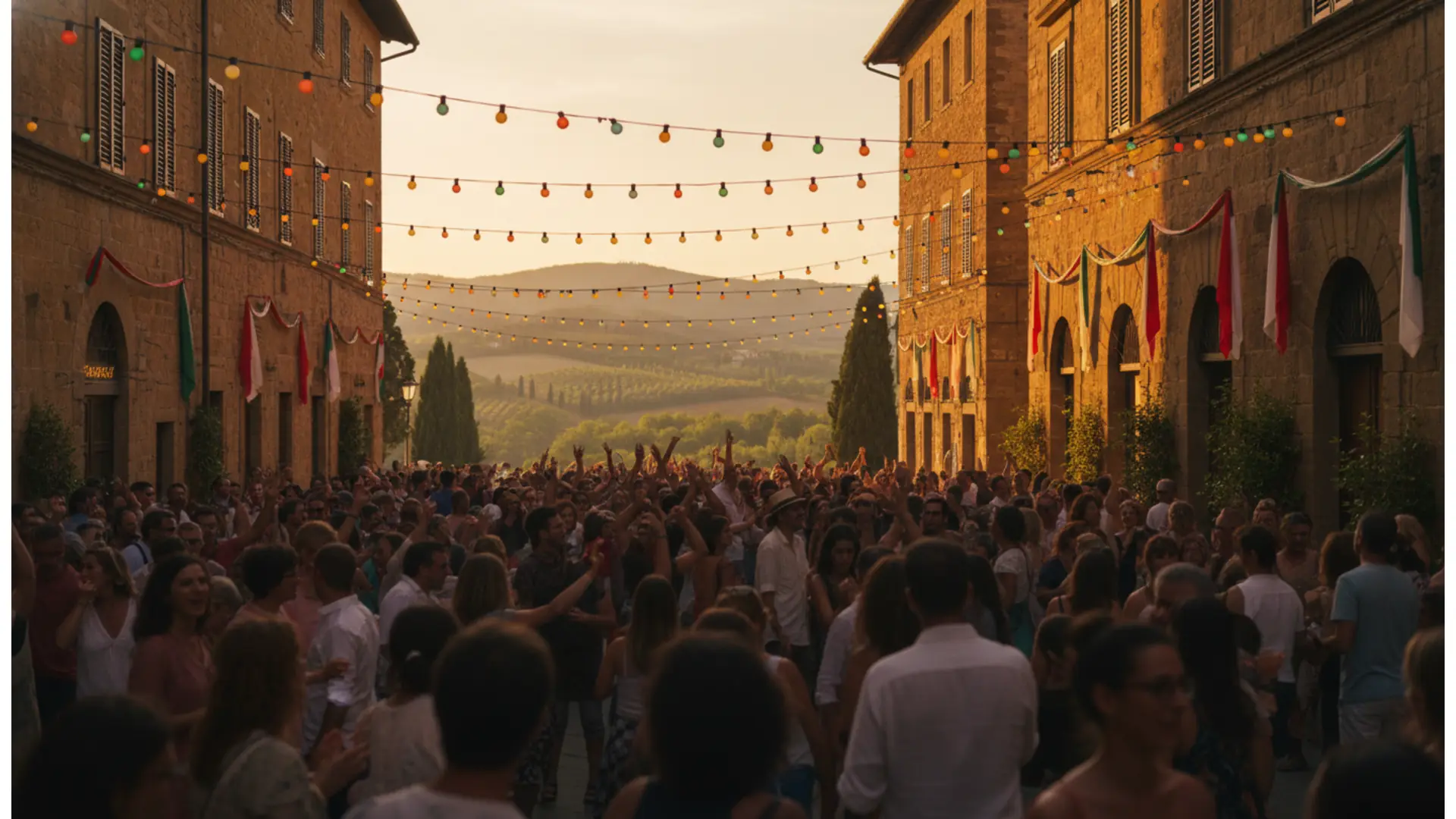
During the days of the festival, the center is transformed: festoon lights are illuminated, decorations are set up along the procession route, and, according to an ancient custom revived in recent years, many families hang blankets and drapes from their balconies as the statues pass by. It is a popular festival, free and open to all, which brings together generations of locals in just a few hours.
When to go
Those who wish to experience the festival in its most complete form should aim for the Sunday of the procession, which is the highlight; on April 23rd, however, the city experiences the more intimate and liturgical dimension of the patronal feast. As this event occupies the main streets for a long time, it is advisable to reach the center on foot or by public transport.
Lava Festival — edition 2026
The 2026 edition
The 2026 edition was divided into two distinct moments. The first is the liturgical feast of the patron saint, Thursday, April 23, 2026: the feast of Saint George the Martyr is a local public holiday in San Giorgio a Cremano, with the closure of local schools and the resumption of activities the following day, Friday, April 24.
The second moment, the most attended, is the Procession of Saint George and the Immaculate Conception, held on Sunday, April 26, 2026. It is the day locals call the Lava Festival, where the 'portancuolli' carry the simulacra of the patron saint and the Madonna of the Immaculate Conception on their shoulders along the main arteries of the center, followed by authorities and citizens.
The festival is part of the spring calendar of the province of Naples and remains one of the strongest identity-defining events in the Vesuvius area, alongside the celebrations in the neighboring towns of Ercolano, Portici, and San Sebastiano al Vesuvio.
Programme Lava Festival 2026
The two confirmed dates for 2026 were:
- Thursday, April 23, 2026 — Liturgical feast of Saint George the Martyr, patron of the city: celebrations in city churches and patronal feast with the closure of local schools.
- Sunday, April 26, 2026 — Procession of Saint George and the Immaculate Conception, the Lava Festival, with the statues of the patron and the Madonna of the Immaculate Conception carried in a procession through the city streets.
Detailed times, routes, and traffic ordinances for the 2026 edition were not published in the sources consulted. In previous editions, the day of the procession opened with vespers in the church of Saint George the Martyr, and the cortege departed from Santa Maria del Principio, in Piazza Carlo di Borbone, in the afternoon or sometimes in the morning when the long route toward Ercolano and San Sebastiano al Vesuvio was planned.
Highlights Lava Festival 2026
- The procession of the two statues, Saint George the Martyr and the Madonna of the Immaculate Conception, carried on the shoulders of the 'portancuolli'.
- April 23rd, the patron saint's day, experienced as a true city holiday.
- Festoon lights and decorations along the procession route.
- The custom, revived in recent years, of hanging blankets and drapes from balconies as the statues pass.
- The return of the simulacra to the churches of Santa Maria del Principio and Saint George the Martyr, the most emotional moment of the day.
Prices Lava Festival 2026
Practical information — Lava Festival
How to get there
By train: The San Giorgio a Cremano station of the Circumvesuviana (EAV), in Piazza Trieste e Trento, is served by the Naples–Sorrento and Naples–Poggiomarino lines; from Naples, you can depart from Porta Nolana or Naples Piazza Garibaldi, located beneath the central station.
By car: The city is connected to the A3 Naples–Salerno motorway; on the days of the procession, municipal ordinances are in effect with parking bans and road closures along the entire route, so it is advisable to leave your car far from the center.
Costs
Religious celebrations and the procession are free and open to all.
Tips
- Check the updated times and route on the official channels of the Municipality of San Giorgio a Cremano and the local parishes, as the date of the procession changes from year to year.
- Arrive early at the departure and return points of the statues, where participation is most intense.
- The city is part of the Vesuvius area: the day can be combined with a visit to the Ruins of Ercolano or the Vesuvius Villas of the Golden Mile.
Festival-goer photos
No photos yet. Share yours!
Share your photos
5 photos max, 5 MB per photo (JPG, PNG, WebP)
Noticed an error or missing information?
Help us keep this listing up to date. Every proposal is verified by our team before publication.
Festival-goer reviews
No rating yet — be the first!
No comments yet. Be the first!
Were you there?
Share your experience with the community.
Published by Valentin Contard, festival listings writer. Reviewed, corrected and approved by Christophe Contard, editor-in-chief. .
Where does it take place — Lava Festival
Chiesa di San Giorgio Martire e vie del centro cittadino
Piazza Carlo di Borbone, 80046 San Giorgio a Cremano