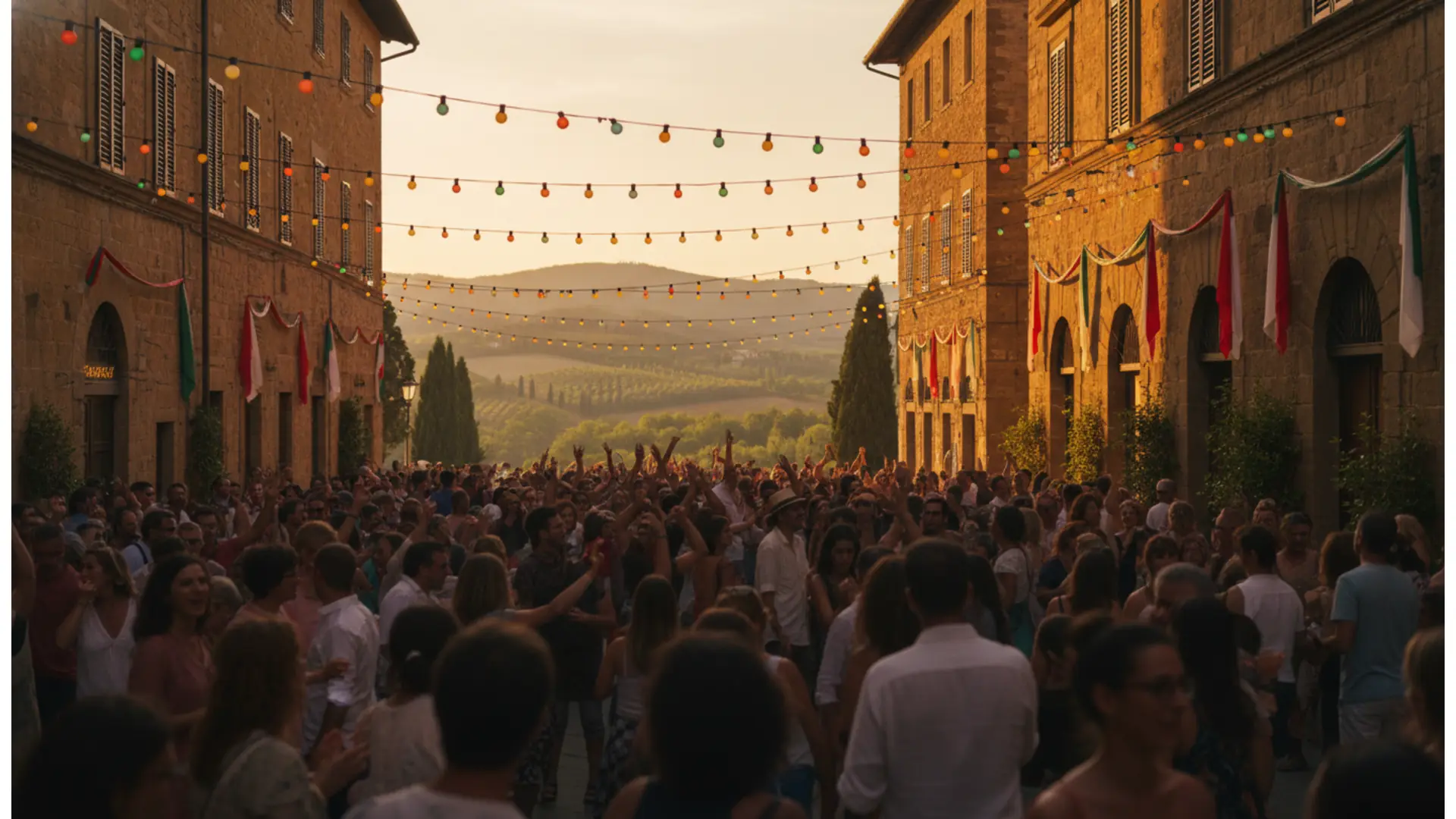
Easter in Grotte – Holy Week
Holy Week comes alive in the historic center with costumed actors and the Passion of Christ
About Easter in Grotte
A Holy Week that becomes popular theater
In the heart of Sicily, in Grotte, a small town in the Province of Agrigento, Holy Week is not just a religious rite but an authentic popular performance that involves the whole town. For a few days, the historic center turns into a large outdoor stage, where dozens of actors in period costumes re-enact the Passion, Death, and Resurrection of Christ. It is a tradition rooted in centuries of memory that attracts curious visitors, scholars, and the faithful from across the region every year.
The Redemption of Adam and the tragedy of Filippo Orioles
The text that serves as the backbone for the dramatizations is 'Il riscatto di Adamo nella morte di Gesù Cristo' (The Redemption of Adam in the Death of Jesus Christ), a sacred tragedy in three acts composed in 1750 by the Palermitan poet Filippo Orioles. The narrative structure of the scenes performed through the streets of the town is derived from this poem: the trial, the conviction, the Stations of the Cross, and the deposition. The popular direction is entrusted to the Associazione Gruppo dei Giudei – Andrea Infantino, which has preserved and passed down costumes, roles, and 'laments' for generations.
The days of the performance
The journey begins on Palm Sunday with the re-enactment of Jesus' entry into Jerusalem riding a donkey, welcomed with palms and olive branches and accompanied by the songs of the apostles. On Holy Thursday, in the late afternoon, the Last Supper, the denial of Peter, and the hanging of Judas are staged in the square; then, a evocative procession moves from the Mother Church toward the Calvary hill, accompanied by brass bands and traditional laments. On Good Friday, the entire historic center becomes a theater: the trial, conviction, Stations of the Cross toward the Calvary (known as 'li caduti'), and the deposition from the Cross. On Easter Sunday, everything dissolves into joy with the traditional meeting between the statue of the Risen Christ and that of the Madonna, announced by the tolling of bells and the firing of firecrackers.
A celebration for the whole community
The strength of the Holy Week in Grotte lies in the choral participation: it is not professional actors performing, but the inhabitants themselves, who pass down the roles from father to son. For this reason, the event has been defined as a 'Pasolinian Easter', capable of uniting sacredness, peasant memory, and popular spectacle. In recent years, the calendar has also been enriched with evening musical events that close the celebrations and open the festival to the entire community, confirming Grotte as one of the most interesting destinations in the Agrigento area during the Easter period.
Easter in Grotte — edition 2026
The 2026 program
The 2026 Holy Week in Grotte kicked off on Sunday, March 29, Palm Sunday, with the re-enactment of Jesus' entry into Jerusalem. It continued with the performances in the square on Holy Thursday (Last Supper, denial of Peter, hanging of Judas) and the procession toward the Calvary, culminating on Good Friday with the trial, the Stations of the Cross, and the deposition from the Cross in the historic center, which was transformed into an open-air theater. The celebrations concluded on Sunday, April 5, Easter Day, with the meeting between the statue of the Risen Christ and that of the Madonna.
Programme Easter in Grotte 2026
Palm Sunday — March 29
- Re-enactment of Jesus' entry into Jerusalem riding a donkey, welcomed with palms and olive branches, accompanied by the songs of the apostles.
Holy Thursday — April 2
- Late afternoon, in the square: performance of the Last Supper, the denial of Peter, and the hanging of Judas.
- Procession from the Mother Church toward the Calvary hill, accompanied by brass bands and traditional laments.
Good Friday — April 3
- The historic center turns into an open-air theater: trial and conviction of Christ.
- Stations of the Cross toward the Calvary, known as «li caduti».
- Deposition of Christ from the Cross with traditional laments; in the evening, procession of the urn with the dead Christ toward the Mother Church.
Easter Sunday — April 5
- Solemn liturgical celebrations and the traditional meeting between the statue of the Risen Christ and that of the Madonna, announced by the tolling of bells and the firing of firecrackers.
- 9:00 PM — Concert by I Cugini di Campagna, closing the public calendar of the Holy Week.
Highlights Easter in Grotte 2026
Prices Easter in Grotte 2026
Practical information — Easter in Grotte
How to get there
Grotte is located in the hinterland of the Province of Agrigento, along the SS189 road. By car from Agrigento, it takes about 25 minutes; the nearest airports are in Palermo or Catania. The performances take place in the historic center, around the Mother Church and along the climb toward the Calvary.
When
Events are concentrated from Palm Sunday to Easter Sunday. It is advisable to arrive early, especially for Good Friday, when the turnout is highest.
Admission
The processions and dramatizations through the streets of the town are free and open to everyone.
Festival-goer photos
No photos yet. Share yours!
Share your photos
5 photos max, 5 MB per photo (JPG, PNG, WebP)
Noticed an error or missing information?
Help us keep this listing up to date. Every proposal is verified by our team before publication.
Festival-goer reviews
No rating yet — be the first!
No comments yet. Be the first!
Were you there?
Share your experience with the community.
Published by Valentin Contard, festival listings writer. Reviewed, corrected and approved by Christophe Contard, editor-in-chief. .
Where does it take place — Easter in Grotte
Centro storico, Chiesa Madre e Calvario