Cava 1535 - The Entry of Emperor Charles V
The Renaissance re-enactment of Charles V's entry into Borgo Scacciaventi
About Cava 1535
A city returning to the Renaissance
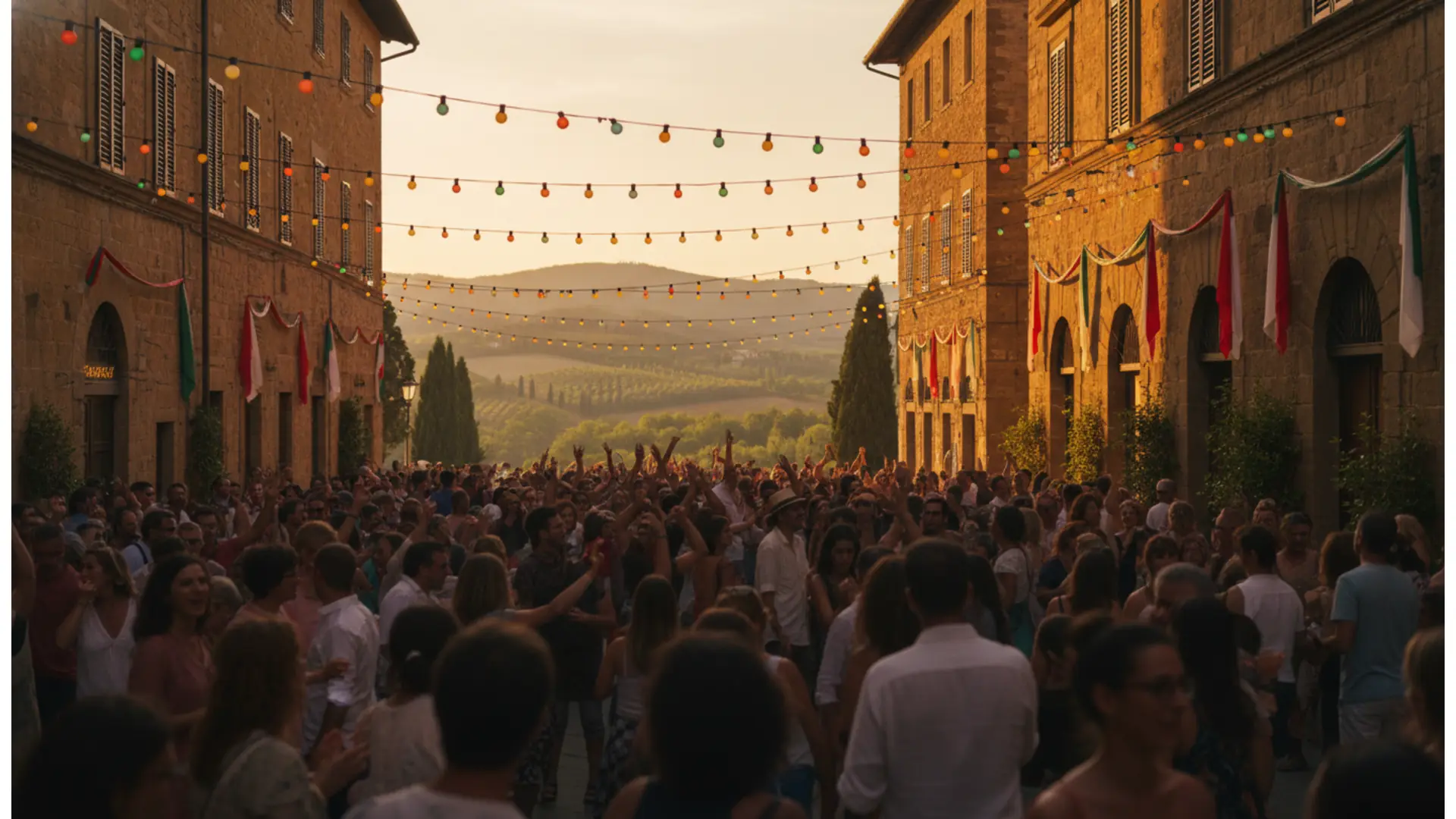
For one evening at the end of May, Cava de' Tirreni sheds its identity as a commercial town in the Metellian valley to become once again the "Città de La Cava" of the 16th century. Cava 1535 - The Entry of Emperor Charles V is the historical re-enactment that brings back to life one of the most famous episodes in the city's memory: the welcome reserved for the Habsburg emperor during his triumphant journey to Naples. The natural stage is Borgo Scacciaventi, the famous arcaded axis of the historic center, which transforms for the occasion into a grand open-air theater.
The history: November 22, 1535
Emperor Charles V of Habsburg—the sovereign over whose empire "the sun never set"—arrived in La Cava on November 22, 1535, returning from his victorious Tunisian expedition against the corsair Barbarossa after a few days' stop in Salerno. The city, led by Mayor Tommaso Pisapia, prepared with great care: three triumphal arches were erected, the streets of the Borgo were decorated with tapestries, laurel, rosemary, and citrus fruits, and the imperial entourage was offered wine, meat, and provisions in abundance.
At the sovereign's feet, the people of Cava placed a golden basin—decorated with the Pillars of Hercules and the city coat of arms—containing three thousand gold scudi and two symbolic keys to the city, one gold and one silver. With the privilege granted on March 22, 1536, Charles V reconfirmed Cava's status as a royal city, exempting it from feudal subjection and granting fiscal exemptions along with judicial and customs autonomies already conceded by the Aragonese sovereigns: a decisive page for the identity and commercial fortune of the territory.
The procession and the show
The event is divided into two main moments. In the late afternoon, the center comes alive with itinerant performances: street artists, jugglers, fire-eaters, Renaissance musicians, and historical groups occupy Corso Umberto I and the side squares. In the evening, the Imperial Historical Procession begins, with over five hundred costumed participants—nobles of regal elegance, commoners, ladies, men-at-arms, flag-wavers, drummers, and the famous arquebusiers—parading from the Convent of San Francesco along the streets of the center.
The finale is entrusted to the theatrical show "The Emperor in La Cava," which stages the meeting between the sovereign and the city representatives with two hundred actors and extras, stage machinery, and period equipment. In recent editions, the parade has also surprised the public with a papier-mâché rhinoceros, a reference to the imperial imagery linked to Charles V's African campaigns.
Who organizes it
The event is promoted by the Historical-Cultural Association Pistonieri-Archibugieri Santa Maria del Rovo, founded in 1975 and for half a century the guardian of Cava's traditions linked to arquebuses and ceremonial processions, with the patronage of the Municipality of Cava de' Tirreni and local authorities. The first edition of the re-enactment dates back to 2015. The event is part of the Cooperation Network of the European Routes of Emperor Charles V, which connects European cities touched by the sovereign's travels.
Why it's worth the trip
- One of the most impressive Renaissance re-enactments in Campania in terms of the number of participants.
- The unique charm of the Borgo Scacciaventi arcades illuminated by torches and flares.
- A journey that combines a procession, theater, early music, and street arts in a single evening.
- The opportunity to discover Cava de' Tirreni, the gateway to the Amalfi Coast and home to the thousand-year-old Benedictine Abbey of the Most Holy Trinity.
Cava de' Tirreni, heart of the Metellian valley
Located in the province of Salerno, a few kilometers from the sea of Vietri and the first heights of the Amalfi Coast, Cava de' Tirreni is the only municipality in Campania with an entirely arcaded historic center. This architecture, born for trade and fairs, is what makes the re-enactment so credible: the public does not watch a reconstruction, but walks inside the same scenery that truly welcomed the emperor nearly five centuries ago.
Cava 1535 — edition 2026
The 2026 edition
The event was concentrated into one grand evening, Saturday, May 30, 2026, in the historic center of Cava de' Tirreni. The arcaded village transformed into a widespread theater: performance stations in front of the Church of Purgatory and the Church of San Rocco, theatrical farces at Palazzo Palumbo, musicians and jesters along Corso Umberto I.
The central moment was once again the Imperial Historical Procession, with over five hundred participants in Renaissance attire accompanying the emperor's entry until the grand finale with the sovereign's farewell. The organization was handled by the Historical-Cultural Association Pistonieri-Archibugieri Santa Maria del Rovo, with the support of the Municipality of Cava de' Tirreni.
Programme Cava 1535 2026
Saturday, May 30, 2026
- 17:30 - 19:00 — Itinerant performances by street artists and historical groups along Corso Umberto I and in the historic center.
- 20:00 — Theatrical farce at Palazzo Palumbo (first performance).
- 20:30 — Period performances and entertainment at the Church of Purgatory.
- 20:30 — Street artist performances near the Church of San Rocco.
- 20:30 — Departure of the Imperial Historical Procession from the Convent of San Francesco, with itinerant performances along the city streets.
- 21:30 — Repeat of the theatrical farce at Palazzo Palumbo.
- 21:30 — Grand finale with the Emperor's farewell.
The eve, Friday, May 29, was dedicated to meetings of the organizing committee for the Charles V cultural project.
Highlights Cava 1535 2026
- Over 500 participants in Renaissance costume in the Imperial Historical Procession.
- Borgo Scacciaventi, the only entirely arcaded historic center in Campania, illuminated for the evening.
- Nobles, commoners, ladies, drummers, jesters, and the famous arquebusiers of the Pistonieri Santa Maria del Rovo.
- Theatrical farces at Palazzo Palumbo and period entertainment at the Church of Purgatory.
- The Emperor's farewell as the concluding scene of the evening.
Prices Cava 1535 2026
Practical information — Cava 1535
How to get there
By train — the Cava de' Tirreni station is on the Salerno-Naples line (via Nocera) and is a few minutes' walk from Corso Umberto I: it is the most convenient means, given the closure of the center to traffic during the event.
By car — take the "Cava de' Tirreni" exit on the A3 Naples-Salerno motorway. On event evenings, the historic center is pedestrianized: it is advisable to park in the peripheral areas and reach the Borgo on foot.
By plane — Salerno-Costa d'Amalfi Airport (approx. 25 km) and Naples-Capodichino Airport (approx. 50 km).
Tips
- Arrive early to secure a good spot along the procession route, especially in Piazza Vittorio Emanuele III.
- Comfortable shoes: the shows are itinerant and you follow the procession on foot.
- The center offers numerous bars and restaurants under the arcades, excellent for a break before the evening parade.
- Cava de' Tirreni is an excellent base for visiting Vietri sul Mare, Amalfi, and Salerno on the same weekend.
Information
Official website: carlov.it — Pistonieri-Archibugieri Santa Maria del Rovo Association.
Festival-goer photos
No photos yet. Share yours!
Share your photos
5 photos max, 5 MB per photo (JPG, PNG, WebP)
Noticed an error or missing information?
Help us keep this listing up to date. Every proposal is verified by our team before publication.
Festival-goer reviews
No rating yet — be the first!
No comments yet. Be the first!
Were you there?
Share your experience with the community.
Published by Valentin Contard, festival listings writer. Reviewed, corrected and approved by Christophe Contard, editor-in-chief. .
Where does it take place — Cava 1535
Centro storico — Borgo Scacciaventi e Corso Umberto I
Corso Umberto I, 84013 Cava de' Tirreni