Cantè j'euv
The ancient Piedmontese Easter ritual of the 'sung eggs' in Calamandrana
About Cantè j'euv
Cantè j'euv: A ritual reborn in Calamandrana
In the town of Calamandrana, a small village nestled in the hills of the Piedmontese Monferrato, one of the most evocative local farming traditions is brought back to life: Cantè j'euv, a dialect expression that literally means "singing the eggs." This ancient Easter ritual, once widespread in the rural areas of the Langhe, Roero, and Monferrato, has been lovingly rediscovered and restored by the local community.
A sung collection from door to door
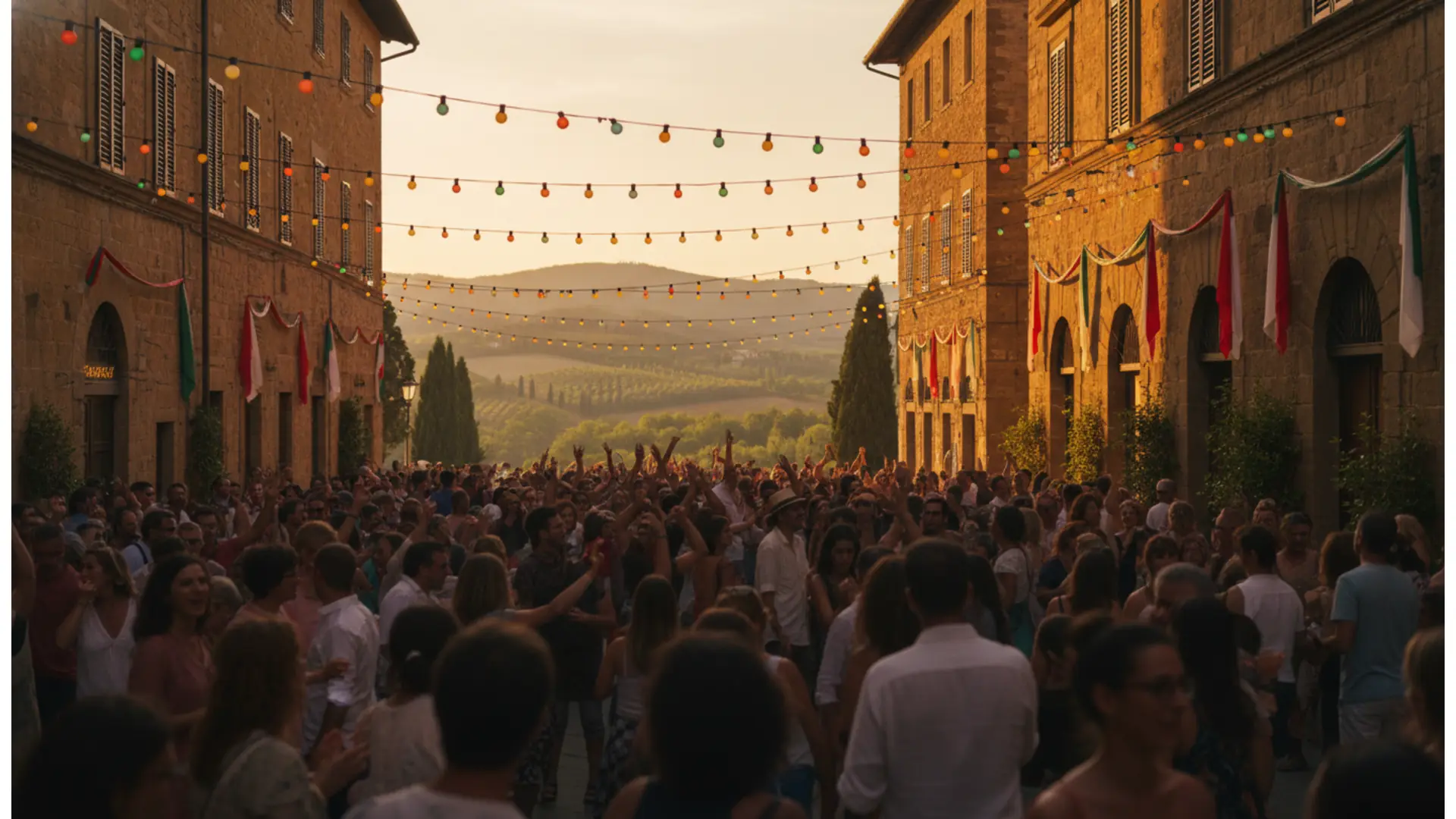
The heart of the event is the procession of singers, who move from door to door in the evening darkness, guided by the glow of lanterns. Before each home, they perform the traditional song, inviting residents to donate eggs, money, bread, and cured meats. The lyrics call for eggs from "the red, white, and black hen," offering blessings and good wishes to those who donate, and playful curses to those who refuse. Families respond by offering the singers a taste of local food, a glass of wine, and the warmth of genuine hospitality.
The meaning of a tradition
In the past, it was the young men who performed this ritual, both to gather food for the Easter Monday picnic and as an opportunity to meet the young women from the local farmsteads. Eggs, symbols of fertility and rebirth, represented wishes for prosperity, good harvests, and abundance for the coming year, marking the awakening of spring in agricultural communities.
Music, dance, and street theatre
The singers are accompanied by the folk group Balacanta, playing the accordion, hurdy-gurdy, flutes, and bagpipes, while local dancers perform traditional folk dances. The evening is full of theatrical surprises, with residents playfully pretending to refuse the gift, creating a spontaneous form of street theatre that delights the audience. The night concludes with music and dancing in a local courtyard.
An event that unites the world
The event is organized by the Associazione Le Colline della Cultura, in collaboration with the Municipal Library and the support of the Municipality of Calamandrana. In recent years, the festival has gained international appeal thanks to the participation of foreign residents living in the hills between Calamandrana and Nizza Monferrato, hailing from New Zealand, Canada, Germany, Switzerland, and Mexico, who join in to sing in the Piedmontese dialect.
Cantè j'euv — edition 2026
L'edizione 2026 del Cantè j'euv ha riportato l'antica tradizione delle uova cantate nella frazione Bruciati di Calamandrana, sulla collina di fronte al borgo antico. La novità più significativa è stata la partecipazione del Coro di Luci, formato da residenti stranieri delle colline tra Calamandrana e Nizza Monferrato, che per la prima volta si sono cimentati nel canto della questua in lingua piemontese.
Programme Cantè j'euv 2026
Venerdì 27 marzo 2026 — Frazione Bruciati
- 19:30 - 20:00 — Accoglienza degli ospiti al parcheggio del Viale del Cimitero e trasferimento con navetta gratuita alla piazzetta della chiesa
- 20:15 — Avvio della manifestazione: apertura della chiesa della Natività di Maria e inizio del giro dei cantori di casa in casa
- Durante la serata — Canto della questua delle uova davanti alle abitazioni, con offerta di assaggi e vino da parte delle famiglie; sorprese sceniche con abitanti che fingono di rifiutare il dono, in stile teatro di strada
- Finale — Musica e danze tradizionali nella corte di casa Mighetto
Accompagnamento musicale: gruppo folk Balacanta — Efisio Ecca (organetto), Franco Malberto (ghironda), Valerio Franco (flauti e cornamuse). Prove curate da Valter Bosca alla chitarra.
Danze: danzatori astigiani del DLF.
Highlights Cantè j'euv 2026
Prices Cantè j'euv 2026
Practical information — Cantè j'euv
When
Cantè j'euv takes place during the Easter period, usually in March or April, in the evening. Please check the exact date of the current edition in the local Asti press or through the official channels of the Municipality of Calamandrana.
Getting there and parking
The event takes place in the Bruciati district, on the hill overlooking the village. Due to the narrow streets, parking on-site is not possible. A parking area is set up at the Viale del Cimitero in Calamandrana, from which a free shuttle service takes participants to the church square.
Hospitality
Guests are generally welcomed between 7:30 PM and 8:00 PM at the parking area, with the event starting around 8:15 PM. Comfortable clothing suitable for an outdoor evening in the hills is recommended.
Festival-goer photos
No photos yet. Share yours!
Share your photos
5 photos max, 5 MB per photo (JPG, PNG, WebP)
Noticed an error or missing information?
Help us keep this listing up to date. Every proposal is verified by our team before publication.
Festival-goer reviews
No rating yet — be the first!
No comments yet. Be the first!
Were you there?
Share your experience with the community.
Published by Valentin Contard, festival listings writer. Reviewed, corrected and approved by Christophe Contard, editor-in-chief. .
Where does it take place — Cantè j'euv
Frazione Bruciati
Frazione Bruciati, 14042 Calamandrana