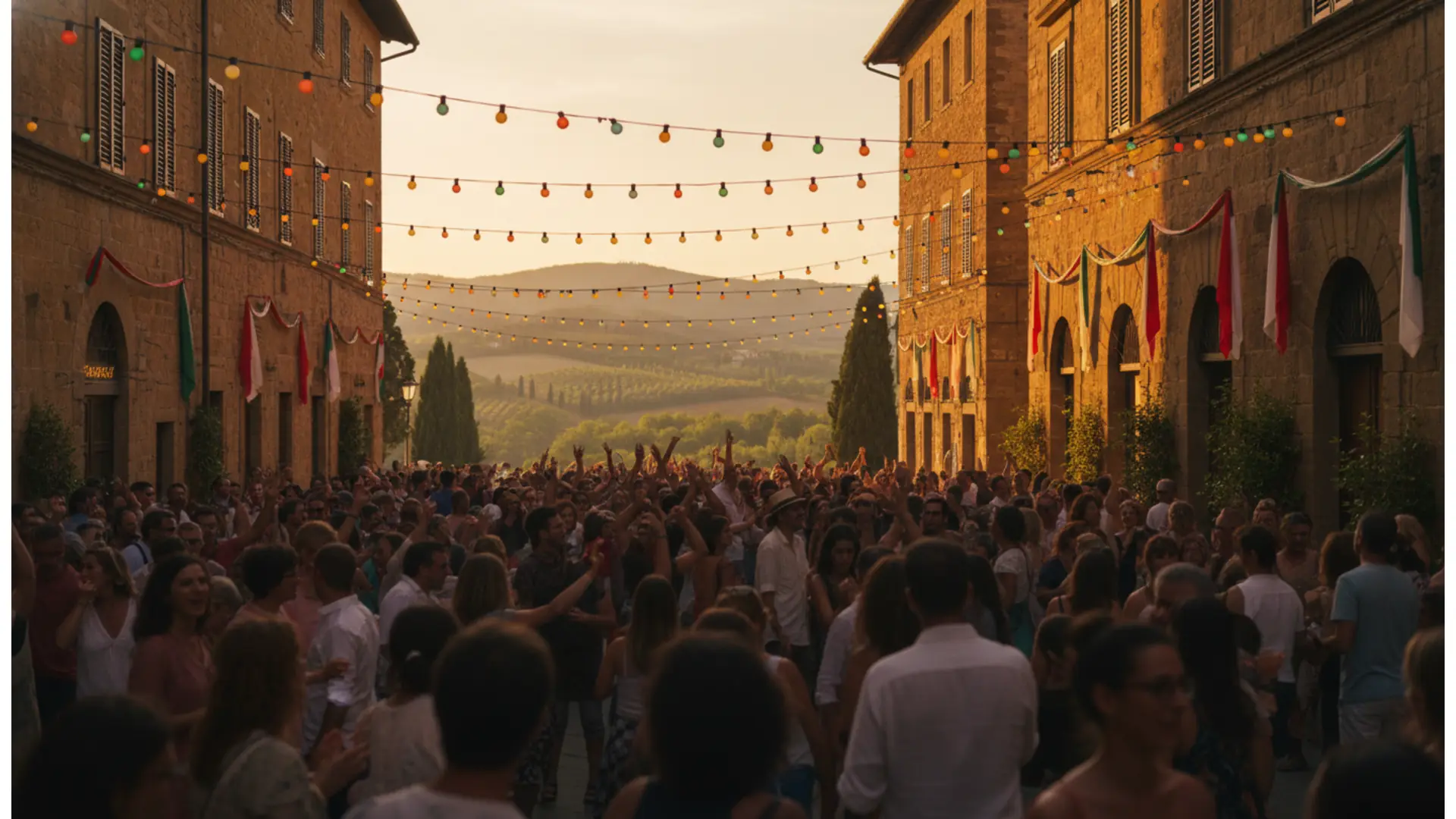
Apricot Festival (Sagra della Crisommola)
Two evenings in Piazza Amodio celebrating the Vesuvius crisommola, with artisanal desserts, music, and folk songs.
Edition 2026 not confirmed to date
This edition has not been confirmed by the organiser to date. We recommend checking before going.
About Apricot Festival
A festival in the shadow of Vesuvius
The Apricot Festival in Pollena Trocchia, a town in the province of Naples, Campania, is one of those grassroots events that stays true to its neighborhood roots. It is organized by the San Giacomo Apostolo Parish, which transforms Piazza Amodio for two evenings into a large communal courtyard filled with stalls, the scent of ripe fruit, and music. The star of the show is the iconic fruit of this corner of Vesuvius: the crisommola, the Neapolitan dialect name for the apricots grown on the slopes of the volcano.
The crisommola, yellow gold of the volcanic lands
The term 'crisommola' comes from crisomela, a variety described as early as 1583 by the Neapolitan naturalist Giovan Battista Della Porta, who distinguished the finest apricots from common ones in his writings. In the Vesuvius area, there are over forty different varieties—such as Ceccona, Palummella, San Castrese, Vitillo, Fracasso, and Portici—all sharing a sugary pulp, intense aroma, and yellow-orange skin shaded or speckled with red.
This is thanks to the volcanic soil, rich in potassium, which gives the fruit a sweetness hard to find elsewhere. The harvest begins in mid-June, which is why the festival takes place at that time of year, when the crisommola is at its peak ripeness and arrives at the stalls freshly picked. Cultivation spans about seventeen Vesuvius municipalities, from Ercolano to Somma Vesuviana, and Pollena Trocchia is among the most renowned.
What to taste
- Artisanal jams and preserves prepared at home using local apricots;
- Traditional desserts made with crisommola, from tarts to family-recipe treats;
- Grilled sandwiches and local gastronomic specialties;
- A selection of typical products from the Vesuvius area.
This is not a gourmet festival with guest chefs: the cooking is done by parish volunteers, and that is precisely where the value of the event lies, offering the authentic flavor of traditional Campanian village festivals.
Music, dance, and folk songs
The evenings usually begin around 8:30 PM and continue with entertainment, live music, dancing, and folk songs: a repertoire that draws heavily on Neapolitan tradition and brings together families, young people, and the elderly in the same space. The square remains the heart of the festival, with stalls arranged all around and people moving from one to another until late at night.
A festival with a strong charitable spirit
The Apricot Festival is not just a gastronomic event. The proceeds from the evenings support parish activities, particularly social projects and initiatives aimed at the youth and families of the local community. It is the same spirit that drives the oratory throughout the year: to value the traditions of the Vesuvius territory while raising resources for those in need.
Pollena Trocchia, between Vesuvius and Monte Somma
A scattered municipality of about 12,600 inhabitants at an altitude of 240 meters, Pollena Trocchia lies entirely within the Vesuvius National Park and retains the character of the agricultural villages of the foothills, marked by eruptions—the 1631 one was devastating—and reborn each time thanks to the extraordinary fertility of the soil. The patron saint is San Giacomo Apostolo, celebrated on July 25th with a procession and concerts in Piazza Amodio. A fun fact: in 1835, Gaetano Donizetti stayed here and composed some pages of Lucia di Lammermoor.
The 2026 edition
At the time of this update, the San Giacomo Apostolo Parish has not yet released the dates and program for the 2026 edition. The event is traditionally held in the second half of June, coinciding with the crisommola harvest: it is advisable to keep an eye on the parish channels and local Vesuvius press for the final calendar.
Apricot Festival — edition 2026
An edition yet to be announced
For 2026, the San Giacomo Apostolo Parish has not yet made public the dates or the program for the Apricot Festival in Pollena Trocchia. In recent editions, the festival has taken place in the second half of June, with two consecutive evenings in Piazza Amodio starting at 8:30 PM.
What to expect
- Stalls with artisanal jams and traditional crisommola-based desserts;
- Grilled sandwiches and typical products of the Vesuvius territory;
- Evening entertainment with music, dancing, and folk songs;
- Charitable purpose: proceeds support the parish's social activities and youth projects.
We recommend checking the final calendar on the parish channels before traveling.
Highlights Apricot Festival 2026
Prices Apricot Festival 2026
Practical information — Apricot Festival
Location
Piazza Amodio, in the center of Pollena Trocchia (NA), a few steps from the parish church of San Giacomo Apostolo.
How to get there
- By train: Circumvesuviana (EAV) line Naples-Sarno/Ottaviano, stops at Pollena Trocchia and Pollena Trocchia-Guindazzi; the journey from Naples Porta Nolana/Garibaldi takes about 30 minutes.
- By car: A3 Naples-Salerno motorway, exit at Torre del Greco or Ercolano, then follow provincial roads towards Massa di Somma and Pollena Trocchia; alternatively from the Cercola-Volla toll booth. Parking in the town center is limited during festival evenings: it is best to arrive early.
- By plane: Naples-Capodichino airport is about 12 km away.
Hours and admission
The evenings usually start at 8:30 PM. There is no admission fee: products and tastings are purchased directly at the stalls set up in the square, with proceeds supporting parish activities.
Tips
The festival is family-friendly and takes place outdoors: a light sweater is useful because the air cools down in the evening at 240 meters above sea level. Visitors from out of town can combine the visit with a hike in the Vesuvius National Park or to the Carcavone volcanic cones, just above the town.
Festival-goer photos
No photos yet. Share yours!
Share your photos
5 photos max, 5 MB per photo (JPG, PNG, WebP)
Noticed an error or missing information?
Help us keep this listing up to date. Every proposal is verified by our team before publication.
Festival-goer reviews
No rating yet — be the first!
No comments yet. Be the first!
Were you there?
Share your experience with the community.
Published by Valentin Contard, festival listings writer. Reviewed, corrected and approved by Christophe Contard, editor-in-chief. .
Where does it take place — Apricot Festival
Piazza Amodio
Piazza Amodio, 80040 Pollena Trocchia