Zeza Carnival of Mercogliano
The sung farce and the 'Ballo Intreccio' that ignite the Irpinian Carnival
About Zeza of Mercogliano
The Zeza, heart of the Mercogliano Carnival
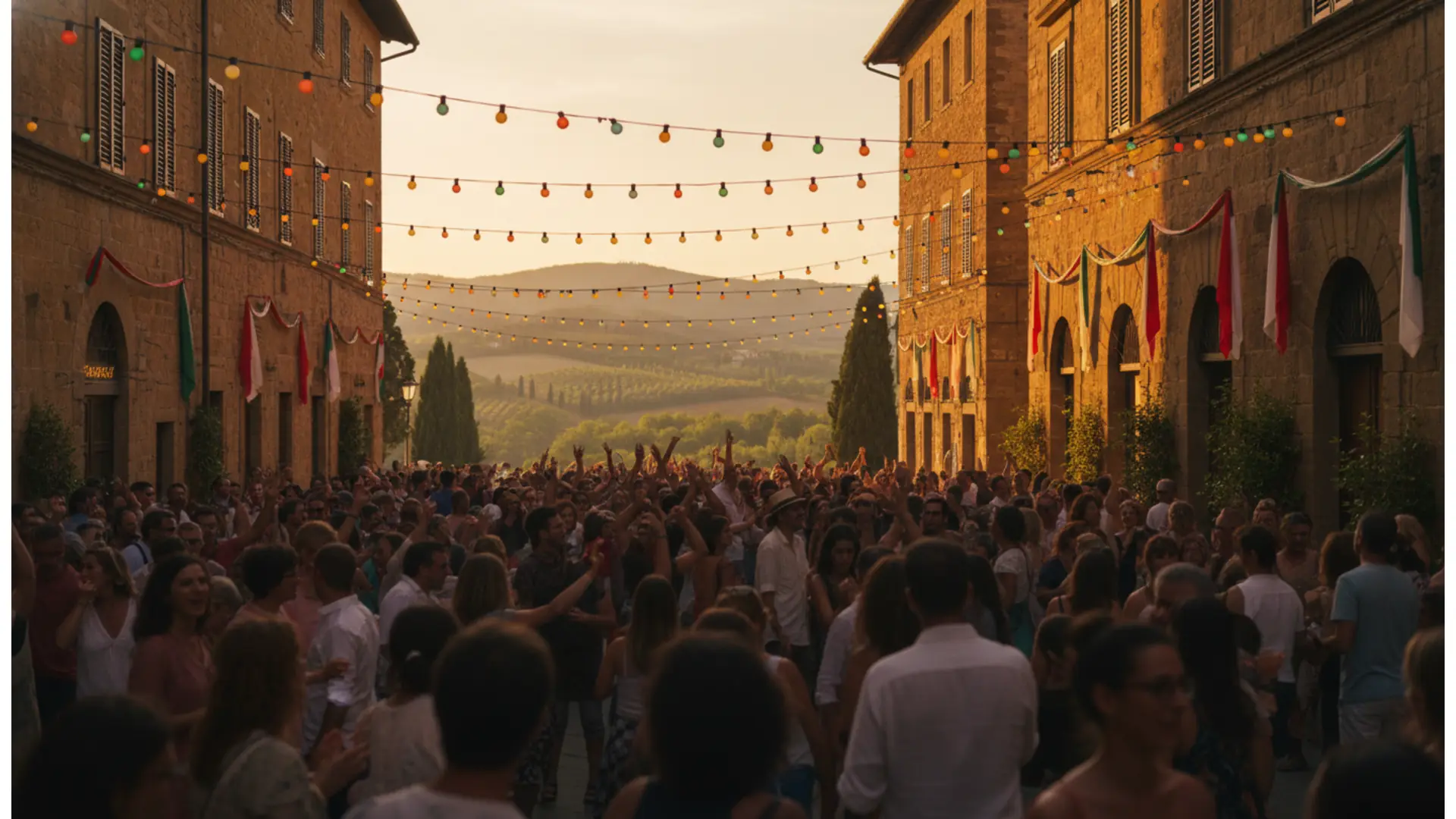
In Mercogliano, a town in the province of Avellino nestled on the slopes of Montevergine, Carnival is not just a flurry of confetti but a community ritual passed down from generation to generation. The absolute star is the Zeza, a popular tragicomic theatrical performance handed down orally, now recognized as one of the defining symbols of Irpinia and the entire Campania region.
An ancient farce of Neapolitan descent
The roots of the Zeza lie in Neapolitan popular theater. Some scholars link it to the 16th-century 'villanella', while others trace it back to the Roman 'atellana' farces; in the 18th century, the farce entered the bourgeois salons of Naples. In Mercogliano, the first documented oral testimonies date back to the early 20th century, when the Zeza was sung by pilgrims traveling from the Naples area to the Sanctuary of Montevergine, a sign that the tradition was already well-established in the territory.
In 1971, Pier Paolo Pasolini chose the songs of the Zeza for the soundtrack of his Decameron, bringing the voice of Mercogliano to the Berlin Film Festival. More recently, the event was inscribed in the inventory of Campanian Intangible Cultural Heritage with Regional Council resolution no. 205 of October 7, 2019.
The plot: the troubled marriage of Vicenzella
The story is simple and universal. Zeza wants to marry off her daughter; Pulcinella, jealous and suspicious, opposes it by any means necessary. Amidst bickering, songs, and beatings, the story leads to a duel between Pulcinella and the suitor, which dissolves into a festive reconciliation and a collective dance. Following a custom reminiscent of Greek theater, all roles are played exclusively by men.
- Zeza Viola (Lucrezia): the mother, pushing for the wedding;
- Pulcinella, also known as the Great Turk: the father opposed to the marriage;
- Vicenzella (Porzia): the contested daughter;
- Don Nicola: the suitor for Vicenzella's hand;
- Don Fabrizio: the innkeeper;
- the Sailor: leader of the 'Ballo Intreccio'.
The 'Ballo Intreccio', the Mercogliano trademark
The event always unfolds in three moments: the processional masked parade accompanied by a band, the sung theatrical performance, and the grand final quadrille. It is this last part that makes the Zeza of Mercogliano unique: the quadrille, performed elsewhere by intertwining hands, is danced here with flowered arches, the intrecci, which the dancers lift and cross to create moving geometric figures. A spectacle that attracts audiences from across the province every year.
Who guards the tradition
Behind the masks lies a collective effort that lasts all year. The Permanent Committee of the Zeza of Mercogliano was founded in 1983; in 2004, the La Zeza Association was established, chaired by Mario Cerchione, with the aim of preserving and passing on the oral repertoire. About two hundred protagonists are involved, from five-year-old children to ninety-year-old elders, in a direct transmission of folk knowledge that takes place during rehearsals in homes and local venues in the village.
When and where it takes place
The Zeza is performed between January 17th, the day of Saint Anthony Abbot which traditionally opens the peasant Carnival, and Shrove Tuesday. The heart of the performances is the Capocastello district, with the gathering in Piazza Zeza, but the group also visits the districts of Torelli and Torrette and parades in Avellino alongside other Irpinian folk groups. The closing event is held in Piazza Municipio, with music, food stalls, and the final 'Ballo Intreccio' of the season.
A Carnival that speaks of community
Those who arrive in Mercogliano during the days of the Zeza do not witness a show packaged for tourists: they step into a village festival where the audience sings the choruses, children learn the steps, and families open their doors to the performers. This is why the Zeza has endured for over a century, while elsewhere carnival farces have been lost, and it is also the reason why it is worth planning a visit to Irpinia during these days in February.
Zeza of Mercogliano — edition 2026
Six days of Zeza
The Zeza Carnival opened its doors in Mercogliano on Thursday, February 12, 2026, kicking off six days of festivities that spanned the entire town, from the historic village of Capocastello to the districts of Torelli and Torrette. As per tradition, the approximately two hundred performers of the La Zeza Association brought the masked procession, the farce sung in dialect, and the grand quadrille of the 'Ballo Intreccio' to the streets.
The 2026 program complemented the masked outings with two in-depth events: the meeting with school students, dedicated to passing on the tradition to new generations, and a food and wine conference on local Irpinian products.
The exchange with Spanish students
The most discussed novelty of the edition was the participation, for the first time, of a group of students from Spain, welcomed in Mercogliano for a cultural exchange project: they attended rehearsals, learned about the history of the Zeza, and took part in the festivities, in a direct comparison between Mediterranean folk traditions.
The Shrove Tuesday finale
On Tuesday, February 17, singing and dancing accompanied the group from the historic village to the city center, continuing until the evening with the grand party in Piazza Municipio, featuring music and local gastronomic products. During the same week, the Zeza of Mercogliano was also a protagonist of the provincial showcase in Avellino, alongside other Irpinian folk groups.
Programme Zeza of Mercogliano 2026
Thursday, February 12, 2026
- Official opening of the Zeza Carnival in Mercogliano: first gathering of the group and start of the six days of festivities.
Throughout the week (February 12-17)
- Meeting of the Zeza with school students, dedicated to the value of oral tradition for new generations.
- Food and wine conference on typical products of the Irpinian territory.
- Welcoming the group of Spanish students for the cultural exchange.
- Zeza parades between Capocastello, Torelli, and Avellino.
Sunday, February 15, 2026
- Zeza stops in the Torelli and Torrette districts of Mercogliano.
- From 10:00 AM, along Corso Vittorio Emanuele in Avellino, parade of provincial folk groups with the Zeza of Mercogliano.
Tuesday, February 17, 2026 - Shrove Tuesday
- Songs and dances from the historic village to the city center, with the performance of the 'Canzone di Zeza' and the 'Ballo Intreccio'.
- In the evening, grand Carnival party in Piazza Municipio with music and local gastronomy.
Performance times may vary: the final calendar is released by the La Zeza Association on its channels.
Highlights Zeza of Mercogliano 2026
- The Canzone di Zeza, a tragicomic farce sung in dialect and passed down orally for over a century.
- The Ballo Intreccio, a quadrille performed with flowered arches that is the hallmark of Mercogliano.
- The masked procession accompanied by a band, with about two hundred performers aged 5 to 90.
- The cultural exchange with Spanish students, an absolute novelty of the 2026 edition.
- The parade of Irpinian folk groups along Corso Vittorio Emanuele in Avellino.
- The Shrove Tuesday closing in Piazza Municipio, with music and food stalls.
Prices Zeza of Mercogliano 2026
Practical information — Zeza of Mercogliano
How to get there
Mercogliano is located a few kilometers from Avellino, along the road that climbs to the Sanctuary of Montevergine. By car: A16 Naples-Canosa motorway, exit Avellino Ovest, then SS 88 towards Mercogliano. By train: the reference station is Avellino, connected to Mercogliano by AIR Campania urban and provincial buses. The nearest airport is Naples-Capodichino, about 50 km away.
Where to follow the Zeza
Performances usually start in the morning from Piazza Zeza, in the Capocastello district, and continue along the village streets; the final day of Shrove Tuesday concludes in Piazza Municipio. On parade days, traffic in the center is heavily restricted: it is advisable to leave your car in the parking lots at the bottom and walk up.
Admission and tips
Participation in the parades and the performance is free and held outdoors. It is recommended to dress in layers: February in Irpinia can be cold and windy. Tastings at the food stalls are paid for individually. For the updated schedule of performances, it is advisable to check the association's website or Facebook page, or call +39 347 6231611.
Where to stay
Mercogliano has hotels and accommodations linked to the flow of pilgrims to Montevergine; further options can be found in Avellino, a ten-minute drive away, and in the villages of the Partenio area.
Festival-goer photos
No photos yet. Share yours!
Share your photos
5 photos max, 5 MB per photo (JPG, PNG, WebP)
Noticed an error or missing information?
Help us keep this listing up to date. Every proposal is verified by our team before publication.
Festival-goer reviews
No rating yet — be the first!
No comments yet. Be the first!
Were you there?
Share your experience with the community.
Published by Valentin Contard, festival listings writer. Reviewed, corrected and approved by Christophe Contard, editor-in-chief. .
Where does it take place — Zeza of Mercogliano
Piazza Municipio e borgo di Capocastello
Piazza Municipio, 83013 Mercogliano