Social Carnival – Capodimonte Stage
The self-managed masked parade starting from the Porta Piccola of the Real Bosco
About Capodimonte Social Carnival
The Capodimonte Social Carnival
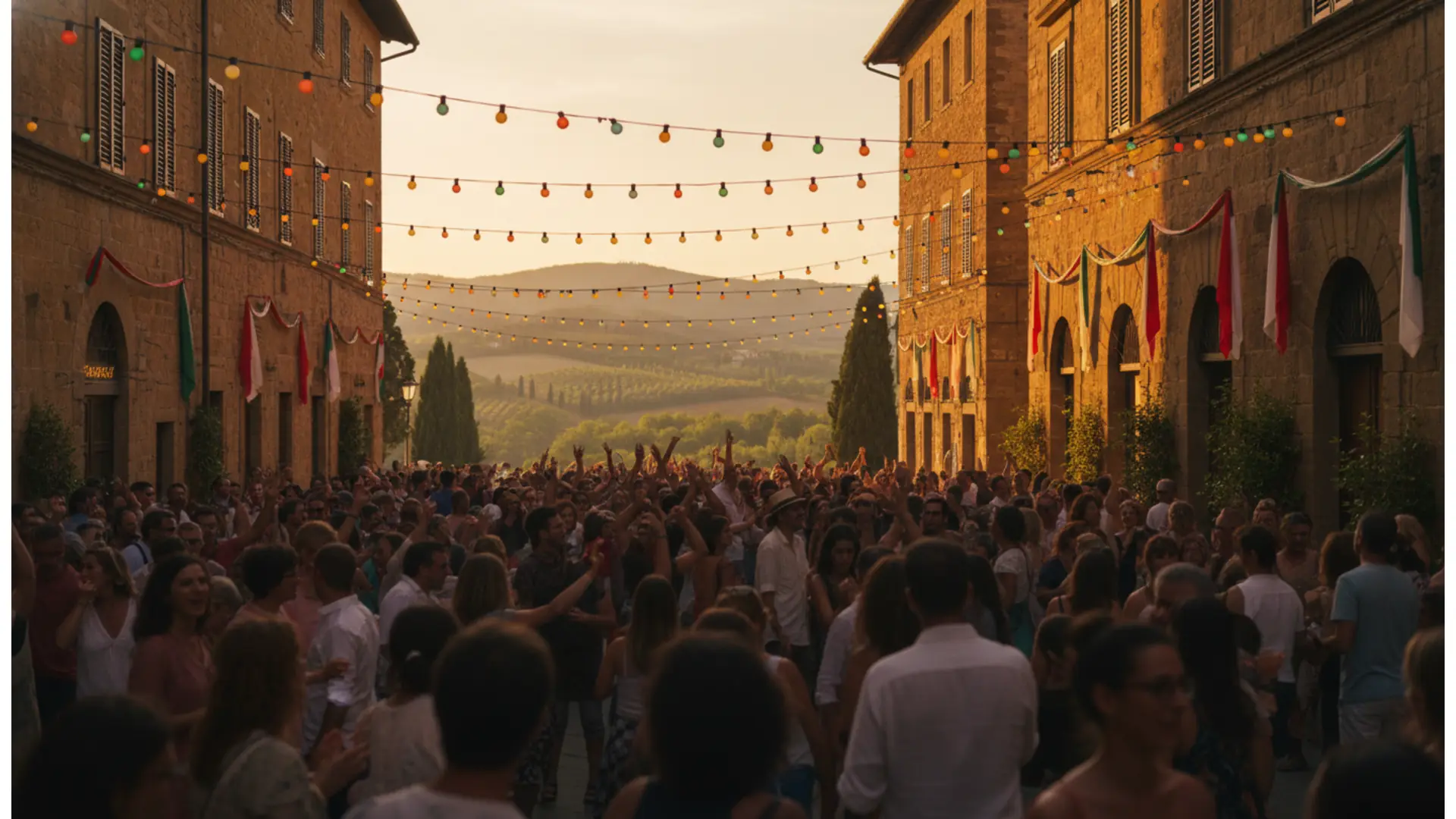
In the days leading up to Shrove Tuesday, the Capodimonte hill in Naples hosts one of the most evocative stages of the Neapolitan Social Carnivals. The meeting point is the Porta Piccola of the Real Bosco di Capodimonte: from there, a masked parade of children, families, schools, committees, and neighborhood associations sets off, marching with papier-mâché floats and handmade masks. There is no stage and no ticket: the parade itself is the festival, and everyone who arrives becomes a participant rather than a spectator.
A carnival born from the grassroots
The Social Carnival is neither an institutional event nor a show to watch while seated: it is a self-managed celebration, prepared in the weeks prior within neighborhood workshops. Floats, masks, costumes, banners, and percussion instruments are created collectively by adults and children, often without asking for a single euro of public funding. It is a way to reclaim the city and its spaces through play: behind the joy of the colors, there is always a message that schools and local groups choose and bring to the streets every year.
This Neapolitan tradition is rooted in the experience of GRIDAS in Scampia, the group born around the figure of muralist Felice Pignataro, which has been bringing a popular carnival of protest and community to the streets for over forty years: in 2026, it celebrated its 44th edition. From that model, dozens of stages have sprung up across the city over the years, and Capodimonte is one of the most beloved because it combines a neighborhood festival with a monumental setting.
The parade inside the Real Bosco
The setting, in fact, makes this stage unique. The Real Bosco di Capodimonte, the immense Bourbon park surrounding the Royal Palace and the Museum, is the city's great green lung: tree-lined avenues, clearings, and ancient service buildings like the Cellaio. Seeing a long line of colorful masks, drums, and homemade papier-mâché floats advancing among the trees is an image that stays with you, far removed from a commercial carnival.
In past editions, the parade has crossed the gates of the Porta Piccola to reach the internal areas of the Bosco, featuring entertainment, folk music, and symbolic moments designed together with local schools: in 2018, for example, the children stormed a cardboard castle and broke the "float of prejudices" to ideally tear down fortresses, walls, and barriers. In other editions, the parade concluded in the grounds of Villa Capriccio, another neighborhood landmark.
A city-wide network, not an isolated event
The Capodimonte stage does not exist in isolation: it is part of a widespread calendar that every year lines up a dozen parades, from the historic center to the suburbs, also involving neighboring towns. Among the neighborhoods that regularly take part are:
- Bagnoli, which often opens the season;
- Materdei and the Rione Sanità;
- Scampia, with the historic GRIDAS parade;
- Soccavo, Montesanto, Pizzofalcone, and the Quartieri Spagnoli, generally on Shrove Tuesday;
- nearby towns such as Afragola and Giugliano in Campania.
Who is it for?
It is a deeply family-oriented event: the protagonists are the children, who arrive already masked or wearing costumes prepared at school and in workshops. Participation is free and open to all; there is no need to register or belong to a group: just show up at the meeting time, preferably with a homemade mask. Even for a visitor who does not know Naples, it is a rare opportunity to see the city from the inside, in its neighborhood dimension.
Capodimonte, between hill and city
The Capodimonte area is part of Municipality 3 (Stella – San Carlo all'Arena) of the Municipality of Naples, in the Metropolitan City of Naples, in Campania. It is an area that combines monumental heritage—the Royal Palace, the Museum, the Bosco, the historic Royal Porcelain Factory—with a very vibrant working-class residential fabric. The Social Carnival is exactly the point where these two worlds meet: the great royal park opened up and traversed by the neighborhood's children.
Capodimonte Social Carnival — edition 2026
Capodimonte, Saturday, February 14, 2026
The Capodimonte stage was included in the heart of the 2026 calendar of Neapolitan Social Carnivals, during the weekend preceding Shrove Tuesday. The appointment was at 10:00 AM at the Porta Piccola of the Bosco di Capodimonte, with the masked parade ready to set off from the entrance of the great Bourbon park.
As every year, the day was built from the grassroots, without public funding: masks, costumes, and papier-mâché floats were prepared in neighborhood workshops, with percussion and folk music accompanying the parade, and children and families in the front row. The city network defined the 2026 Social Carnival as "a creative and cooperative event in almost all neighborhoods of Naples to show and claim a city for everyone, a city of rights."
Twelve parades throughout the city
In 2026, there were twelve stages, distributed from February 8 to 17 between Naples and neighboring towns: from Bagnoli, which opened the season, to the final day of Shrove Tuesday with five simultaneous parades. The historic GRIDAS parade in Scampia celebrated its 44th edition.
Programme Capodimonte Social Carnival 2026
Saturday, February 14, 2026 — Capodimonte
- 10:00 AM — Meeting and start of the parade at the Porta Piccola of the Bosco di Capodimonte
- Masked parade with papier-mâché floats, masks, and costumes made in neighborhood workshops
- Entertainment, drums, and folk music along the route
- Free and open participation, welcoming children, families, schools, committees, and associations
The other stages of the 2026 Social Carnival in Naples
- Sunday, February 8 — Bagnoli, Viale Campi Flegrei, 10:30 AM
- Wednesday, February 11 — Afragola, Rione Salicelle, 10:30 AM
- Thursday, February 12 — Borgo (Buvero), Piazza Giovanni Leone, 10:30 AM
- Friday, February 13 — Materdei, Piazza Scipione Ammirato (metro), 10:00 AM
- Friday, February 13 — Rione Sanità, Piazza Sanità, 10:00 AM
- Saturday, February 14 — Capodimonte, Porta Piccola del Bosco, 10:00 AM
- Sunday, February 15 — Scampia, via Monte Rosa 90/B (GRIDAS), 10:00 AM
- Tuesday, February 17 — Soccavo, via Orazio Coclite, 10:30 AM
- Tuesday, February 17 — Montesanto, Parco Sociale Ventaglieri, 2:00 PM
- Tuesday, February 17 — Historic center, Santa Fede Liberata, 3:00 PM
- Tuesday, February 17 — Quartieri Spagnoli, Piazza Montecalvario, 3:00 PM
- Tuesday, February 17 — Pizzofalcone, Piazza Santa Maria degli Angeli, 3:00 PM
Highlights Capodimonte Social Carnival 2026
- Morning meeting at the Porta Piccola of the Real Bosco di Capodimonte, one of the most beautiful settings in Naples
- Self-produced papier-mâché floats and masks from neighborhood workshops
- Self-managed parade, without a stage or sponsors
- Percussion and folk music accompanying the parade
- Event designed for children and families of the neighborhood
- One of the twelve stages of the 2026 Social Carnival city network
Prices Capodimonte Social Carnival 2026
Practical information — Capodimonte Social Carnival
How to get there
Metro Line 1, stops Museo or Piazza Cavour, then ANM bus towards Capodimonte. Alternatively, the Shuttle Capodimonte service is available from Piazza Trieste e Trento. The parade meeting point is at the Porta Piccola entrance of the Real Bosco di Capodimonte.
By car
The area is congested and parking is very limited on festival mornings: it is recommended to leave the car further downhill and take public transport.
Costs
Free and open participation. There are no tickets or registration required: the parade is open to everyone.
Tips
Arrive a few minutes before the meeting time (generally 10:00 AM), wear comfortable shoes for the paths of the Bosco, and bring a homemade mask or costume if possible. The event takes place outdoors: it is best to check the weather forecast, as times may change in case of heavy rain.
Contacts
For information on neighborhood initiatives: [email protected]
Festival-goer photos
No photos yet. Share yours!
Share your photos
5 photos max, 5 MB per photo (JPG, PNG, WebP)
Noticed an error or missing information?
Help us keep this listing up to date. Every proposal is verified by our team before publication.
Festival-goer reviews
No rating yet — be the first!
No comments yet. Be the first!
Were you there?
Share your experience with the community.
Published by Valentin Contard, festival listings writer. Reviewed, corrected and approved by Christophe Contard, editor-in-chief. .
Where does it take place — Capodimonte Social Carnival
Porta Piccola – Real Bosco di Capodimonte
Porta Piccola del Real Bosco di Capodimonte, 80131 Napoli