Saint Nicholas Festival — Sfilata delle Some, Fire Ritual and Saint Nicholas Fava Beans
The winter cycle of the patron saint of Pollutri, featuring the Sfilata delle Some, the sacred fire, and the miraculous fava beans
Edition 2026 not confirmed to date
This edition has not been confirmed by the organiser to date. We recommend checking before going.
About Saint Nicholas Fava Beans
The Saint Nicholas Festival in Pollutri
In the village of Pollutri, in the province of Chieti, the cult of Saint Nicholas is rooted in centuries-old devotion. The community celebrates its patron saint in two distinct cycles each year: the spring cycle (May 1-7), which commemorates the translation of the saint's relics to Italy, and the winter cycle (late November - December 6), linked to the death of the Bishop of Myra. It is the winter cycle that preserves the most archaic and spectacular rites, ranking among the most characteristic in all of Abruzzo.
The Sfilata delle Some
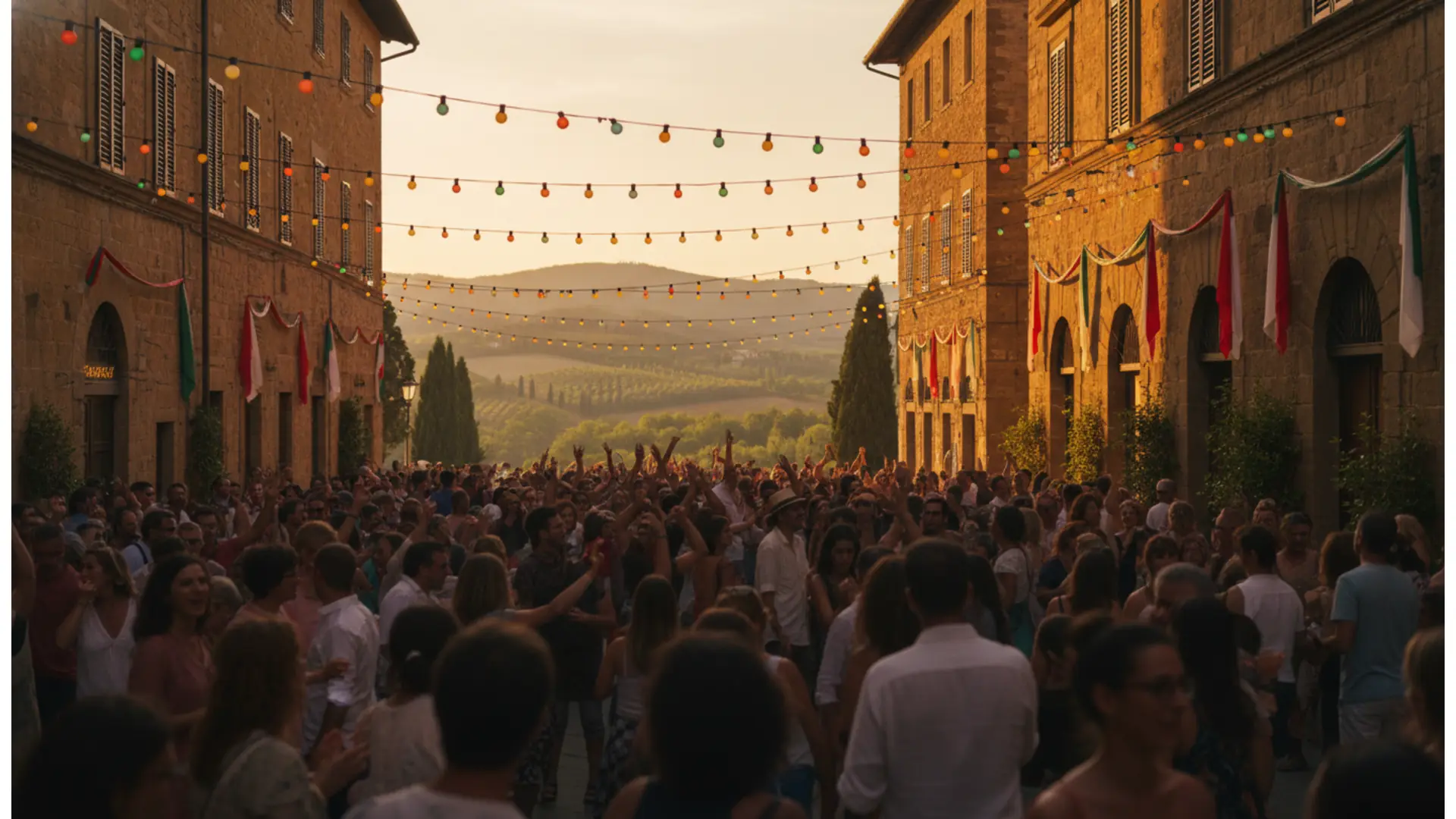
The festivities open with the Sfilata delle Some (Procession of the Loads), held on the so-called "Sunday of the Loads." Once, donkeys laden with freshly milled flour would travel the village streets; today, the procession is animated by dozens of tractors—around thirty in the 2025 edition—re-enacting that ritual journey. The parade starts from the "Paolo Pepe" Multifunctional Center and concludes with the "tavolata delle some," a traditional communal lunch at the House of Saint Nicholas. In the days leading up to the eve, men collect offerings while women prepare the sacred breads—the "pupatte," "cavalle," and loaves stamped with the saint's seal.
The sacred fire and the miraculous fava beans
The heart of the festival is the night of fire on December 5th. At the sound of the bells, brushwood is lit in the churchyard of the Santissimo Salvatore, where nine large copper cauldrons—one for each district—cook the famous Saint Nicholas fava beans. Around the cauldrons, a friendly competition ignites among the "stokers": the first cauldron to reach a boil wins a prize, amidst the cheering of the crowd. Afterward, the freshly cooked beans are distributed to those present along with bread and wine. The rite commemorates the miracle by which, according to legend, Saint Nicholas multiplied a handful of beans to feed the entire population during a severe famine in the 17th century. In the 2025 edition, six quintals of beans were cooked and over two thousand loaves were prepared.
The solemnity of December 6th
On December 6th, the patron saint's day, the Solemn Mass is followed by a procession of the saint's silver bust, a work of the Neapolitan school, carried through the village streets. The day concludes with fireworks and the repositioning of the silver bust. The festival thus unites faith, collective memory, and conviviality, keeping the village's identity alive.
A centuries-old tradition
The origins of the cult are ancient: a church dedicated to Saint Nicholas stood in Pollutri even before Bari began the construction of its famous basilica. 2025 marked a special milestone, the 4th Centenary of the Patronage (1625-2025), four centuries of the village's official devotion to its protector.
Saint Nicholas Fava Beans — edition 2026
At the moment, the committee has not yet released the official program for the 2026 edition of the Saint Nicholas Festival in Pollutri. Based on the calendar established over the years, the winter cycle includes the Sfilata delle Some on the last Sunday of November, the novena, the night of fire with the cooking of fava beans in copper cauldrons on December 5th, and the procession of the silver bust on December 6th. Precise dates and times will be communicated later.
Practical information — Saint Nicholas Fava Beans
When
The winter cycle takes place between late November (Sfilata delle Some) and December 6th, the patron saint's day. The cooking of the fava beans is held on the evening of December 5th in the churchyard of the Santissimo Salvatore.
How to get there
Pollutri is located inland from the Costa dei Trabocchi, in the province of Chieti. By car, it can be reached from the Vasto Nord exit of the A14 motorway, continuing inland. The nearest train station is Vasto-San Salvo, on the Adriatic line.
Admission
Participation in the rites and the distribution of the beans is free. Winter clothing is recommended for attending the night of fire outdoors.
Festival-goer photos
No photos yet. Share yours!
Share your photos
5 photos max, 5 MB per photo (JPG, PNG, WebP)
Noticed an error or missing information?
Help us keep this listing up to date. Every proposal is verified by our team before publication.
Festival-goer reviews
No rating yet — be the first!
No comments yet. Be the first!
Were you there?
Share your experience with the community.
Published by Valentin Contard, festival listings writer. Reviewed, corrected and approved by Christophe Contard, editor-in-chief. .
Where does it take place — Saint Nicholas Fava Beans
Sagrato della Chiesa del Santissimo Salvatore