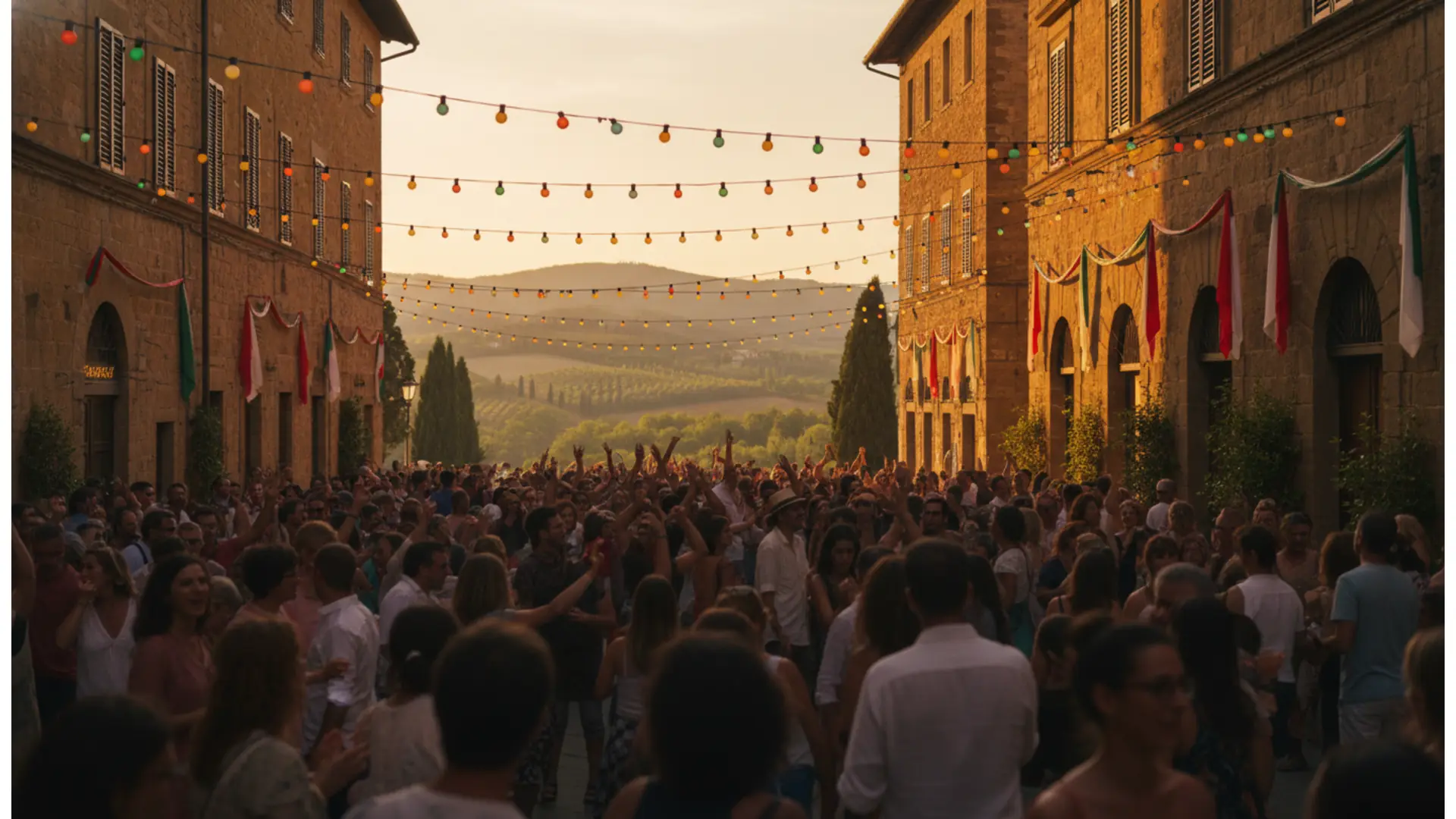
Saint Nicholas Feast of Morro d'Oro (Patronal Festival)
The patronal festival of Morro d'Oro in the heart of the Abruzzo Advent
About Saint Nicholas Feast
The patronal festival of Morro d'Oro
On December 6th, the municipality of Morro d'Oro, nestled among the rolling hills of the Apennines in the Vomano Valley, in the province of Teramo, celebrates its patron saint, Saint Nicholas of Bari (also known as Saint Nicholas of Myra). It is one of the most cherished traditions in the local calendar: centered around the figure of the Bishop of Myra—venerated throughout Christendom and popularly regarded as the inspiration for Santa Claus—the local community gathers for a day of faith, tradition, and conviviality that symbolically marks the beginning of the Christmas season in Abruzzo.
Faith and tradition at the Church of Saints Salvatore and Saint Nicholas
The heart of the festival is the Parish Church of Saints Salvatore and Saint Nicholas, part of the Diocese of Teramo-Atri, where solemn Eucharistic celebrations are held in honor of the patron saint. The day culminates in a procession carrying the statue of Saint Nicholas through the streets of the old town, accompanied by the faithful and the local band. Devotion to Saint Nicholas, the protector of children, sailors, and unmarried women, is deeply rooted in the centuries-old history of this fortified village, which dates back to around the year 1000 and was once linked to the Monastery of Montecassino.
Between Saint Nicholas and the Immaculate Conception: The Morro d'Oro Advent
The patronal festival on December 6th intertwines with the nearby Immaculate Conception holiday on December 8th. During this time, the Pro Loco of Morro d'Oro organizes a rich calendar of festivities that transform the village into a small Advent village. Beloved highlights include the living nativity scene in the medieval historic center, markets featuring local crafts and traditional products, musical performances, and a competition for traditional Abruzzo sweets, all of which bring residents together in a warm and supportive atmosphere.
A village to discover
Visiting Morro d'Oro for the patronal festival is also the perfect opportunity to discover one of the jewels of the Teramo region: the Abbey of Santa Maria di Propezzano, a Romanesque-Gothic complex linked to the legend of a Marian apparition and famous for its Holy Door. The village, which owes its name to the fertility of the surrounding soil, offers picturesque views and authentic Abruzzo hospitality, just a few kilometers from the Adriatic coast of Roseto degli Abruzzi and Giulianova.
Information on the 2026 edition
The patronal festival of Saint Nicholas falls, according to liturgical tradition, on December 6, 2026. The detailed program of religious and civil celebrations will be announced by the Parish and the Pro Loco in the weeks leading up to the event.
Saint Nicholas Feast — edition 2026
The Saint Nicholas of Bari patronal festival in Morro d'Oro will take place as per tradition on December 6, 2026. The day includes solemn Eucharistic celebrations at the Parish Church of Saints Salvatore and Saint Nicholas and the procession of the patron saint through the streets of the historic center. In the surrounding days, for the Immaculate Conception (December 8th), the Pro Loco of Morro d'Oro will enliven the village with a living nativity scene, markets, and Christmas events. The detailed program for the 2026 edition will be communicated by the organizers closer to the date.
Prices Saint Nicholas Feast 2026
Practical information — Saint Nicholas Feast
How to get there
Morro d'Oro can be reached by car via the SS150 state road of the Vomano Valley. The nearest train stations are in Roseto degli Abruzzi and Giulianova, on the Adriatic line, approximately 12-15 km away. From the A14 motorway, take the exit for Roseto degli Abruzzi or Val Vomano.
When
The patronal festival is celebrated on December 6th. Festivities extend throughout the Advent period, leading up to the Immaculate Conception (December 8th).
Admission
Religious celebrations and village events are free and open to the public.
Tips
Warm winter clothing is recommended for the evening procession. Do not miss a visit to the Abbey of Santa Maria di Propezzano.
Festival-goer photos
No photos yet. Share yours!
Share your photos
5 photos max, 5 MB per photo (JPG, PNG, WebP)
Noticed an error or missing information?
Help us keep this listing up to date. Every proposal is verified by our team before publication.
Festival-goer reviews
No rating yet — be the first!
No comments yet. Be the first!
Were you there?
Share your experience with the community.
Published by Valentin Contard, festival listings writer. Reviewed, corrected and approved by Christophe Contard, editor-in-chief. .
Where does it take place — Saint Nicholas Feast
Chiesa dei Santi Salvatore e San Nicola