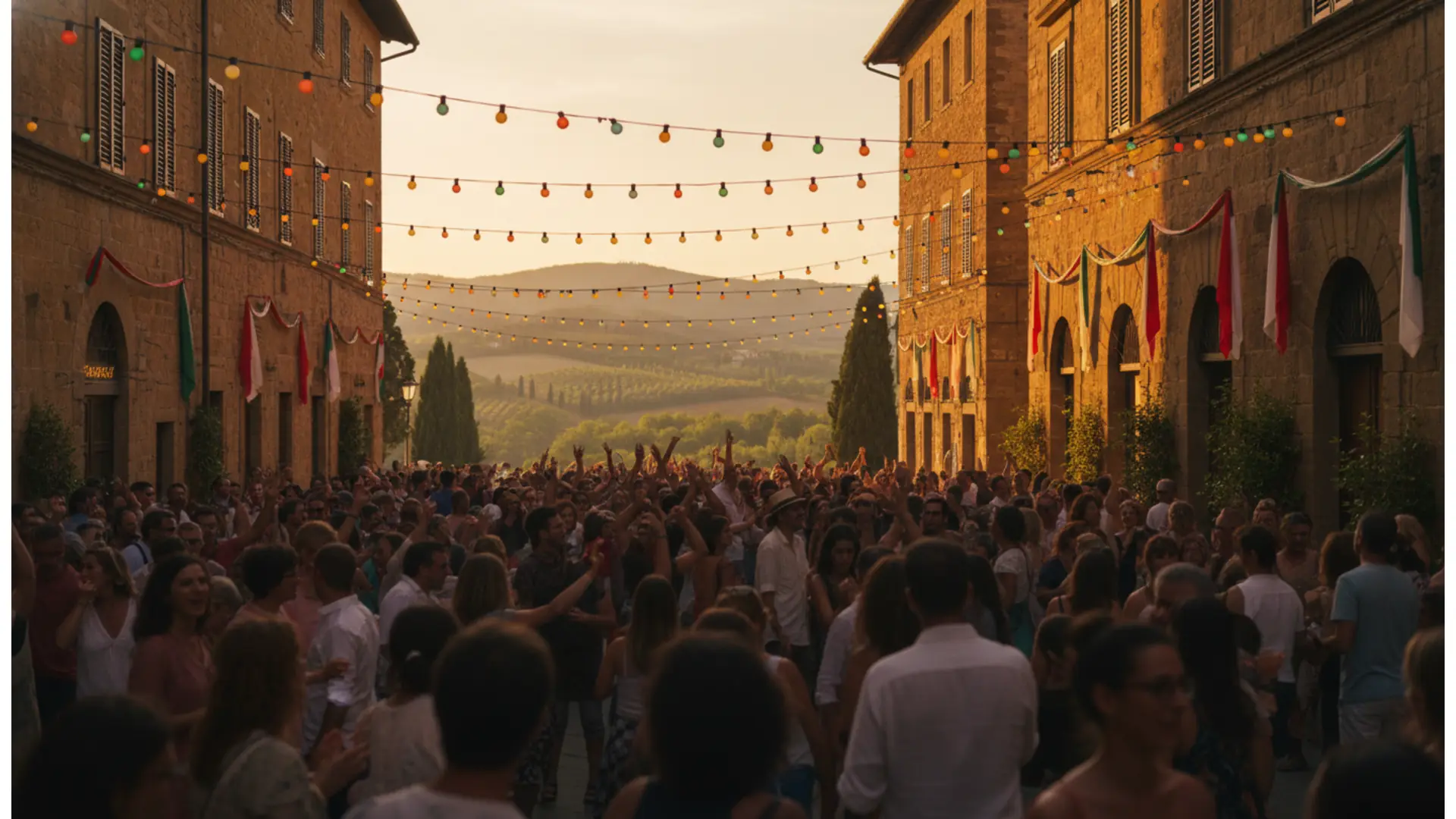
Saint Irene Patronal Feast in Magliano Nuovo
The patron saint of the Cilento village celebrated through processions, popular devotion, and the memory of the vow against the plague
About Saint Irene in Magliano Nuovo
A saint invoked against lightning
In the heart of the Cilento hinterland, in the province of Salerno, the small village of Magliano Nuovo — a hamlet of the Municipality of Magliano Vetere, in Campania — lives all year round in anticipation of its most important celebration: the Saint Irene Patronal Feast. According to hagiographic tradition, the martyr lived in the 4th century and is linked to the cities of Thessaloniki and Lecce. Here, she is venerated as a powerful intercessor against lightning, storms, and natural disasters: a protection that is far from symbolic for a settlement located in a dominant position at about seven hundred meters above sea level, exposed to the summer storms that rise up the Alento and Calore Lucano valleys.
A cult with 17th-century roots
Local sources trace the beginning of the Magliano cult back to at least the 17th century, when the church dedicated to the saint was built; the devotion then consolidated in the 18th century, partly due to the link between Saint Irene and the Kingdom of Naples. This is not a marginal detail: Magliano Nuovo was founded exactly during that period, rebuilt after the fire that struck the original settlement, and the cult of the patron saint has accompanied the life of the new village from the very beginning. The figure of the saint is flanked by the village's memories: the Preta Perciata, the mountain pass connecting the nearby valleys, and the ruins of the ancient castle at the top of the village.
The three commemorations of Saint Irene
A peculiarity that makes this feast different from many other patronal festivals in Cilento is the plurality of dates. The community remembers its patron saint at three distinct times of the year:
- May 5th — the canonical and oldest anniversary, the liturgical heart of the feast, historically accompanied by a fair originally scheduled for May 3rd;
- Second Sunday of August — the thanksgiving procession linked to the memory of the 1656 plague, which hit the territory hard: the end of the contagion, in the early 18th century, was commemorated with a vow and a summer procession that survives to this day;
- October 20th — the autumn date, lacking a direct historical foundation but adopted due to homonymy with Saint Irene of Portugal, in some years accompanied by civil celebrations on the eve of the 19th.
Religious rites and civil festivities
The heart of the celebration remains the procession: the statue and the relic of Saint Irene travel through the alleys of the village accompanied by the singing of the faithful, music, and, in the most solemn editions, evening fireworks displays. Holy Masses are held in the parish church, with a solemn Mass on the feast day. In years when the civil program is expanded, the village has hosted the Magliano-Altavilla Town Band Concert, musical evenings in the square with folk groups and orchestras, tastings of local products, and social gatherings that extend the day until night.
The village that reunites
With only a few hundred permanent residents, Magliano Nuovo doubles its population during the feast days: it is the occasion when emigrants return, families scattered between Salerno, Northern Italy, and abroad, and the village rediscovers its collective dimension. The Saint Irene feast is therefore not just a devotional appointment, but an identity ritual that brings together different generations, in a context — that of the Cilento, Vallo di Diano and Alburni National Park — where popular traditions are still a living heritage and not a folkloric reconstruction.
Why it is worth visiting
- An authentic patronal feast, far from mass tourism circuits;
- A stone village at seven hundred meters, with panoramic views over the Alento and Calore Lucano valleys;
- The chance to discover the most genuine Cilento cuisine, from handmade cavatielli to local cured meats and cheeses;
- A unique devotional calendar, with three appointments spread across spring, summer, and autumn.
Saint Irene in Magliano Nuovo — edition 2026
Saint Irene 2026 in Magliano Nuovo
On May 5th, 2026, Magliano Nuovo renewed the oldest appointment in its devotional calendar. The anniversary was announced by the Cilento press in the days immediately preceding it, with a reference to the history of the local cult: a devotion dating back at least to the 17th century that invokes Saint Irene as a protector against lightning and natural disasters.
The day followed the established pattern of the patronal feast: liturgical rites in the parish church and a procession with the image and relic of the saint along the stone alleys of the village, with the participation of the resident community and those returning to the village for the occasion.
The Magliano calendar does not end in the spring: the canonical date of May 5th is traditionally accompanied by the thanksgiving procession on the second Sunday of August, linked to the memory of the 1656 plague, and the autumn anniversary on October 20th.
Programme Saint Irene in Magliano Nuovo 2026
Highlights Saint Irene in Magliano Nuovo 2026
- Canonical date confirmed: Tuesday, May 5th, 2026.
- Procession with the relic and image of Saint Irene through the alleys of Magliano Nuovo.
- Liturgical celebrations in the village parish church.
- A devotion documented since at least the 17th century, linked to protection against lightning and disasters.
- The calendar for the year still includes the votive procession on the second Sunday of August (memory of the 1656 plague) and the anniversary on October 20th.
Prices Saint Irene in Magliano Nuovo 2026
Practical information — Saint Irene in Magliano Nuovo
Where it takes place
Magliano Nuovo, a hamlet of the Municipality of Magliano Vetere (province of Salerno, Campania), ZIP code 84050. The celebrations are concentrated in the parish church and along the streets of the historic center.
How to get there
By car: from the A2 del Mediterraneo motorway, take the Battipaglia exit, then the SS18 and provincial roads towards Vallo della Lucania and Magliano Vetere; the village is about 3 km from Magliano Vetere. By train: Vallo della Lucania-Castelnuovo station on the Tyrrhenian line, then local bus connection or taxi. By plane: Salerno-Costa d'Amalfi or Naples-Capodichino airport.
Costs and access
Religious celebrations and civil festivities in the square are free and open to the public. Any food stands apply their own prices.
Tips
The historic center is uphill and paved with cobblestones: comfortable shoes are recommended. Parking should be sought at the entrance to the village, as the alleys are not accessible by car during the procession. At seven hundred meters above sea level, the evenings remain cool even in summer: it is best to bring a light jacket. For accommodation, the widest range of options can be found in Vallo della Lucania, Stio, Felitto, and along the Cilento coast.
Festival-goer photos
No photos yet. Share yours!
Share your photos
5 photos max, 5 MB per photo (JPG, PNG, WebP)
Noticed an error or missing information?
Help us keep this listing up to date. Every proposal is verified by our team before publication.
Festival-goer reviews
No rating yet — be the first!
No comments yet. Be the first!
Were you there?
Share your experience with the community.
Published by Valentin Contard, festival listings writer. Reviewed, corrected and approved by Christophe Contard, editor-in-chief. .
Where does it take place — Saint Irene in Magliano Nuovo
Magliano Nuovo, centro storico e chiesa parrocchiale di Santa Maria Assunta