Saint Barnabas Patronal Feast
The patron saint of Marino: faith, historical processions, and culture in the Castelli Romani
About Saint Barnabas in Marino
A devotion spanning over four centuries
The Saint Barnabas Patronal Feast is the most cherished identity-defining event in Marino, a town in the Metropolitan City of Rome Capital, Lazio, overlooking Lake Albano and considered one of the capitals of the Castelli Romani. Its origins date back to the early 17th century: on June 11th of 1615, 1616, and 1617, three violent hailstorms devastated the crops of the Marino countryside. The community, gathered in a popular assembly, asked Cardinal Francesco Sforza to venerate as patron saint the apostle whose liturgical day fell on that very date. Approval was granted on June 4th, 1619, and the festival has been held annually ever since.
The procession, the heart of the feast
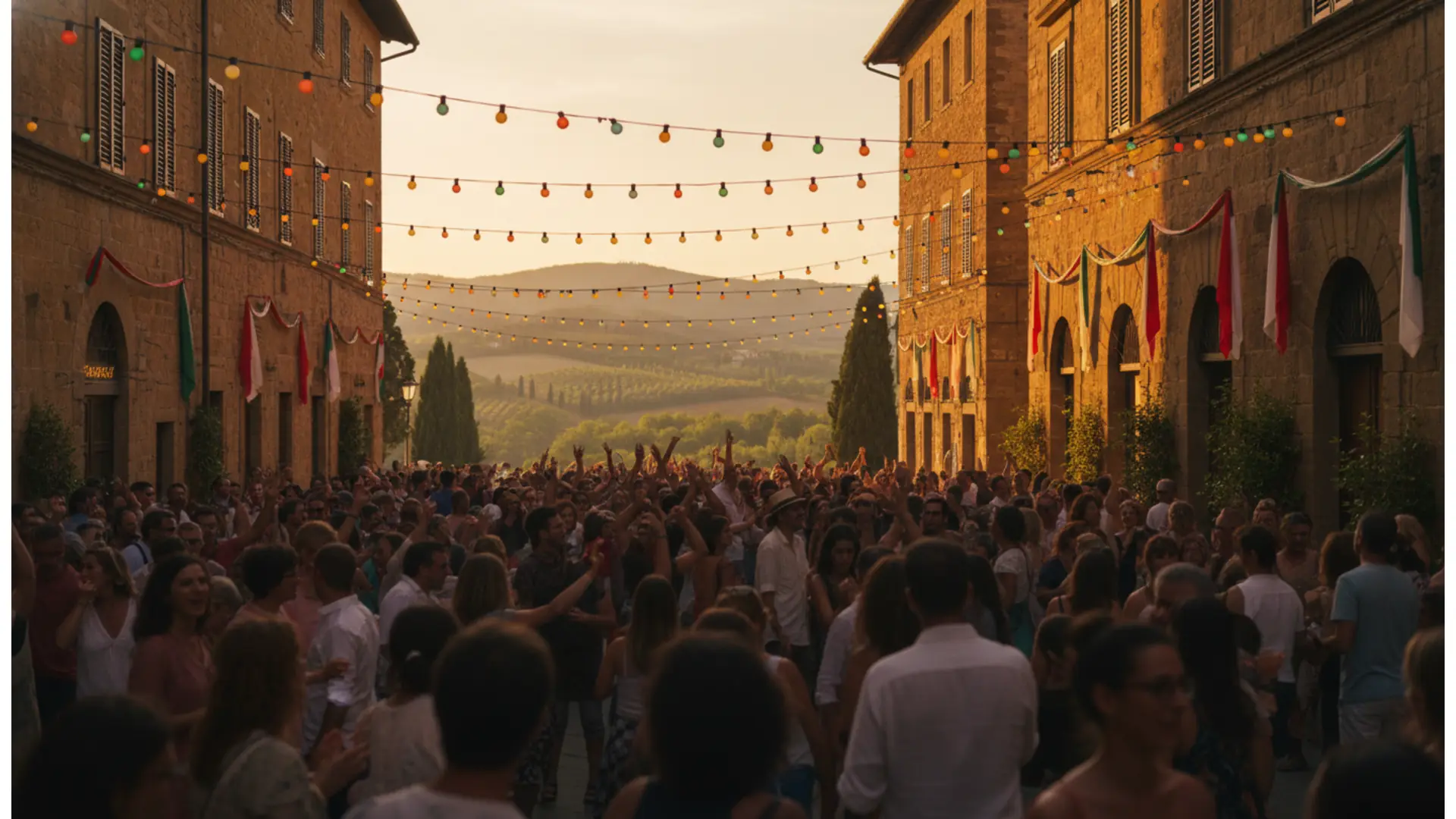
The most anticipated moment remains the solemn procession that winds through the alleys and squares of the historic center. The pageant follows a structure codified over centuries: lay groups lead the way, followed by confraternities carrying processional regalia—including two massive 17th-century tapestries and the so-called "basilica," the large yellow-and-red umbrella that symbolically represents the mother church—followed by the clergy, civil and military authorities, and the crowd of faithful. The statue of the saint is carried through the streets lined with spectators, accompanied by marching bands.
The solemn mass in the basilica
The main Eucharistic celebration is held in the Collegiate Basilica of Saint Barnabas, a monumental building whose first stone was laid on June 10th, 1640, and where the first sung mass was held on October 22nd, 1662. It is presided over by the Bishop of the Diocese of Albano, Monsignor Vincenzo Viva, in the presence of the Mayor, the Executive Committee, the City Council, and local associations. The mass is traditionally followed by the blessing of the city.
The civil side: music, art, and books
Alongside the religious dimension, the municipal administration organizes a multi-day cultural program each year. On the basilica steps and in Piazza San Barnaba, school choirs, youth orchestras, jazz ensembles, and rock and pop bands perform; institutional halls host book launches and in-depth cultural meetings. Outdoor art is also a staple, with spontaneous exhibitions set up along the streets of the center and the Scorci di Marino (Glimpses of Marino) extemporaneous painting competition, which invites artists to capture the city's corners and views from life.
The fair and the popular spirit
Since the 17th century, the festival has been linked to a livestock and goods fair held from June 11th to 18th: a tradition that survives today in the stalls and markets that crowd the center during the festival days. The calendar also includes acts of solidarity, such as lunches offered to those in need, and convivial gatherings involving local parishes and youth centers.
Marino, between wine and memory
Visitors arriving for Saint Barnabas find a city with strong traditions: in October, it hosts the world-famous Grape Festival, the oldest in Italy, and the wine of the Castelli Romani naturally accompanies the June festivities as well. In the local dialect, the patron saint is affectionately called «san Barnipa», a sign of a popular familiarity that speaks louder than any official celebration. Walking between the Fountain of the Four Moors, Palazzo Colonna, and the medieval alleys, one understands why the festival is considered, as local officials repeat, "the moment when the community gathers and recognizes its most authentic values."
Recommended for
- Those seeking an authentic patronal feast just a few kilometers from Rome, far from mass tourism.
- Fans of popular traditions, confraternities, and historical processional regalia.
- Those who love free live music in open-air monumental settings.
- Families, thanks to a widespread, pedestrian-friendly program.
Saint Barnabas in Marino — edition 2026
Saint Barnabas 2026: the community gathers
From June 9th to 12th, 2026, Marino celebrated its patron saint with a calendar that combined devotion and culture. The central moment was the solemn procession on June 11th along the streets of the historic center, followed by numerous faithful, confraternities, and civic associations, with the participation of the Bishop Vincenzo Viva of the Diocese of Albano, Mayor Stefano Cecchi, city councilors, law enforcement, and civil protection volunteers.
Alongside the liturgical celebrations, the program curated by the municipal administration and the Councilor for Culture Pamela Muccini featured spontaneous art exhibitions along the streets of the center, the Scorci di Marino extemporaneous painting competition, musical performances on the steps of the Basilica of Saint Barnabas—ranging from school choirs to rock, pop, and jazz bands—and cultural deep-dives, including the highly attended presentation in the Council Chamber of the volume on Masaccio by journalist and art historian Alessandro Masi.
A widespread and free festival that confirmed Marino as one of the key identity landmarks of the Castelli Romani.
Programme Saint Barnabas in Marino 2026
2026 Edition Program
- Festival days: from Tuesday, June 9th to Friday, June 12th, 2026, with the highlight on Thursday, June 11th, the day of Saint Barnabas the Apostle.
- Liturgical celebrations: holy masses in the Collegiate Basilica of Saint Barnabas during the festival days.
- Solemn mass: Eucharistic celebration presided over by the Bishop of Albano, Monsignor Vincenzo Viva.
- Solemn procession: pageant with the statue of the patron saint through the historic center, with confraternities, lay groups, associations, clergy, and civil and military authorities.
- Art exhibitions: spontaneous displays set up along the streets and squares of the center.
- Scorci di Marino: extemporaneous painting competition dedicated to the most evocative corners of the city.
- Live music: concerts on the steps of the Basilica of Saint Barnabas, from school choirs to rock, pop, and jazz bands.
- Culture: presentation in the Council Chamber of the volume on Masaccio with Alessandro Masi.
- Markets: stalls and booths in the historic center, heirs to the historic June fair.
Highlights Saint Barnabas in Marino 2026
- The June 11th procession with the two 17th-century tapestries and the large yellow-and-red umbrella known as "the basilica".
- The solemn mass by the Bishop of Albano in the Collegiate Basilica of Saint Barnabas.
- The Scorci di Marino extemporaneous painting competition.
- Free concerts on the basilica steps.
- The presentation of the volume on Masaccio with Alessandro Masi in the Council Chamber.
Prices Saint Barnabas in Marino 2026
Practical information — Saint Barnabas in Marino
How to get there
By car from Rome: Via Appia Nuova (SS7) or Via dei Laghi, take the Marino exit; the historic center is restricted to traffic during the festival, so it is recommended to park in the outer areas and walk up.
By train: FL4 line Rome Termini–Albano Laziale, get off at Marino Laziale station, then take a shuttle or enjoy the short walk up to the center.
By metro and bus: Metro A to Anagnina, then a Cotral bus to Marino.
Costs
Free admission to the procession, religious celebrations, concerts on the steps, and outdoor exhibitions. Some community lunches or dinners may require a contribution.
Tips
The June 11th procession takes place in the late afternoon: arrive an hour early to find a spot along the route. Comfortable shoes are recommended for the uphill alleys and historic cobblestones. For information: Municipality of Marino, tel. +39 06 93662384.
Festival-goer photos
No photos yet. Share yours!
Share your photos
5 photos max, 5 MB per photo (JPG, PNG, WebP)
Noticed an error or missing information?
Help us keep this listing up to date. Every proposal is verified by our team before publication.
Festival-goer reviews
No rating yet — be the first!
No comments yet. Be the first!
Were you there?
Share your experience with the community.
Where does it take place — Saint Barnabas in Marino
Basilica di San Barnaba e centro storico
Piazza San Barnaba, 00047 Marino