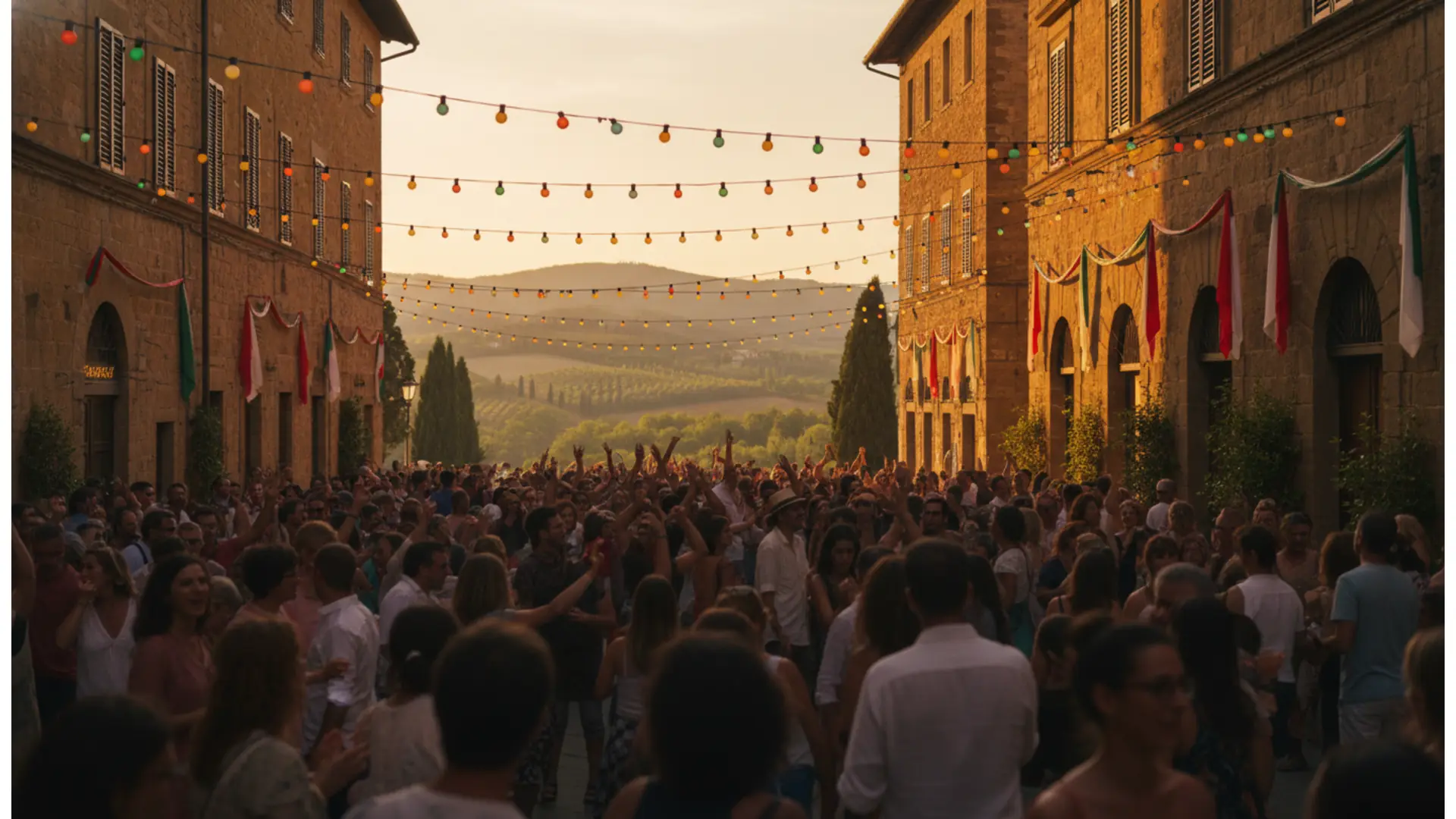
Procession of the Silver Busts of the Patron Saints of Capua
The solemn procession of the silver effigies of the patron saints through the streets of the historic center
About Silver Busts of Capua
A centuries-old tradition in the heart of Capua
In the city of Capua, located in the province of Caserta in the heart of the Campanian Terra di Lavoro, the first Saturday of May has for centuries been the day dedicated to the patron saints. The Procession of the Silver Busts is one of the most deeply rooted religious and identity-defining events in the region: a ritual that blends faith, art, and collective memory, bringing the entire Capuan community together around the effigies of its protectors.
The silver effigies and the statue of Saint Vincent
The heart of the procession consists of the seven silver reliquary busts of the city's patrons: Saint Stephen, Saint Agatha, Our Lady of Sorrows, Saint Cajetan of Thiene, Saint Andrew Avellino, Saint Irene, and Saint Sebastian. They are accompanied by the wooden statue of Saint Vincent Ferrer, the only non-silver image in the procession. These busts, crafted by Neapolitan silversmiths during the 18th century based on designs attributed to renowned painters, represent a sacred art heritage of extraordinary value, kept in the Cathedral and displayed to the public on this very occasion.
Ancient origins
The roots of Capuan devotion date back, according to tradition, to the 6th century, when Bishop Germanus is said to have received the relics of Saints Stephen and Agatha from Emperor Justin I. The solemn commemoration of the patrons, as we know it today, solidified between the late 16th century and the following decades, replacing older forms of city festivals and adopting the form of the procession of the effigies.
The ritual and the participants
The day begins with Solemn Mass in the Cathedral; at the end of the service, the busts are placed on the shoulders of the accollatori (bearers) and make their way through the historic center. The transport is led and supported by the Capuan Accollatori Association, joined by confraternities, religious groups, and the city's civil and military representatives. The procession, promoted by the Archdiocese of Capua, traverses the main streets and squares of the center before returning to the Cathedral, where the rite concludes in prayer and reflection.
An identity-defining event
For Capua, the procession of the silver busts is not just a liturgical event, but a moment when the city on the Volturno rediscovers its history and its deep bond with its patron saints. Those visiting Campania during this period will find in Capua an authentic opportunity to experience a living popular tradition, far from mass tourism and deeply rooted in the local community.
Silver Busts of Capua — edition 2026
In 2026, Capua renewed its devotion to its patron saints on Saturday, May 2nd. After the Solemn Mass celebrated in the Cathedral at 6:00 PM, the seven silver busts and the wooden statue of Saint Vincent Ferrer were carried on shoulders by the accollatori through the historic center, accompanied by confraternities, religious groups, and civil and military representatives, before returning to the Cathedral to conclude the rite.
Programme Silver Busts of Capua 2026
Saturday, May 2, 2026
- 6:00 PM — Solemn Mass in the Cathedral (Duomo of Saints Stephen and Agatha)
- Following — Procession of the silver busts of the patron saints and the wooden statue of Saint Vincent Ferrer through the streets of the historic center, led by the Capuan Accollatori Association with confraternities and civil and military representatives
- Upon return — Return of the effigies to the Cathedral and conclusion of the rite
The procession carries the reliquary busts of Saint Stephen, Saint Agatha, Our Lady of Sorrows, Saint Cajetan of Thiene, Saint Andrew Avellino, Saint Irene, and Saint Sebastian.
Highlights Silver Busts of Capua 2026
Prices Silver Busts of Capua 2026
Practical information — Silver Busts of Capua
When
The first Saturday of May. In 2026, the procession is scheduled for Saturday, May 2nd, with the Solemn Mass in the Cathedral starting at 6:00 PM, followed by the procession.
Where
Cathedral of Capua (Duomo of Saints Stephen and Agatha) and the streets of the historic center of Capua (CE), in the province of Caserta, Campania. During the procession, some streets in the center may be closed to traffic.
Admission
Participation is free and open to all, as this is a religious event open to the entire citizenry and visitors.
How to get there
Capua is accessible by train via the city's railway station and by car from the Capua exit on the A1 motorway. The historic center is easily walkable.
Festival-goer photos
No photos yet. Share yours!
Share your photos
5 photos max, 5 MB per photo (JPG, PNG, WebP)
Noticed an error or missing information?
Help us keep this listing up to date. Every proposal is verified by our team before publication.
Festival-goer reviews
No rating yet — be the first!
No comments yet. Be the first!
Were you there?
Share your experience with the community.
Published by Valentin Contard, festival listings writer. Reviewed, corrected and approved by Christophe Contard, editor-in-chief. .
Where does it take place — Silver Busts of Capua
Cattedrale di Capua (Duomo dei Santi Stefano e Agata)