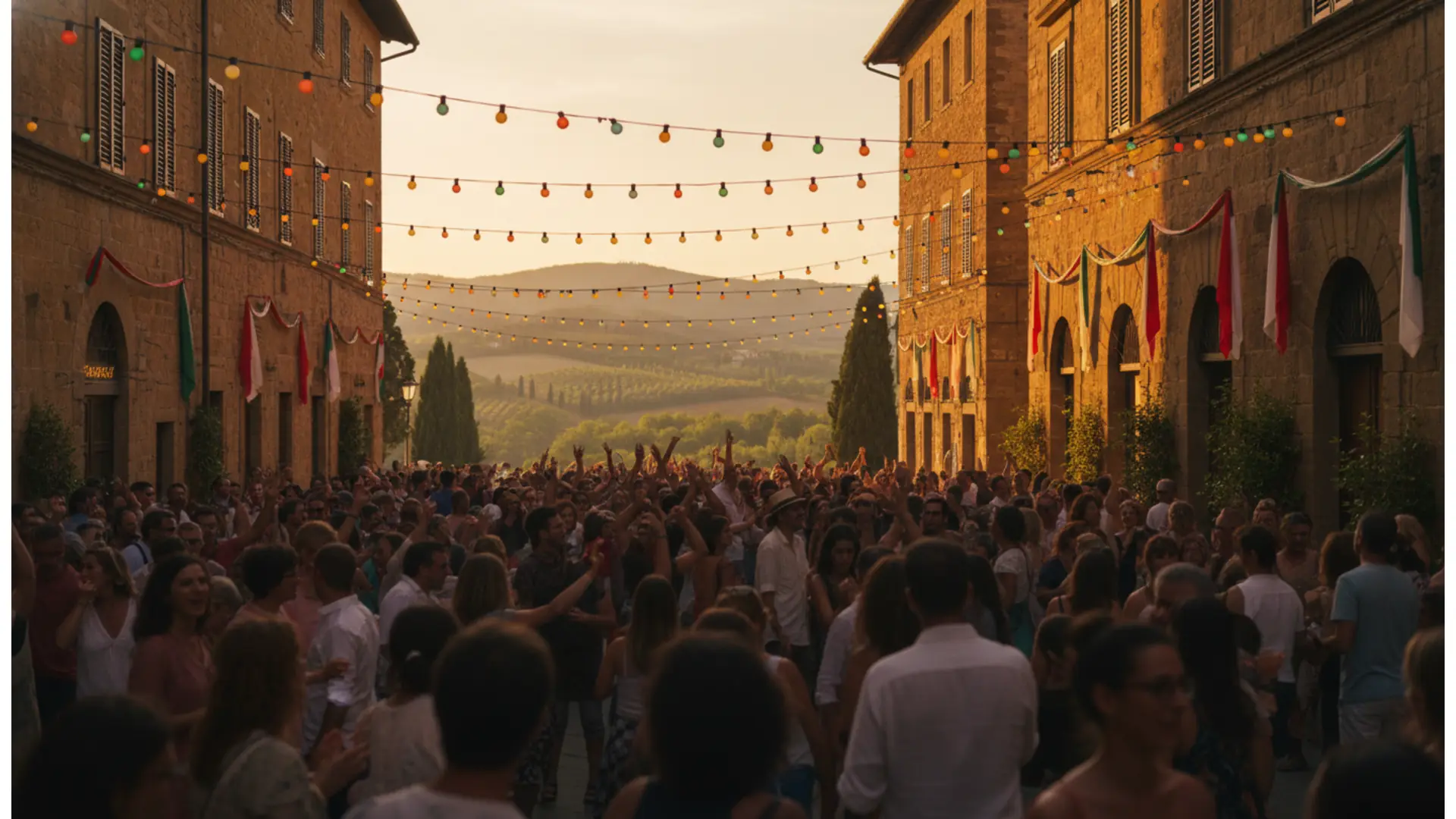
Pilgrimage in Honor of Santo Salvatore ("Frate Janne")
The ancient pilgrimage from Giano Vetusto to the sanctuaries of Monte Maggiore
About Santo Salvatore Pilgrimage
An ancient pilgrimage on Monte Maggiore
In the heart of the upper Caserta region, in Campania, the small town of Giano Vetusto preserves one of the most evocative religious traditions in the province of Caserta: the Pilgrimage in honor of Santo Salvatore, known to locals as "Frate Janne". Every year, on the first Sunday of May, the community sets out on a journey toward the sanctuaries nestled on the slopes and the summit of Monte Maggiore, in a ritual that weaves together faith, nature, and rural memory.
The route: twenty-five kilometers of faith
The pilgrimage begins at the mother church of Giano Vetusto, where the procession departs, led by two crosses—one masculine and one feminine—carried in turns by different volunteers. The 25-kilometer journey passes through the Pozzillo district and the Curti area before climbing the trails of Monte Maggiore. After a stop at "Nocciole", the pilgrims reach the first sanctuary, Santa Maria a Frate Janne, where the first mass is celebrated. The journey then continues to the second sanctuary, dedicated to Santo Salvatore, perched on Monte Caprario at an altitude of about 860 meters, where the second mass is held.
The "Mazza e' Sàntu Salvàtore"
An unmistakable element of the pilgrimage is the "Mazza e' Sàntu Salvàtore", the staff that accompanies every pilgrim along the way. It is made of elm wood, with the bark carved and decorated using pyrography to create regular, intricate patterns. Blessed at the sanctuaries, the staff is kept in homes as a symbol of protection; in the past, farmers used it as a talisman for the fertility of their fields and livestock.
A rite passed from father to son
The cult of Santo Salvatore is ancient and deeply rooted in the identity of Giano Vetusto: it is said that every family in the village sends at least one representative to the pilgrimage. The date, at the beginning of May, is not coincidental; it coincides with a crucial month for crop growth, blending religious devotion with ancient propitiatory rites linked to the agricultural cycle. Every year, pilgrims from neighboring towns, including Rocchetta e Croce, Pietramelara, Riardo, Roccaromana, Pontelatone, Formicola, and Calvi Risorta, join the procession.
Nature and spirituality
Beyond its religious significance, the pilgrimage is an immersive experience in the nature of the Monte Maggiore massif, amidst forests, trails, and hermitages that offer panoramic views of the entire Campanian plain. Walking this route means traversing a landscape that unites spirituality, hiking, and folk tradition, standing as one of the most authentic testimonies of the intangible heritage of the province of Caserta.
Santo Salvatore Pilgrimage — edition 2026
As every first Sunday of May, the community of Giano Vetusto renewed the ancient pilgrimage to Santo Salvatore in 2026. The procession departed from the mother church led by the two traditional crosses, passed through the Pozzillo and Curti districts, and reached, after the stop at Nocciole, the sanctuaries of Santa Maria a Frate Janne and Santo Salvatore, where the two masses were celebrated. Once again this year, the faithful carried the characteristic Mazza di San Salvatore with them.
Programme Santo Salvatore Pilgrimage 2026
First Sunday of May, early morning departure from the mother church of Giano Vetusto; approximately 25 km walk with stops at the Pozzillo, Curti, and Nocciole districts; first mass at the sanctuary of Santa Maria a Frate Janne and second mass at the sanctuary of Santo Salvatore on Monte Maggiore.
Highlights Santo Salvatore Pilgrimage 2026
- Procession led by the two traditional crosses, one masculine and one feminine
- The characteristic Mazza e' Sàntu Salvàtore, an elm wood staff decorated with pyrography
- The sanctuaries of Santa Maria a Frate Janne and Santo Salvatore
- The two masses celebrated along the path on Monte Maggiore
Prices Santo Salvatore Pilgrimage 2026
Practical information — Santo Salvatore Pilgrimage
How to get there
Giano Vetusto can be reached by car from the Capua exit (A1 motorway), continuing toward the upper Caserta area; the nearest train stations are Capua and Sparanise, on the Rome-Naples line.
Practical tips
The pilgrimage covers approximately 25 km of mountain trails: trekking shoes, water, and layered clothing are essential. Departure takes place early in the morning from the mother church. The event is free and open to everyone.
Festival-goer photos
No photos yet. Share yours!
Share your photos
5 photos max, 5 MB per photo (JPG, PNG, WebP)
Noticed an error or missing information?
Help us keep this listing up to date. Every proposal is verified by our team before publication.
Festival-goer reviews
No rating yet — be the first!
No comments yet. Be the first!
Were you there?
Share your experience with the community.
Published by Valentin Contard, festival listings writer. Reviewed, corrected and approved by Christophe Contard, editor-in-chief. .
Where does it take place — Santo Salvatore Pilgrimage
Santuario del Santo Salvatore (Monte Maggiore)