'Mbrà doij terr (Between Two Lands)
The historic center festival of Troia between the city's two original settlements
About 'Mbrà doij terr
A festival born between two lands
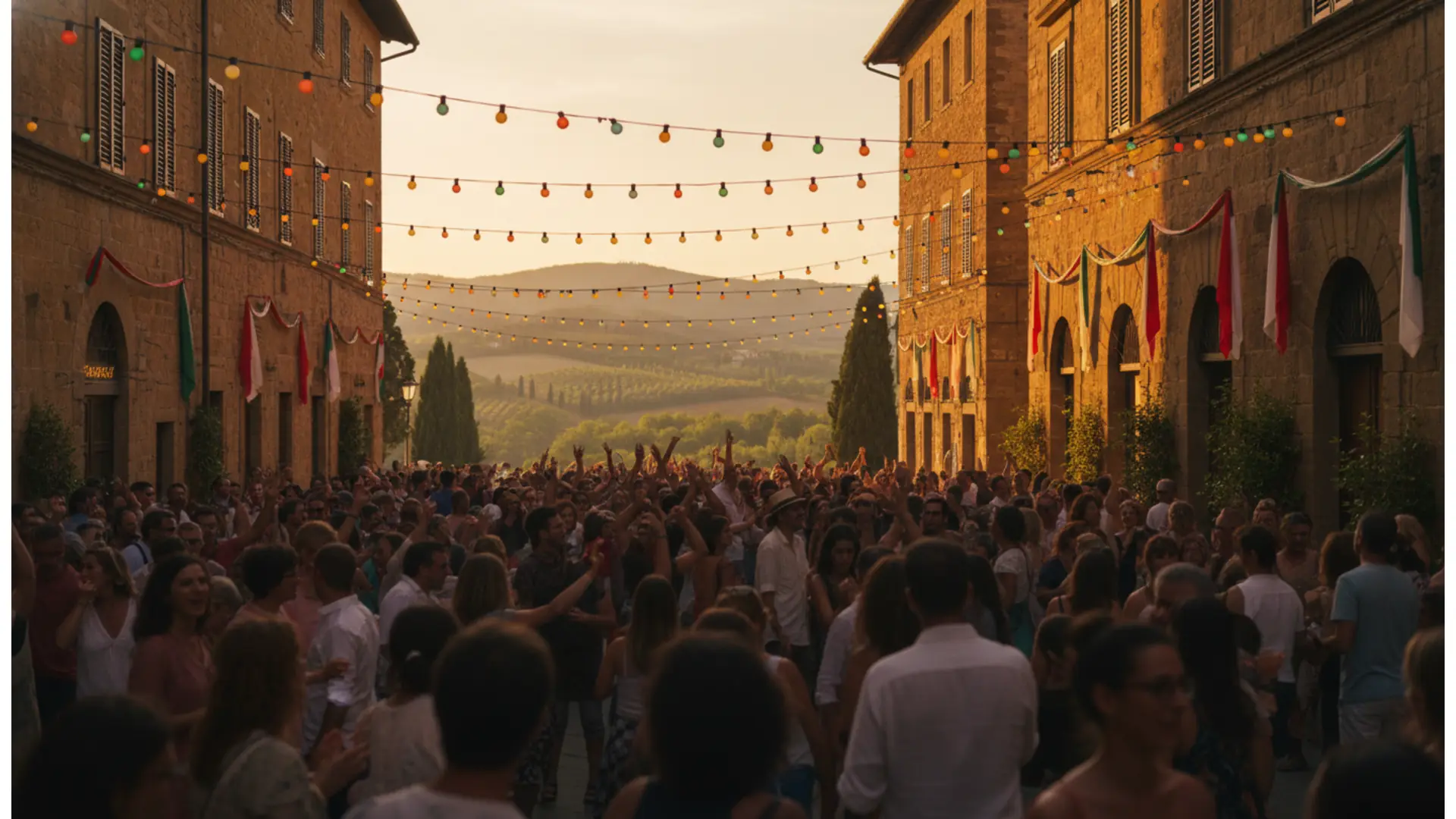
'Mbrà doij terr — in Italian Fra Due Terre — is the festival that brings the historic center of Troia to life, a small town in the Monti Dauni area of the Foggia province, in Puglia. The name, in the local Troian dialect, evokes the ancient bond between the two first settlements that gave rise to the village: the two lands that extended around the churches of San Basilio Magno and San Vincenzo. Founded in 1019 by the Byzantine Catapan Basilio Boioannes, Troia preserves its most remote memories in these alleys, and the festival was created precisely to showcase the historic center in its entirety.
An itinerary in the ancient heart
The event's route winds along Corso Umberto I, ideally connecting the church of San Basilio Magno to that of San Vincenzo: a path that unites the two original nuclei and transforms the oldest districts of Troia into an immersive journey through history, flavors, and entertainment. The streets and squares of the village are filled with stalls, exhibitions, and performers, restoring the atmosphere of a community gathering around its roots.
What to experience along the route
- Theatrical tour (usually at 6:00 PM): an animated storytelling of local history, conducted in an entertaining way through the streets of the center.
- Food and wine stalls with typical products of the Daunian territory and traditional Troian cuisine.
- Wandering music, flag-wavers, and stilt walkers animating the alleys.
- Photographic and art exhibitions and displays from the Museum of Peasant Civilization.
- Literary salon with readings of Troian dialect poetry organized by the Pro Loco.
The Soldo Troiano
A characteristic element of the festival is the Soldo Troiano, the local currency used to make purchases at the food stalls along the route. Visitors exchange euros for 'soldi' (at a one-to-one rate) at booths set up in central locations such as Palazzo D'Avalos, the tourist office, and Piazza San Marco di Ecana; unused coins can be converted back at the end of the evening. A simple and evocative way to immerse yourself in the village atmosphere.
Troia and the Monti Dauni
The festival is part of the Troian Summer program, which accompanies the town from July to September with dozens of cultural and traditional events. Visiting Troia also means discovering its famous Romanesque Cathedral with its splendid eleven-spoke rose window, a jewel of the Monti Dauni. 'Mbrà doij terr is the ideal opportunity to combine the discovery of artistic heritage with the taste of local products and the warmth of an authentic popular festival.
'Mbrà doij terr — edition 2026
On August 14, 2026, the historic center of Troia hosts a new edition of 'Mbrà doij terr (Between Two Lands), included in the rich Troian Summer 2026 program, which offers over sixty cultural and traditional events from July to September. The festival confirms its route along Corso Umberto I, between the churches of San Basilio Magno and San Vincenzo, with the atmosphere of the Daunian village reigniting with flavors, music, and entertainment.
The detailed program for the 2026 edition will be announced by the organizers in the weeks leading up to the event. The traditional format of the event includes the theatrical tour, food and wine stalls, wandering musical groups, flag-wavers and stilt walkers, exhibitions, and the Soldo Troiano to be exchanged at the center's booths.
Prices 'Mbrà doij terr 2026
Practical information — 'Mbrà doij terr
How to get there
Troia is located in the Monti Dauni, in the province of Foggia. By car: from the A16 motorway or the SS16, exit Foggia, then take the SS546 towards Troia (about 20 km from Foggia). The nearest train station is Foggia, connected by local bus lines.
Where it takes place
The event enlivens the historic center along Corso Umberto I, between the churches of San Basilio Magno and San Vincenzo.
Costs
Access to the festival is free. For purchases at the stalls, the Soldo Troiano is used, exchanged one-to-one with the euro at the booths in the center.
Tips
Bring comfortable shoes for the route through the alleys and check with the tourist office for times and reservations for the theatrical tour (tel. +39 370 1204347).
Festival-goer photos
No photos yet. Share yours!
Share your photos
5 photos max, 5 MB per photo (JPG, PNG, WebP)
Noticed an error or missing information?
Help us keep this listing up to date. Every proposal is verified by our team before publication.
Festival-goer reviews
No rating yet — be the first!
No comments yet. Be the first!
Were you there?
Share your experience with the community.
Published by Valentin Contard, festival listings writer. Reviewed, corrected and approved by Christophe Contard, editor-in-chief. .
Where does it take place — 'Mbrà doij terr
Centro storico di Troia
Corso Umberto I, 71029 Troia