Living Via Crucis of Postiglione
The Passion of Christ comes to life in the alleys of the Alburni village
About Living Via Crucis
An open-air Passion in the heart of the Alburni
On Palm Sunday, as Holy Week celebrations begin across Italy with the blessing of the olive branches, Postiglione goes a step further: the entire town becomes an open-air theater to stage the Living Via Crucis, a sacred representation that retraces the final hours of Christ through the alleys, stairways, and squares of the historic center. It is one of the most heartfelt events on the calendar for the Municipality of Postiglione, in the province of Salerno, and one of the most evocative Easter rituals in the Alburni Mountains, in Campania.
The village becomes the stage
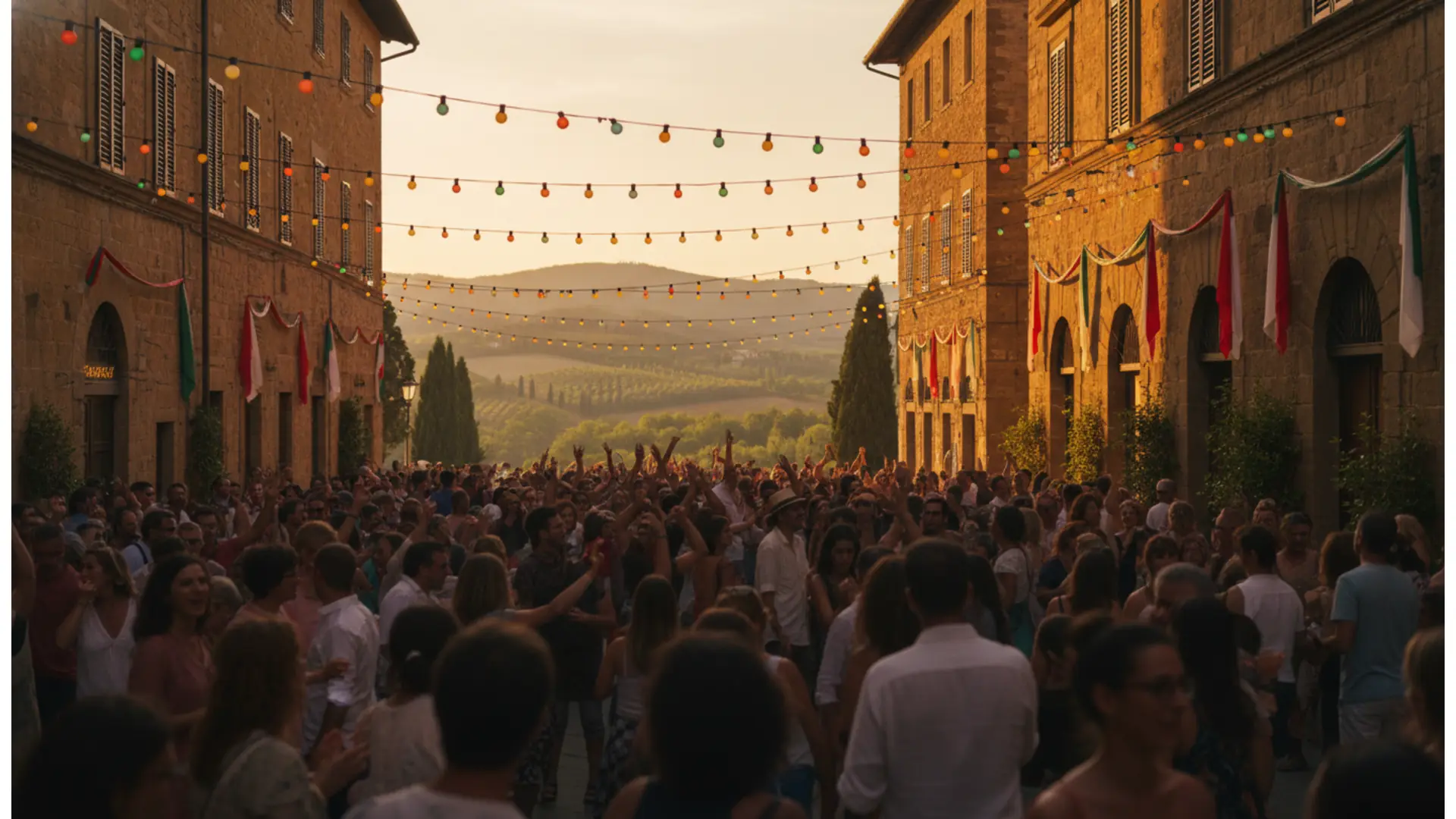
There is no stage here: the village itself is the scenery. The stations follow one another along a route that winds through the ancient core of the town, utilizing arches, portals, staircases, and open spaces that have naturally evolved over centuries to host such a narrative. The audience follows on foot, moving from one scene to the next, while lights, music, and silence mark the moments of the Passion. The sets, soundtracks, script adaptations, and costumes—created in collaboration with theatrical tailors—are meticulously detailed and have always been a key reason for the acclaim received from the large crowds that gather in the Alburni every year.
Over a hundred participants: a community on stage
The strength of the Living Via Crucis of Postiglione lies in the numbers and, above all, in the people who make them up: more than a hundred participants take the stage, almost all of whom are local residents. Roman soldiers, apostles, townspeople, Christ, and the pious women are not professional actors but neighbors who spend weeks rehearsing, sewing, assembling structures, and preparing the lighting. The performance is organized by the Parish in conjunction with local associations, particularly the youth group of Postiglione, with the support of the municipal administration. It is this choral participation that makes the event more than just a show: it is a civic and religious ritual that unites generations.
Faith, tradition, and memory
The Living Via Crucis is not a museum reconstruction but an act of popular devotion. The rhythm of the narrative, the hymns, and the darkness falling over the village as the procession advances restore the dimension that Southern piety has always reserved for Holy Week: participatory, physical, and shared. After the pause imposed by the pandemic, the event resumed and has continued to grow, reaching its sixteenth edition in 2026, with a public response that confirms how deeply rooted the tradition is.
Postiglione, the Norman Castle, and the Cilento National Park
Postiglione is a small village perched on the slopes of the Alburni Mountains, within the Cilento, Vallo di Diano and Alburni National Park. It is dominated by the Norman Castle of G. Da Procida, built around the year 1000 and still recognizable by its towers: from its ramparts, the view embraces the Gulf of Salerno, the Vallo de Diano, and stretches of the Amalfi Coast and Cilento. In the historic center, one finds the parish church of San Giorgio, the sanctuary of the Santissima Annunziata, the chapel of San Rocco, and the bell tower of San Nicola, while just above the town lies the cave of Sant'Elia, a pilgrimage destination since the 16th century. A setting that, on the evening of the performance, multiplies the evocative power of every station.
How to best experience the performance
- Arrive well in advance: the historic center is compact, and the best vantage points along the route fill up quickly.
- Wear comfortable shoes: you will be walking on cobblestones, steps, and inclines.
- Bring a jacket: at the end of March, at over 600 meters above sea level in the Alburni, the evenings are cold.
- Respect the religious nature of the event by maintaining silence during the scenes.
- Take advantage of your trip to discover the rest of the Postiglione calendar, from the Feast of the Madonna del Carmine at the end of July to the Strettule food and wine festival in December.
Living Via Crucis — edition 2026
Postiglione, 16th edition
On Sunday, March 29, 2026, Palm Sunday, the historic center of Postiglione hosted the sixteenth edition of the Living Via Crucis. The sacred representation, organized by the Parish with local associations and the village's youth group, staged the Passion of Christ along a route winding through the alleys, stairways, and squares of the town.
Over a hundred participants
As per tradition, the entire community got involved: over a hundred costumed participants animated the scenes of the performance, supported by lighting, soundtracks, and sets prepared in the preceding weeks. Local news reported on a ritual of faith and tradition that moved the entire community, with a large turnout of visitors arriving from the neighboring towns of the Alburni and the Sele plain.
A consolidated event
With this edition, the Living Via Crucis of Postiglione confirmed its place among the most heartfelt Holy Week events in the province of Salerno, in Campania, and among the reference religious re-enactments of the Cilento, Vallo di Diano and Alburni National Park.
Programme Living Via Crucis 2026
Highlights Living Via Crucis 2026
- Over a hundred costumed participants, almost all residents of Postiglione.
- Itinerant route through the alleys and stairways of the historic center, without a stage.
- Costumes created with the collaboration of theatrical tailors.
- Soundtracks, lighting, and sets curated for each scene.
- Setting of the Alburni Mountains, with the Norman Castle dominating the village.
Prices Living Via Crucis 2026
Practical information — Living Via Crucis
How to get there
By car: from the A2 del Mediterraneo motorway, take the Sicignano degli Alburni exit, then follow provincial roads toward Postiglione (a few kilometers). From Salerno, take the SS 19 towards Battipaglia-Eboli and then climb up toward the Alburni.
By train: the nearest useful stations are Eboli and Sicignano degli Alburni, on the Salerno-Potenza line; from there, the connection to the town is possible by car or local bus services.
Parking
The historic center is pedestrianized and partially closed to traffic during the performance: it is best to leave your car in the parking areas at the entrance to the town and continue on foot.
Admission
The Living Via Crucis takes place along the public streets of the village: participation is free and open to all, with no tickets or reservations required.
Tips
Comfortable shoes and warm clothing are essential. To confirm the time and starting point, it is advisable to check the channels of the Parish and the Municipality of Postiglione in the days leading up to Palm Sunday.
Festival-goer photos
No photos yet. Share yours!
Share your photos
5 photos max, 5 MB per photo (JPG, PNG, WebP)
Noticed an error or missing information?
Help us keep this listing up to date. Every proposal is verified by our team before publication.
Festival-goer reviews
No rating yet — be the first!
No comments yet. Be the first!
Were you there?
Share your experience with the community.
Published by Valentin Contard, festival listings writer. Reviewed, corrected and approved by Christophe Contard, editor-in-chief. .
Where does it take place — Living Via Crucis
Centro storico di Postiglione