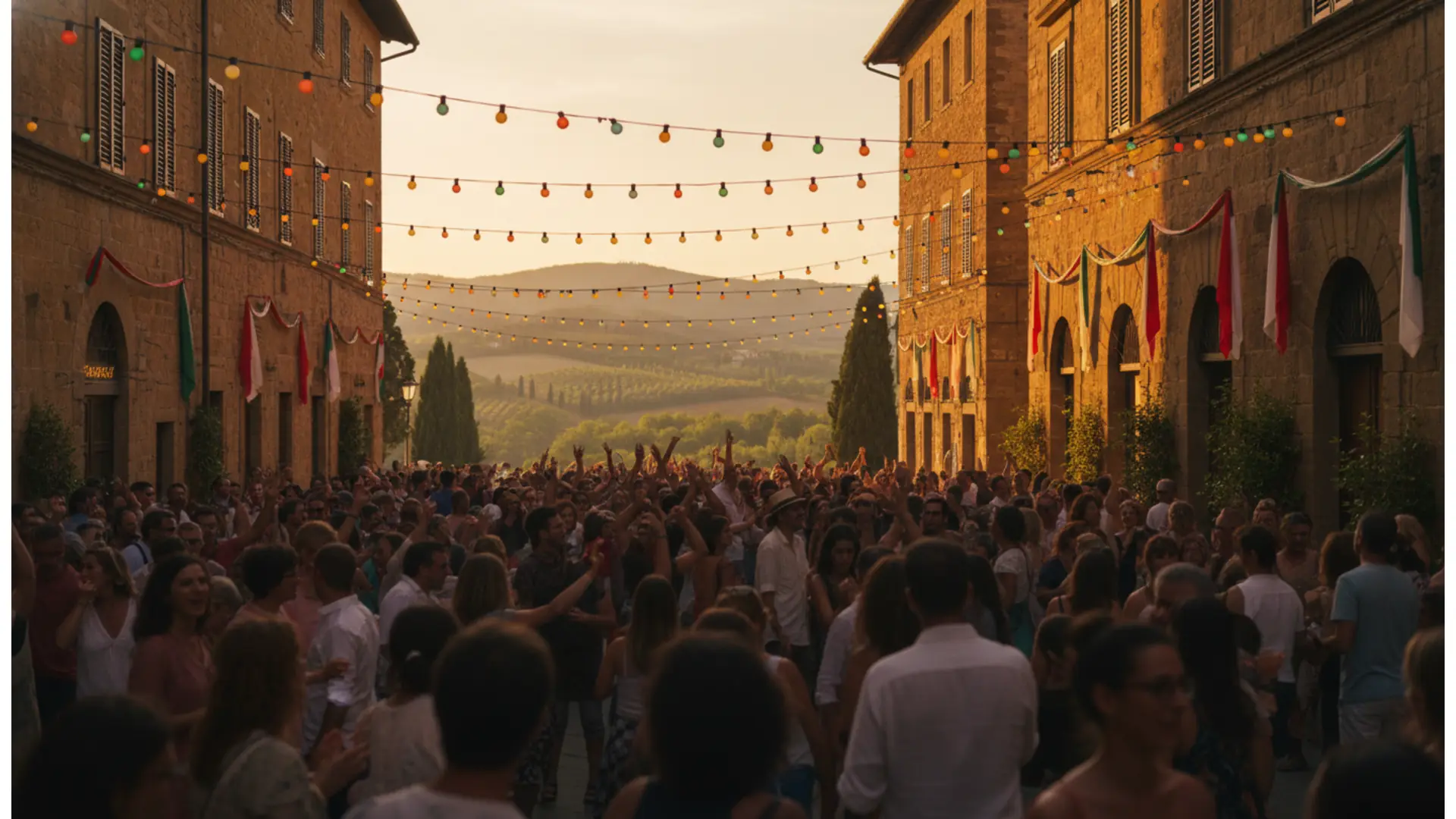
Il Placito Capuano
The historical re-enactment where the Italian language was born
About Placito Capuano
Where the Italian language was born
In March 960 AD, before the judge of Capua, a witness spoke the famous formula: "Sao ko kelle terre, per kelle fini que ki contene, trenta anni le possette parte Sancti Benedicti". Those few lines, known as the Placito Capuano, are considered the first official document written in the vernacular—the language that would eventually become Italian. Every year, the city of Capua, in the heart of the Terra di Lavoro in the province of Caserta, celebrates this milestone with a grand historical re-enactment that transports the community back to the Lombard Middle Ages.
A weekend of history, art, and memory
The event spans two days, transforming Capua's historic center into an open-air museum. Visitors are guided through Lombard churches, the Campano Museum, the Cathedral, and medieval alleys by costumed re-enactors. Meanwhile, in the Piazzetta del Placito, the scriptorium comes to life with demonstrations of Beneventan script, educational stations, and a Lombard armory. The highlight is the theatrical re-enactment of the 960 trial, which brings the solemn atmosphere of that distant day back to life.
The program of the 11th edition
The eleventh edition, scheduled for May 16–17, 2026, opens on Saturday with "The Youth Placito": an awards ceremony for students, a historical pageant dedicated to Pandolfo Capodiferro, and a concert by the "G. Martucci" Orchestra in the Chiesa del Gesù Gonfalone, featuring students from the "L. Garofano" Musical High School. Sunday is dedicated to "Open Monuments and Re-enactment of the Placito Trial," featuring guided tours, exhibitions, and the theatrical performance by the "La Mansarda - Teatro dell'Orco" company.
Open monuments and Lombard itineraries
- Guided tours of the churches of San Salvatore a Corte, San Giovanni, San Michele, and the Cathedral with its Crypt
- Alternative itinerary through San Rufo, San Carponio, Sant'Angelo Audoaldis, and the Royal Armory
- Scriptorium with Beneventan script demonstrations and educational Lombard stations
- "Representing the Placito Capuano" exhibition featuring student artworks and video projections
Capua, the birthplace of the language
The re-enactment is part of a broader cultural project that defines Capua as "the place of the language," a city committed to preserving and promoting the roots of the national idiom. The initiative is further enriched by literary events and awards dedicated to the Italian language, confirming Capua's status as an essential destination for those wishing to understand the history of Italian culture.
A local event
Il Placito Capuano is promoted by the Italian Touring Club with the Terra di Lavoro Territory Club and the "Aperti per Voi" group of Capua, in collaboration with the Municipality of Capua and local associations. Admission to all activities is free, reflecting a festival conceived as a gift from the community to itself and its visitors in one of the most fascinating art cities in Campania.
Placito Capuano — edition 2026
The eleventh edition of the Placito Capuano brought Capua's historic center to life over the weekend of May 16–17, 2026. Saturday, dedicated to "The Youth Placito," featured student awards, a historical pageant inspired by Pandolfo Capodiferro, and a concert by the "G. Martucci" Orchestra with students from the "L. Garofano" Musical High School. Sunday, featuring "Open Monuments and Re-enactment of the Placito Trial," offered guided tours of Lombard churches, a scriptorium with Beneventan script demonstrations, and a theatrical performance by "La Mansarda - Teatro dell'Orco".
Programme Placito Capuano 2026
Saturday, May 16, 2026 - The Youth Placito
- 11:15 AM - Student awards ceremony with the jury (Angela Ragozzino, Alessandro Ciambrone)
- 12:00 PM - Concert by the "G. Martucci" Orchestra in the Chiesa del Gesù Gonfalone, with students from the "L. Garofano" Musical High School, conducted by Giancarlo Perna
Sunday, May 17, 2026 - Open Monuments and Re-enactment
- 9:30 AM - Meeting at the Church of San Salvatore a Corte and opening of the "Representing the Placito Capuano" exhibition
- 9:30 AM - Scriptorium, educational Lombard stations, and armory in the Piazzetta del Placito Capuano
- 10:00 AM - Guided tours of Lombard churches, the Campano Museum, and the Cathedral with its Crypt
- 12:00 PM - Theatrical re-enactment of the 960 AD trial by "La Mansarda - Teatro dell'Orco" at the Placito Capuano Monument
- 1:00 PM - Prize draw for visitors at the Church of San Salvatore
Highlights Placito Capuano 2026
- Theatrical re-enactment of the 960 AD trial, the first document in Italian vernacular
- Historical pageant dedicated to Pandolfo Capodiferro
- Scriptorium with Beneventan script demonstrations
- Concert by the "G. Martucci" Orchestra
- Extraordinary opening of Lombard churches and the Campano Museum
Prices Placito Capuano 2026
Practical information — Placito Capuano
How to get there
Capua is located in the province of Caserta, Campania. By car: take the Capua exit on the A1 Milan-Naples motorway, then follow signs for the historic center. By train: Capua station is on the regional line, a short distance from the center. The nearest airport is Naples-Capodichino, approximately 40 km away.
Admission and information
Admission to all activities, guided tours, and exhibitions is free. Events take place in the historic center, with meeting points at the Church of San Salvatore a Corte and the Piazzetta del Placito Capuano. For information: Culture and Tourism Office of the Municipality of Capua, tel. +39 0823 560318.
Tips
Comfortable shoes are recommended for walking tours between churches and monuments. May is the ideal time to combine the re-enactment with a stroll along the Volturno river and to discover the gastronomy of the Terra di Lavoro.
Festival-goer photos
No photos yet. Share yours!
Share your photos
5 photos max, 5 MB per photo (JPG, PNG, WebP)
Noticed an error or missing information?
Help us keep this listing up to date. Every proposal is verified by our team before publication.
Festival-goer reviews
No rating yet — be the first!
No comments yet. Be the first!
Were you there?
Share your experience with the community.
Published by Valentin Contard, festival listings writer. Reviewed, corrected and approved by Christophe Contard, editor-in-chief. .
Where does it take place — Placito Capuano
Centro storico di Capua
Piazza dei Giudici 4, 81043 Capua