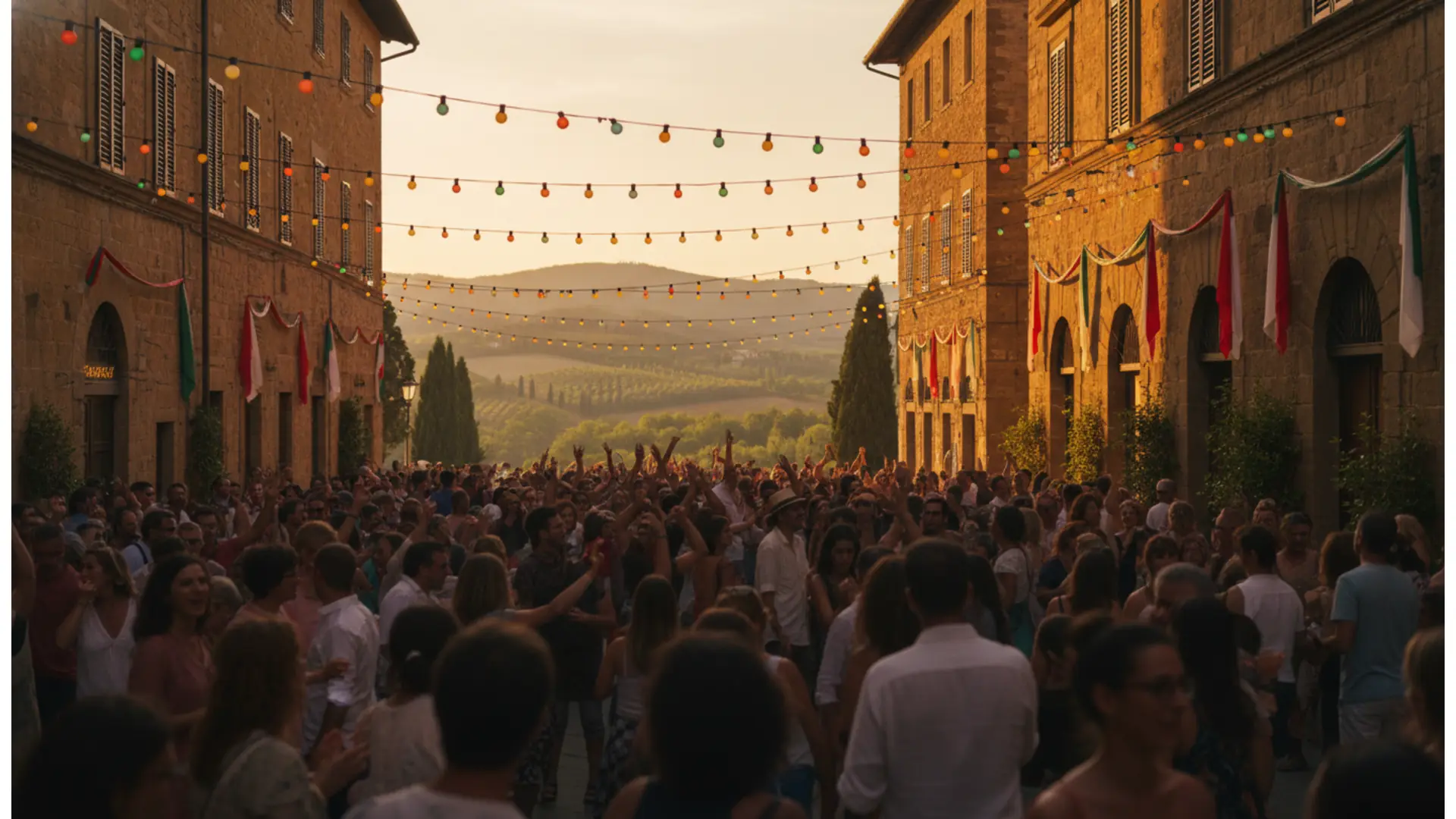
Holy Week in Noto – Procession of the Holy Thorn and "La Pace"
The Good Friday Holy Thorn procession and the "La Pace" encounter during Noto's Baroque Easter
About Holy Week in Noto
Holy Week in the Capital of Baroque
In Noto, a jewel of Sicilian Baroque and a UNESCO World Heritage site in the province of Syracuse, Holy Week is far more than a religious observance: it is a collective ritual that weaves together faith, memory, and local identity. Through the golden stone streets of the historic center, confraternities, the local marching band, and thousands of faithful accompany rites passed down for centuries, in an atmosphere that blends the splendor of 18th-century architecture with the solemnity of popular devotion.
The Holy Thorn Relic
The heart of Noto's tradition is the Holy Thorn, one of the thorns from Christ's crown, which has been kept in Noto since 1295 and is preserved in a precious golden reliquary. This relic gives the city's Holy Week a unique character in the Sicilian landscape, binding the community inextricably to its most ancient spiritual heritage.
Holy Thursday and the Visit to the Sepulchres
The rites reach their peak on Holy Thursday with the Eucharistic celebration and the re-enactment of the Washing of the Feet. It is a tradition for the people of Noto to visit the sepulchres and the altars of repose set up in the city's churches, following a devotional path through the historic center.
Good Friday: The Procession of the Holy Thorn
The most solemn moment is the Good Friday Procession of the Holy Thorn, which begins in the late afternoon. The relic parades through the town alongside the urn of the Dead Christ and the statue of Our Lady of Sorrows, followed by local confraternities with lowered banners, the City of Noto Musical Institution Band, and a crowd gathered in silence. The procession is marked by funeral marches, the prolonged "si-sol" of the trumpet, and the solemn drumbeats that give the slow pace of the bearers a rhythm heavy with pathos.
Easter Sunday: "La Pace"
On Easter Sunday, the city gathers in Piazza Municipio, in front of the Cathedral steps, for the most anticipated ritual: "La Pace". Around noon, the statues of the Risen Christ and the Madonna emerge from their respective churches and, after a dramatic dash, meet and embrace in the square. The Madonna, recognizing her risen Son, lets her black mourning cloak fall in a theatrical gesture that triggers the crowd's joy, often accompanied by the release of doves. The statues then ascend the Cathedral steps together, blessing those present.
A Heritage of the Municipality of Noto and Sicily
The Holy Week of Noto represents one of the defining Easter rituals of southeastern Sicily and the Municipality of Noto. Experiencing these days means discovering the city not only for its famous Baroque facades but also for the power of a living tradition, shared and deeply felt by the entire community.
Holy Week in Noto — edition 2026
Holy Week 2026 in Noto
The 2026 edition of the Noto Easter rites took place between Holy Thursday (April 2), with the visit to the sepulchres and the re-enactment of the Washing of the Feet, and Easter Sunday (April 5).
On Good Friday, April 3, the relic of the Holy Thorn was carried in procession through the historic center, accompanied by confraternities, the marching band, and funeral marches marked by the "si-sol" of the trumpet. On Easter Sunday, April 5, around lunchtime, "La Pace" was celebrated in Piazza Municipio, with the meeting of the statues of the Risen Christ and the Madonna in front of the Cathedral steps.
Programme Holy Week in Noto 2026
2026 Program
- Holy Thursday, April 2 – Eucharistic celebration with the Washing of the Feet; visit to the sepulchres and altars of repose in the city's churches.
- Good Friday, April 3 – Procession of the Holy Thorn with the urn of the Dead Christ and Our Lady of Sorrows; participation of confraternities and the City of Noto Musical Band.
- Easter Sunday, April 5 – "La Pace": meeting of the statues of the Risen Christ and the Madonna in Piazza Municipio, followed by the ascent of the Cathedral steps.
Highlights Holy Week in Noto 2026
- Good Friday Holy Thorn Procession
- "La Pace" on Easter Sunday in Piazza Municipio
- The Holy Thorn relic, kept in Noto since 1295
Prices Holy Week in Noto 2026
Practical information — Holy Week in Noto
Getting There
Noto can be reached by car via the A18/SS115 motorway; the Noto train station is connected to the Syracuse–Modica–Ragusa line. The nearest airports are Catania-Fontanarossa (approx. 90 km) and Comiso (approx. 60 km).
Rites and Access
The processions take place in the historic center of Noto, and access is free and open to the public. On Good Friday, the Holy Thorn procession starts in the late afternoon; on Easter Sunday, "La Pace" takes place around lunchtime in Piazza Municipio.
Tips
During Holy Week, the historic center is closed to traffic during the rites: it is advisable to park in the outer areas. For updated schedules, we recommend checking with the Diocese of Noto and the local parishes.
Festival-goer photos
No photos yet. Share yours!
Share your photos
5 photos max, 5 MB per photo (JPG, PNG, WebP)
Noticed an error or missing information?
Help us keep this listing up to date. Every proposal is verified by our team before publication.
Festival-goer reviews
No rating yet — be the first!
No comments yet. Be the first!
Were you there?
Share your experience with the community.
Published by Valentin Contard, festival listings writer. Reviewed, corrected and approved by Christophe Contard, editor-in-chief. .
Where does it take place — Holy Week in Noto
Centro storico di Noto