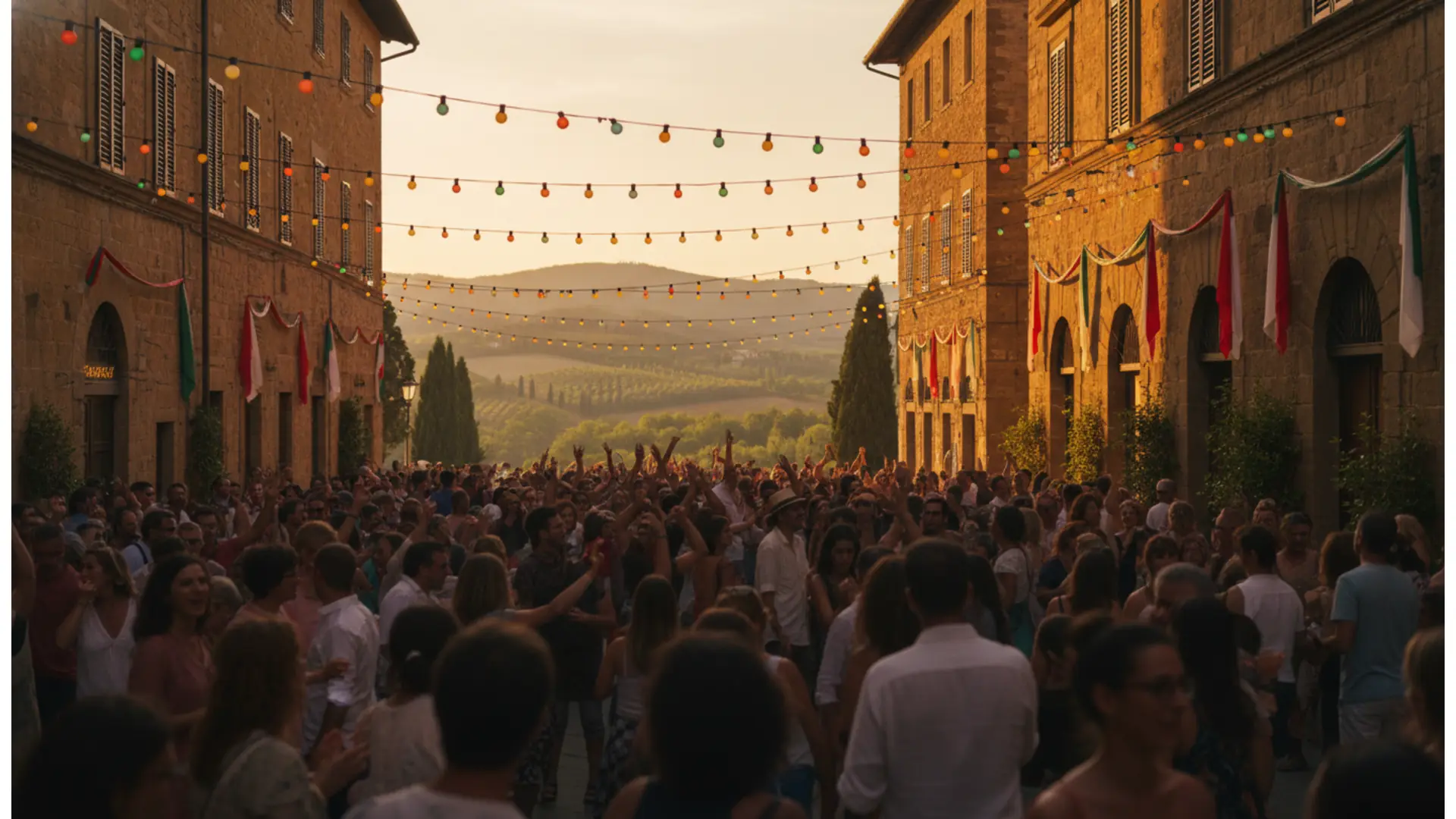
Feast of Saint Ciro, Patron Saint of Portici
The patronal festival of Portici, held between January 31st and the procession on the first Sunday of May
About Feast of Saint Ciro
A festival that marks the year in Portici
In Portici, a town in the Metropolitan City of Naples overlooking the Gulf at the foot of Mount Vesuvius, devotion to Saint Ciro is not confined to a single day; it spans two distinct and complementary occasions. January 31st is the liturgical date, marking the saint's martyrdom, observed inside the Sanctuary with a long sequence of celebrations from dawn until evening. The first Sunday of May is the day of the grand procession, when the wooden statue leaves the church to be carried on shoulders through the city streets. Together, these two moments form the most significant identity-defining event for the town and one of the most followed patronal feasts in the Vesuvius area of Campania.
Who was Saint Ciro
Born in Alexandria, Egypt, around 250 AD, Ciro was a physician who treated the poor for free, combining the practice of medicine with Christian preaching. He was beheaded on January 31st, 303, during the persecutions: hence the date of the liturgical memorial, which also serves as the town's civic holiday. The bond with Portici was consolidated between the 17th and 18th centuries: in 1770, some of the saint's relics—his tongue and jawbone—arrived in the city and are still kept in a reliquary at the foot of the statue. In 1776, Pope Pius VI proclaimed Saint Ciro the principal patron of Portici. The wooden statue that parades in the procession was commissioned in 1764 from the Neapolitan sculptor Ferdinando Sperandeo as a popular thanksgiving after a severe famine; it is still the same statue carried by the bearers through the streets today.
January 31st: The liturgical heart
In the days leading up to January 31st, the Sanctuary offers an intense cycle of preparation: lighting of the votive lamp, daily evening masses led by priests and diocesan officials, celebrations dedicated to specific categories and associations, moments of reconciliation, visits to the community's sick, and the traditional March for Peace. On the day of the feast, the church remains open from dawn until evening, with masses following almost hourly, while an uninterrupted stream of faithful approaches the statue—placed to the right of the altar—to leave flowers and candles. The day culminates with the solemn evening mass, celebrated in the presence of civil and military authorities.
The first Sunday of May: The procession
This is the most anticipated moment of the year. After the opening of the Sanctuary and the exposition of the statue early in the morning, a solemn Eucharistic celebration begins the day; then, Saint Ciro heads out into the streets. The morning procession reaches the upper part of the city, along Via Libertà and the streets of the hillside districts, returning around lunchtime. In the afternoon, the second outing travels along Corso Umberto I, Piazza San Pasquale, and the market area up to the border with San Giorgio a Cremano, touching the other local parishes—from the Addolorata to the Immacolata and the Ferrovieri—before the evening return to Piazza San Ciro and the final rite. Along the route, balconies are draped with embroidered blankets and flowers rain down as the statue passes: an image that has remained virtually unchanged for generations.
The traditional fair and illuminations
The religious dimension is accompanied by a popular one. For both occasions, the Municipality of Portici authorizes the traditional fair with temporary occupation of public land along Corso Umberto I: dozens of stalls selling street food, sweets, toys, and gift items, while illuminations light up the city's central axis and traffic regulations close much of the center to vehicles. Stall applications are managed by the SUAP and Commerce Office through the 'Impresa in un giorno' portal, with deadlines set a few days before each festival.
The Sanctuary of Santa Maria della Natività and Saint Ciro
The heart of it all is the Sanctuary of Santa Maria della Natività and Saint Ciro, overlooking Piazza San Ciro in the ancient core of Portici. Inside, the chapel dedicated to the patron saint houses the 18th-century statue and the reliquary containing the relics that arrived in 1770. During the festival days, the church welcomes pilgrims from across the Vesuvius area; devotion to Saint Ciro has also followed Portici's emigration to the United States, where associations named after the saint still survive today.
Why it is worth attending
Those who come to Portici for Saint Ciro do not witness a show built for visitors, but enter into a collective ritual repeated for over two and a half centuries. The May procession draws a huge crowd; January 31st, on the other hand, offers a more intimate atmosphere, filled with silent anticipation, candles, and personal devotion.
Feast of Saint Ciro — edition 2026
Saint Ciro 2026 in Portici
The year 2026 fully re-proposed the historical calendar of the patronal feast. January 31st, which fell on a Saturday, was preceded by ten days of preparation at the Sanctuary of Santa Maria della Natività and Saint Ciro, with daily evening masses, celebrations dedicated to the healthcare world, the March for Peace, and community moments; on the day of the feast, celebrations followed one another from 6:00 AM until the solemn evening mass, presided over by Monsignor Michele Autuoro with the participation of civil and military authorities.
The second act took place on Sunday, May 3rd, the first Sunday of the month, with the procession of the patron saint's wooden statue: departure in the morning towards the upper districts of the city and, in the afternoon, the long route along Corso Umberto I, Piazza San Pasquale, and the market area up to the border with San Giorgio a Cremano. The Municipality of Portici authorized the traditional fair along Corso Umberto I for both dates and adopted the relevant traffic measures.
Programme Feast of Saint Ciro 2026
January 2026 — preparation and liturgical feast
- Thursday, January 22nd: opening of the festivities with the lighting of the lamp; evening mass and Eucharistic adoration
- Friday, January 23rd: mass of reconciliation, confessions, and visits to the community's sick
- Saturday, January 24th: March for Peace (4:00 PM); mass dedicated to healthcare professionals (6:30 PM)
- Sunday, January 25th: masses from 8:00 AM to 6:30 PM, renewal of Catholic Action memberships, and synodal meeting of families
- From Monday, January 26th to Friday, January 30th: daily evening mass at 6:30 PM, presided over by priests and diocesan officials
- Saturday, January 31st, Feast of Saint Ciro: masses at 6:00, 7:15, 8:30, 9:30, 10:30, 12:00, 13:15, 15:00, 16:00, and 17:00; at 7:00 PM solemn mass presided over by Monsignor Michele Autuoro, with civil and military authorities
Sunday, May 3rd, 2026 — the procession
- 8:15 AM: opening of the Sanctuary and exposition of the statue
- 8:30 AM: solemn Eucharistic celebration, presided over by Monsignor Antonio Di Donna
- 10:00 AM: first procession towards the upper area of the city, along Via Libertà and the hillside districts, returning around 1:00 PM
- 5:00 PM: second procession along Corso Umberto I, Piazza San Pasquale, and the market area up to the border with San Giorgio a Cremano, touching the other local parishes
- In the evening: return of the statue to Piazza San Ciro and final rite
For both occasions, the Municipality of Portici authorized the traditional fair with stalls along Corso Umberto I (applications via the 'Impresa in un giorno' portal by January 23rd and April 27th, 2026) and ordered traffic closures in the city center.
Highlights Feast of Saint Ciro 2026
- The procession on Sunday, May 3rd, 2026, followed by a huge crowd on the streets and thousands of people via live streaming
- The ten masses held in the Sanctuary on January 31st, from 6:00 AM until the solemn evening mass
- The wooden statue by Ferdinando Sperandeo (1764) carried on shoulders by the bearers to the upper districts
- Balconies decorated with embroidered blankets and the rain of flowers as the Saint passed
- The fair and illuminations along Corso Umberto I, in January and May
Prices Feast of Saint Ciro 2026
Practical information — Feast of Saint Ciro
Location
Sanctuary of Santa Maria della Natività and Saint Ciro, Piazza San Ciro, 80055 Portici (NA). The fair, illuminations, and afternoon procession are concentrated along Corso Umberto I.
How to get there
By train: the Circumvesuviana (EAV) connects Naples Porta Nolana and Naples Garibaldi to the Portici Bellavista and Portici Via Libertà stations, both a few minutes' walk from the center; the RFI Naples–Salerno line stops at Portici-Ercolano. By car: take the Portici exit on the A3 Naples–Salerno motorway; however, during the festival days, the center is subject to traffic closures and parking bans ordered by the Municipality, so it is advisable to leave the car on the outskirts and continue on foot. By plane: Naples-Capodichino airport, about 12 km away.
Costs
Free admission: celebrations and the procession are free and open to everyone.
Tips
For the May procession, it is advisable to position yourself along the route in advance, expect to be on your feet for many hours, and wear comfortable shoes: the two outings take up almost the entire day. On January 31st, the visit to the Sanctuary is more intimate, but queues can be long during peak hours. Before leaving, it is useful to check the traffic regulations published on the Portici Municipality website.
Festival-goer photos
No photos yet. Share yours!
Share your photos
5 photos max, 5 MB per photo (JPG, PNG, WebP)
Noticed an error or missing information?
Help us keep this listing up to date. Every proposal is verified by our team before publication.
Festival-goer reviews
No rating yet — be the first!
No comments yet. Be the first!
Were you there?
Share your experience with the community.
Published by Valentin Contard, festival listings writer. Reviewed, corrected and approved by Christophe Contard, editor-in-chief. .
Where does it take place — Feast of Saint Ciro
Santuario Santa Maria della Natività e San Ciro
Piazza San Ciro, 80055 Portici