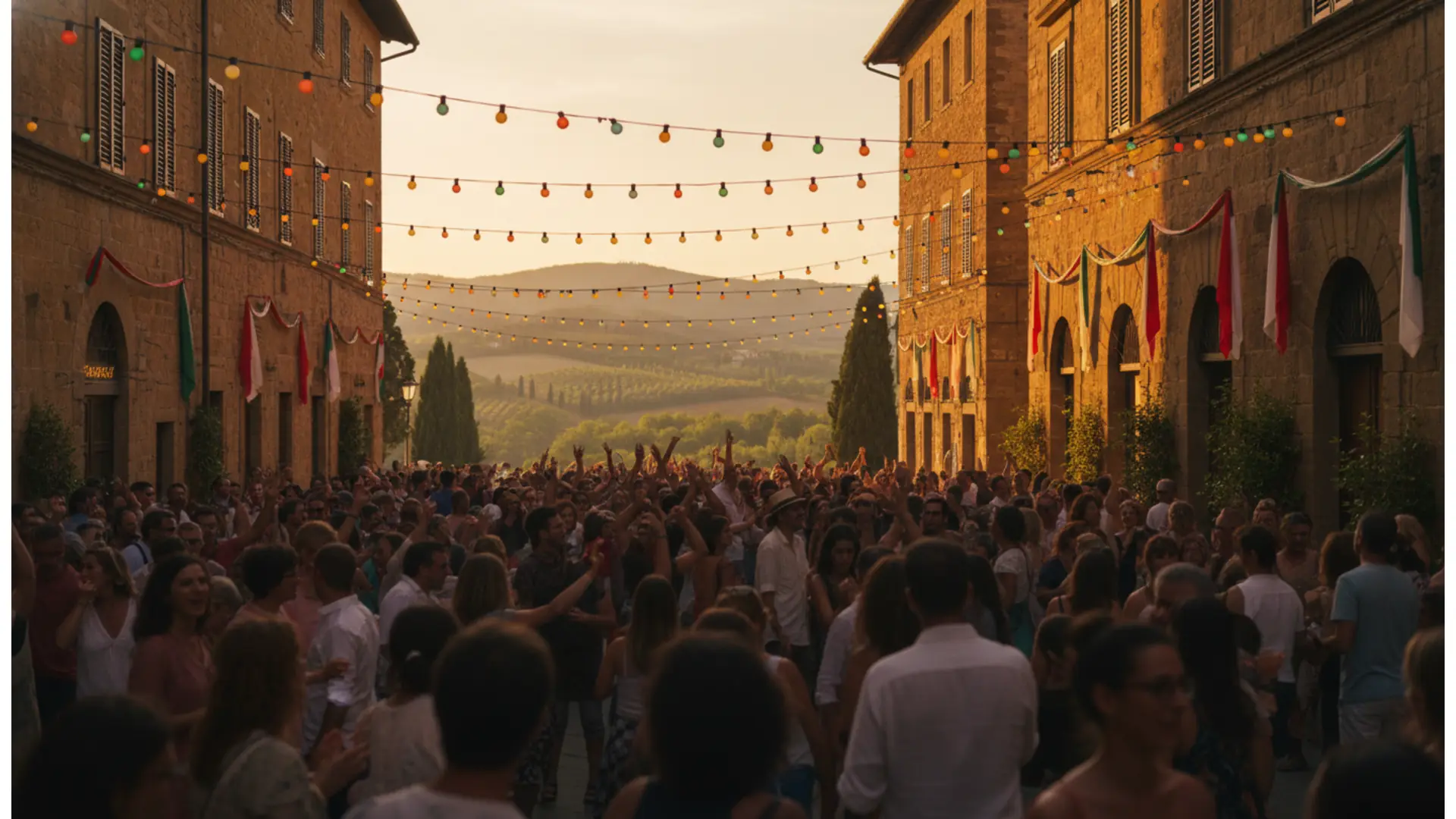
Dissonanze Festival
The historic Roman electronic music festival at the Auditorium Parco della Musica
About Dissonanze
A piece of Italian electronic history
Dissonanze is not your typical festival: when its first edition opened in Rome in 2000, Italy lacked a true international festival dedicated to electronic music and digital arts. For a decade, until 2010, the event founded by Giorgio Mortari brought the artists who were redefining European club culture to the capital, freeing Rome from its inferiority complex toward Berlin, London, or Barcelona. Then came the silence, and a long wait that lasted for years.
The return to the Auditorium
The festival was reborn in the heart of the Flaminio district, at the Auditorium Parco della Musica Ennio Morricone, the complex designed by Renzo Piano that serves as the main musical hub for the Municipality of Rome and the entire Metropolitan City of Rome Capital, in the Lazio region. The twenty-fifth-anniversary celebration paved the way; the following edition, titled New Chapter, solidified the project with a more ambitious structure and a promotional campaign that spanned several months, receiving widespread acclaim from the Italian specialized press.
Three stages, three identities
The current format distributes the audience across three distinct areas, each with its own artistic character and dedicated sound and visual setup:
- Cavea — the outdoor amphitheater of the Auditorium, the heart of the festival and home to the international headliners;
- Park — the green area nestled between Renzo Piano's three "scarabs," dedicated to extended sets and house and groove sounds;
- Hide — the more intimate, experimental space reserved for sound research, ambient music, and electronic live acts.
The programming is designed as a journey: you arrive at noon in broad daylight and leave late at night, traversing musical languages ranging from experimental techno to classic Detroit and Chicago house, from British dub to the most radical electro-acoustic fringes.
Electronic music and digital arts
From its inception, Dissonanze has defined itself as a project dedicated to contemporary music and sound experimentation, where electronics engage with digital arts and performance. The installations, visuals, and video mapping are not mere decoration but an integral part of the day's dramaturgy, maintaining continuity with the festival's original identity, which already featured a digital art section alongside the musical program back in the 2000s.
Part of the Roman Summer lineup
The festival has become a staple of the Roma Summer Fest, the major summer concert series organized by the Fondazione Musica per Roma, effectively serving as its grand finale: September, when the heat subsides and the Cavea becomes comfortable until late at night, is the ideal window for two days of outdoor music. For the city, it is also a significant tourist draw, attracting audiences from all over Italy and abroad.
Why it's worth the trip
Those familiar with major European electronic festivals will find a human scale here that has been lost elsewhere: a single venue, three stages within walking distance, a world-class architectural setting, and a curation that prioritizes artistic coherence over sheer numbers. Those approaching this world for the first time will find a welcoming environment that remains daytime-focused for much of the event, immersed in the greenery of the Parco della Musica. In either case, Dissonanze is now one of the most defining events of the Italian electronic scene.
Dissonanze — edition 2026
New Chapter: the chapter of maturity
Following the twenty-fifth-anniversary celebration, Dissonanze returns in 2026 with an edition planned well in advance and received with enthusiasm by the specialized press, which highlighted the quality of the artistic choices. The festival occupies the entire Auditorium complex in the Flaminio district, organized across three areas with complementary sonic identities.
Two days, three stages
The event runs from noon until late at night on Saturday, September 12, and Sunday, September 13. The Cavea hosts the biggest names, the Park is dedicated to extended sets and house sounds, while the Hide gathers the most experimental part of the lineup, featuring electronic live acts and sound research.
Closing the Roma Summer Fest
The event effectively closes the summer concert series of the Fondazione Musica per Roma, bringing an audience from all over Italy and abroad to the capital.
Programme Dissonanze 2026
Saturday, September 12, 2026 — doors open at 12:00
- Björk (DJ set)
- Peggy Gou
- Honey Dijon
- Kelly Lee Owens (DJ set)
- Derrick Carter
- Paranoid London (live)
- Nubiyan Twist (live)
- Aline Umber
Sunday, September 13, 2026 — doors open at 12:00
- Floating Points b2b Daphni
- Moodymann b2b Marcellus Pittman
- Chloé Caillet
- Donato Dozzy
- Skream & Benga
- Octave One (live)
- Jazzanova
- Session Victim
- Tiger & Woods
The lineup for both days, distributed across the Cavea, Park, and Hide stages, is completed by artists such as Job Jobse, Raresh, Ron Trent, and Sama' Abdulhadi. Detailed schedules by stage will be published on the official website in the days leading up to the event.
Highlights Dissonanze 2026
- The Björk DJ set, the most anticipated event of the edition
- Peggy Gou and Honey Dijon on the Cavea stage
- The back-to-back set by Floating Points and Daphni
- Moodymann b2b Marcellus Pittman, a meeting of two pillars of the Detroit scene
- The analog live performance by Octave One
- The Hide stage, dedicated to the most radical sound research
Prices Dissonanze 2026
Practical information — Dissonanze
How to get there
The Auditorium Parco della Musica Ennio Morricone is located at Viale Pietro de Coubertin 30, in the Flaminio district. By metro: Line A to Flaminio, then tram 2 to the Apollodoro stop. By bus: lines 53, 217, 910, 982. By car: take the exit from the Tangenziale Est toward Viale Tiziano; there is a paid parking garage on-site, though public transport is recommended during the festival.
Tickets
Daily passes and full-event passes for both days are available, with prices starting from approximately 60 euros. Advance tickets can be purchased on xceed.me and ticketone.it. Early-bird tickets and group packages for five people are available.
Access rules
Admission is restricted to those 18 and older. Re-entry is not permitted once you leave the venue. Access to individual stages may be limited once capacity is reached.
Where to stay
The Flaminio district offers hotels and bed and breakfasts within a few minutes' walk; alternatively, the Prati area and the historic center are connected by metro in about fifteen minutes.
Festival-goer photos
No photos yet. Share yours!
Share your photos
5 photos max, 5 MB per photo (JPG, PNG, WebP)
Noticed an error or missing information?
Help us keep this listing up to date. Every proposal is verified by our team before publication.
Festival-goer reviews
No rating yet — be the first!
No comments yet. Be the first!
Were you there?
Share your experience with the community.
Where does it take place — Dissonanze
Auditorium Parco della Musica Ennio Morricone
Viale Pietro de Coubertin 30, 00196 Roma