Cuzzi co' j'ajju Festival
The rustic peasant pasta of the Aniene Valley, tossed with garlic, oil, and pecorino cheese
Edition 2026 not confirmed to date
This edition has not been confirmed by the organiser to date. We recommend checking before going.
About Cuzzi Festival
A festival born to preserve a culinary memory
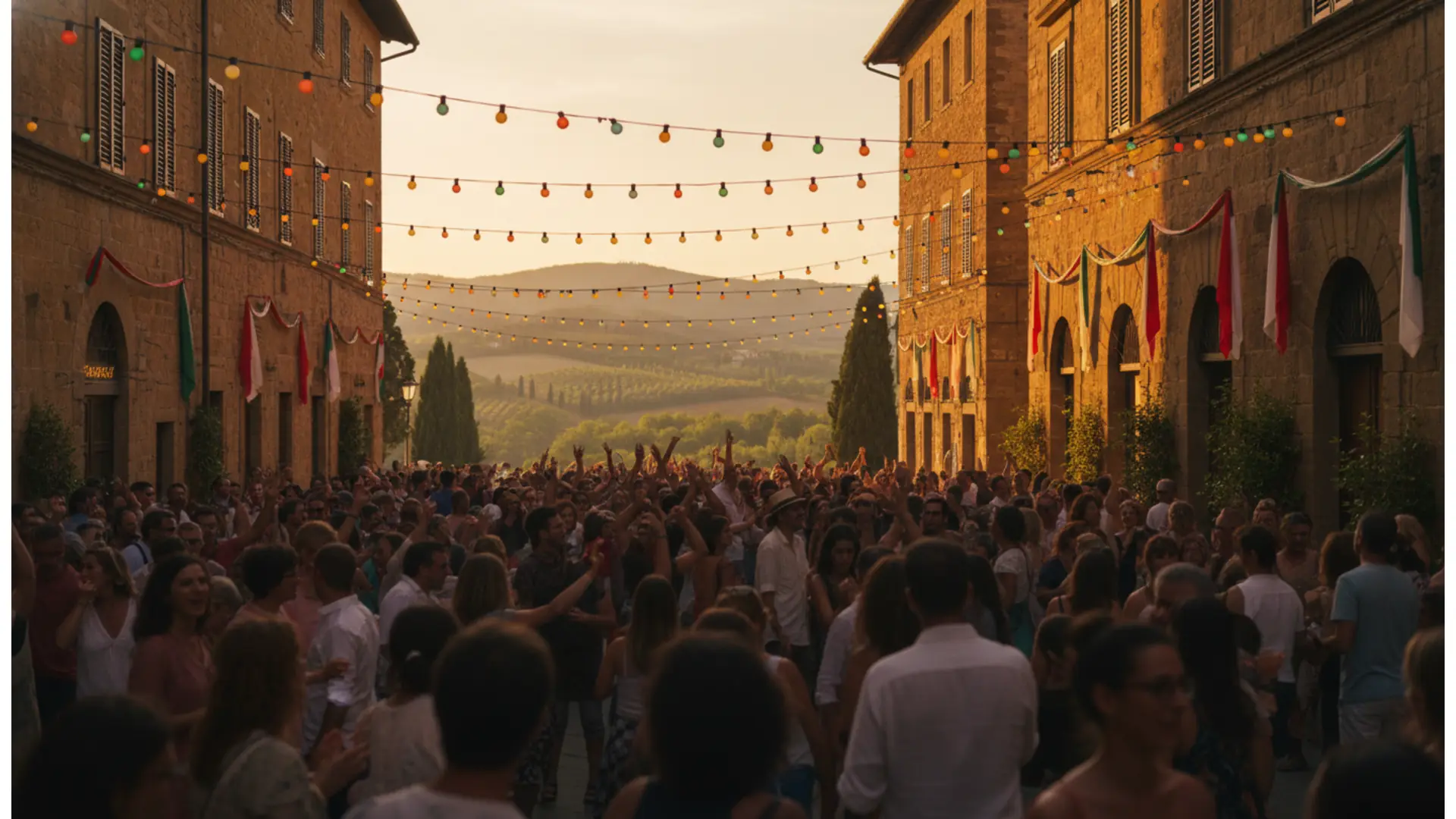
The Cuzzi co' j'ajju Festival brings the historic center of Roviano to life every summer. Located in the Aniene Valley, halfway between Tivoli and Subiaco in the Metropolitan City of Rome, this village is a hidden gem. The event was established in 1995 by the local community to champion a humble, traditional dish that was at risk of being forgotten. Since then, the Pro Loco of Roviano has hosted the festival every mid-August, involving the entire village and its 1,200 residents.
What are 'cuzzi co' j'ajju'?
Cuzzi are fresh, handmade pasta strips made from a blend of mixed flours—soft wheat, durum wheat, and cornmeal—along with water, a pinch of salt, and a few eggs. Rolled out with a rolling pin and cut into strips about 50 centimeters long and 4-5 centimeters wide, their name comes from the local dialect: 'cuzzi' means stumpy, referring to their short, thick shape. The cornmeal gives the pasta a rough texture and a slightly toasted aftertaste, which is perfect for holding the sauce. They are served in traditional scifette (carved wooden troughs) and dressed 'co' j'ajju': garlic sautéed in extra virgin olive oil, tomato sauce, chili, and a generous dusting of local pecorino cheese, with a more delicate version featuring fresh basil also available. Cuzzi are officially recognized as a Traditional Agri-food Product (PAT) of the Lazio Region.
The Sunday dish
Once upon a time, cuzzi were the Sunday staple for the people of Roviano who worked in the fields or mines during the week. Sunday lunch was not just about eating; it was the moment for the family to gather around the table. The festival keeps this peasant memory alive, turning the village square into a large communal dining table where recipes are passed down from generation to generation.
The festival in the historic center
The evening follows a well-established tradition: from late afternoon, the food stalls open, serving handmade cuzzi accompanied by wine and typical products from the valley. There are also moments of community, such as screenings of photographs and films from past editions, and live music that keeps the party going until late at night. During the event, guided tours are often organized to the village's landmarks: Castello Brancaccio, home to the Museum of Peasant Civilization of the Aniene Valley, and the Roman-era Ponte Scotonico.
Roviano and the Aniene Valley
The Municipality of Roviano rises on a rocky spur overlooking the upper Aniene Valley, along the ancient route of the Via Tiburtina Valeria, about 60 kilometers from Rome. The village preserves a medieval layout of alleys and stairways dominated by the castle, serving as a gateway to the Simbruini Mountains and the inland towns of Lazio. The festival is the perfect opportunity to discover this authentic corner of the Lazio Region, far from the beaten tourist track, where gastronomy and local identity remain deeply intertwined.
An event not to be missed
With its mix of genuine cuisine, folk music, and historical heritage, the Cuzzi co' j'ajju Festival is one of the most cherished summer events in the Aniene Valley: a simple, convivial experience that tells the story of an entire village through a single dish.
Cuzzi Festival — edition 2026
Following the 2025 edition, which took place on Sunday, August 17th, the Cuzzi co' j'ajju Festival is expected to return in the summer of 2026 in the historic center of Roviano. The event traditionally features food stalls with handmade cuzzi dressed with garlic, extra virgin olive oil, tomato, chili, and pecorino, as well as live music and moments dedicated to the village's heritage. The date and program for the 2026 edition have not yet been officially announced by the Pro Loco: it is recommended to follow the organization's channels for confirmation.
Programme Cuzzi Festival 2026
Prices Cuzzi Festival 2026
Practical information — Cuzzi Festival
How to get there
By car: A24 Rome-L'Aquila motorway, take the Vicovaro-Mandela exit (from Rome) or the Carsoli-Oricola exit (from the east), then follow the Via Tiburtina Valeria (SR5) to Roviano; the village is about 60 km from the center of Rome. By train: take the regional Rome-Avezzano line and get off at Roviano, which is a short distance from the historic center.
Admission
Admission to the festival is free; you only pay for what you consume at the food stalls.
Tips
Seating during the peak hours fills up quickly, so it is best to arrive when the stalls open. The historic center is pedestrian-only, with parking available in the areas surrounding the village.
Festival-goer photos
No photos yet. Share yours!
Share your photos
5 photos max, 5 MB per photo (JPG, PNG, WebP)
Noticed an error or missing information?
Help us keep this listing up to date. Every proposal is verified by our team before publication.
Festival-goer reviews
No rating yet — be the first!
No comments yet. Be the first!
Were you there?
Share your experience with the community.
Published by Valentin Contard, festival listings writer. Reviewed, corrected and approved by Christophe Contard, editor-in-chief. .
Where does it take place — Cuzzi Festival
Centro storico di Roviano