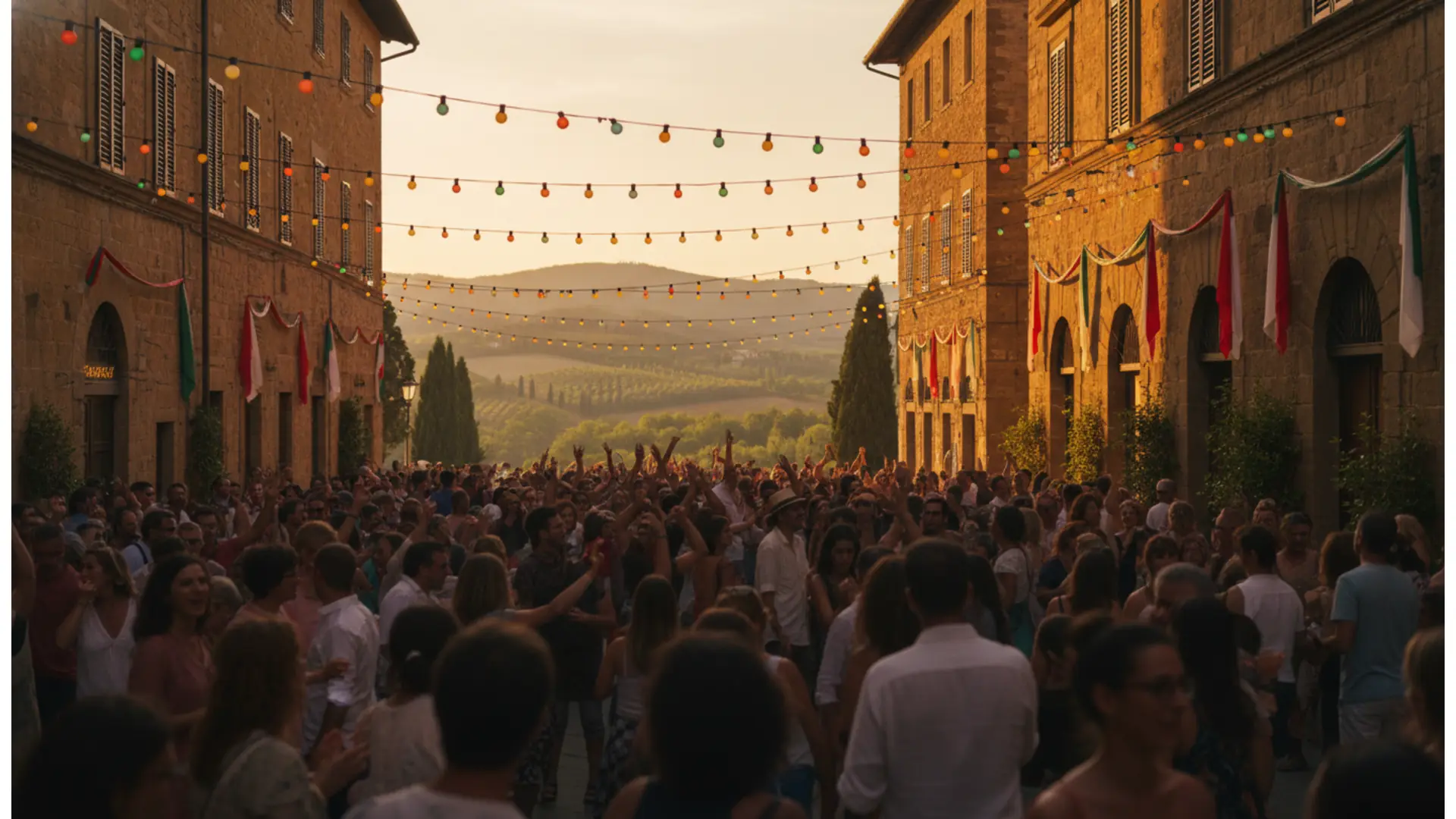
Saint Nicholas Festival
The patron saint of Campora and the panieddi, the ritual bread of the three spheres
Edition 2026 not confirmed to date
This edition has not been confirmed by the organiser to date. We recommend checking before going.
About Saint Nicholas in Campora
December 6th in Campora: a devotion that spans the centuries
In the heart of the Cilento region, at an altitude of approximately 520 meters and about fifteen kilometers from Vallo della Lucania, the municipality of Campora (province of Salerno, Campania) experiences its most intense moment of the liturgical year on December 6th, the feast day of Saint Nicholas of Myra, the town's patron saint. This is not a large tourist event: it is a community festival, consisting of a few hundred inhabitants, a parish church, a ritual bread, and customs passed down from family to family. For this very reason, it is one of the most authentic testimonies of Cilento's popular religiosity.
The panieddi of Saint Nicholas, the bread of the three spheres
The element that makes the Campora festival recognizable is the panieddi di San Nicola: small breads shaped like three spheres joined at the sides, which every family traditionally prepared at home and brought to church. After the mass, the panieddi are blessed and distributed, and their use follows a precise rule that has remained unchanged over time:
- a portion is consumed by the family gathered at the table during the lunch following the service;
- a portion is reserved for the animals in the stable and the barnyard, so that the saint's protection extends to them as well;
- a final piece is kept in the house as a sign of good luck for the year about to begin.
The shape of the three spheres is not accidental: it recalls the classic iconography of Saint Nicholas, linked to the ancient episode of the three bags of gold donated in secret to save three young women from poverty. The bread thus becomes a small domestic catechism, capable of telling the story of the saint's charity without the need for words.
The legend of the brigands
The devotion in Campora is rooted in a story passed down orally. According to tradition, a band of brigands spotted the cluster of houses that then made up the town and decided to loot it. Saint Nicholas, appearing in the guise of an old beggar, convinced them to desist by warning them of the danger they would face crossing the large cliff that surrounded the settlement. Campora, saved, elected him as its patron saint and has venerated him with all honors every year since.
The Church of Saint Nicholas, the heart of the festival
The celebrations revolve around the Church of Saint Nicholas, built in 1660 and the mother church of the town. With a single nave, it houses valuable wooden statues depicting Saint Nicholas, Our Lady of the Snow, the Immaculate Conception, and a Crucifix, as well as an important fresco dedicated to Saint Nicholas of Bari. Next to it, the municipal territory preserves two other significant sacred buildings: the Church of Our Lady of the Snow (1779), with well-preserved frescoes, and the 18th-century Church of the Annunciation.
A village in the Cilento National Park
Campora rises in the upper Calore valley, between the Torno and Trenico streams, surrounded by forests of beech, chestnut, oak, and turkey oak trees, within the Cilento, Vallo di Diano and Alburni National Park. The toponym derives from the Latin campus, meaning flat place, and the first known document dates back to 1131, when Roger II of Sicily confirmed the monastic possessions linked to the Benedictine monastery of San Giorgio di Campora. The village later passed under noble families such as the Carafa, Sanseverino, and Caiazzo, and was severely hit by the plague of 1656, a few years before the construction of the Church of Saint Nicholas.
What to expect
Those arriving in Campora on December 6th will find a day marked by liturgy and conviviality: the solemn mass, the blessing and distribution of the panieddi, and moments of gathering among the village families. It is the perfect opportunity to discover the local cuisine, which here means handmade fusilli with meat sauce, minestra maritata (wedding soup), chestnuts, and artisanal cured meats, starting with the prosciutto that gives its name to the famous Spring Prosciutto Shooting Festival.
Other anniversaries in the Campora calendar
The devotion of the people of Campora does not end with the patron saint: on June 15th, Saint Vitus the Martyr is celebrated, and on August 5th, Saint Mary of the Snow, two events that, together with the December festival, define the religious calendar of this small municipality in inland Campania.
Saint Nicholas in Campora — edition 2026
The 2026 Saint Nicholas Festival in Campora, in the inland Cilento in the province of Salerno, does not currently have a published program. The reference date remains the liturgical one of December 6th, the day on which the municipality has celebrated its patron saint for centuries.
The structure of the day is consolidated by tradition: Eucharistic celebration in the parish church of Saint Nicholas, built in 1660, blessing of the panieddi di San Nicola - the breads shaped like three spheres joined at the sides - and subsequent distribution to families, who reserve a portion for the animals and keep a piece at home as a sign of good luck.
To find out the times and details of the 2026 edition, it is best to contact the Municipality of Campora or the parish directly, as they announce the program close to the event.
Highlights Saint Nicholas in Campora 2026
Prices Saint Nicholas in Campora 2026
Practical information — Saint Nicholas in Campora
How to get there
Campora is located in the inland Cilento, about 15 km north of Vallo della Lucania, the main reference center of the district. Access is via mountain provincial roads: in winter, it is advisable to check road conditions before leaving.
When
The patronal feast takes place on December 6th, the liturgical date of Saint Nicholas of Myra. The town is located at an altitude of about 520 meters: warm winter clothing is recommended.
Costs
Religious celebrations and the distribution of the blessed panieddi are free and open to everyone.
Information
Municipality of Campora, Piazza Umberto I 13, 84040 Campora (SA) - tel. +39 0974 944004. The exact times of the services are communicated by the parish in the days leading up to the festival.
Festival-goer photos
No photos yet. Share yours!
Share your photos
5 photos max, 5 MB per photo (JPG, PNG, WebP)
Noticed an error or missing information?
Help us keep this listing up to date. Every proposal is verified by our team before publication.
Festival-goer reviews
No rating yet — be the first!
No comments yet. Be the first!
Were you there?
Share your experience with the community.
Published by Valentin Contard, festival listings writer. Reviewed, corrected and approved by Christophe Contard, editor-in-chief. .
Where does it take place — Saint Nicholas in Campora
Chiesa parrocchiale di San Nicola